Key Takeaways
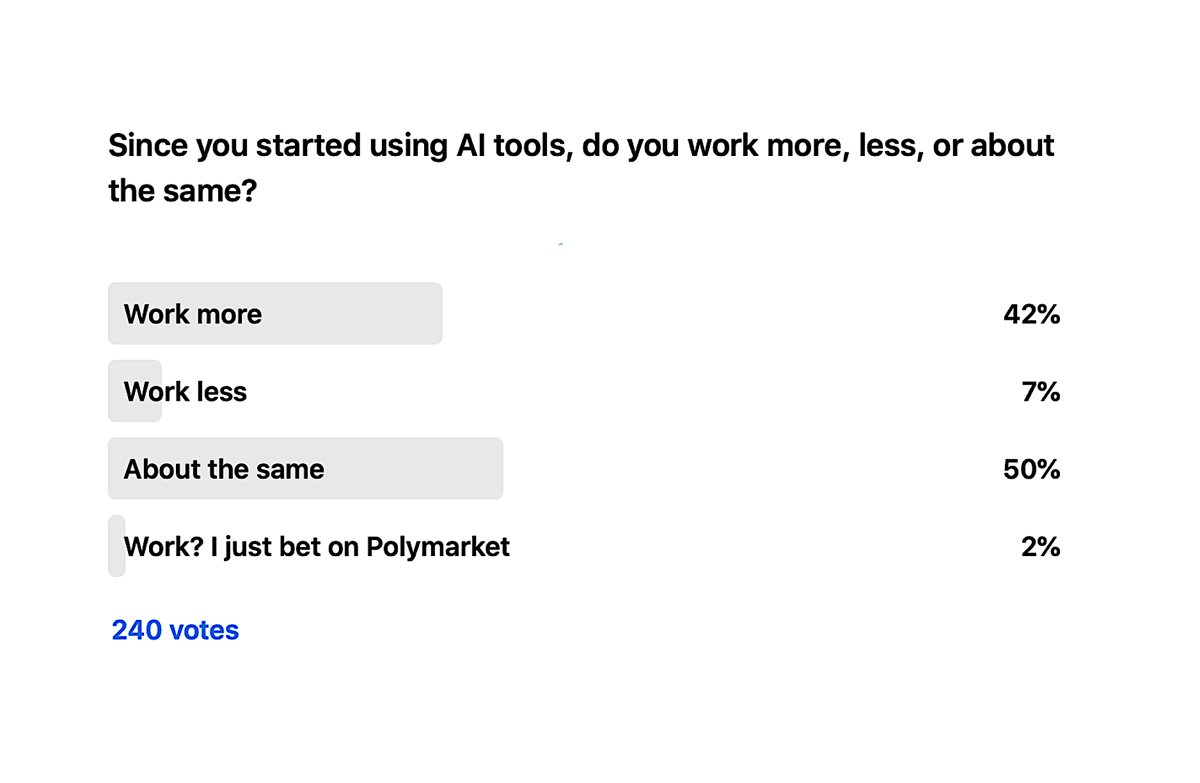
- •42% of surveyed lawyers report longer work hours after AI adoption
- •Half say their workload remains unchanged despite AI tools
- •Only 7% experience reduced hours, highlighting limited time savings
- •Efficiency gains translate into higher case volume, not fewer billable hours
- •Law firms' billable‑hour model pressures staff to stay productive longer
Pulse Analysis
The Artificial Lawyer survey provides a rare quantitative glimpse into how generative AI is reshaping daily rhythms on the legal front. While many firms touted AI as a lever for cutting routine drafting and research, the numbers tell a different story: productivity gains are being absorbed by a surge in matters that can now be handled at scale. This mirrors a classic economic paradox—when friction drops, demand rises—so lawyers find themselves juggling more files, not fewer, even as individual tasks become faster.
Two structural forces amplify this effect. First, the billable‑hour model still dominates most law practices; faster turnaround simply frees up capacity for additional billable work, preserving revenue streams. Second, AI‑generated outputs demand rigorous human validation, especially in high‑stakes commercial transactions, creating a layer of supervisory work that often outweighs the time saved on drafting. Consequently, senior attorneys and legal‑tech teams are logging extra hours to ensure accuracy, compliance, and client expectations are met. This dynamic contrasts with tech‑centric industries where efficiency can translate directly into reduced staffing or shorter shifts.
For firms, the survey underscores the need to rethink performance metrics and employee well‑being strategies. Investing in AI should be paired with initiatives that redistribute saved time toward higher‑value, strategic activities rather than merely expanding billable volume. Moreover, cultivating judgment capacity—through training, better AI‑human collaboration tools, and realistic workload planning—will be crucial to prevent burnout. As AI continues to lower procedural barriers, the legal sector must balance productivity gains with sustainable work practices to truly reap the technology’s promised benefits.
Using AI Means You Work the Same, or Longer
Comments
Want to join the conversation?