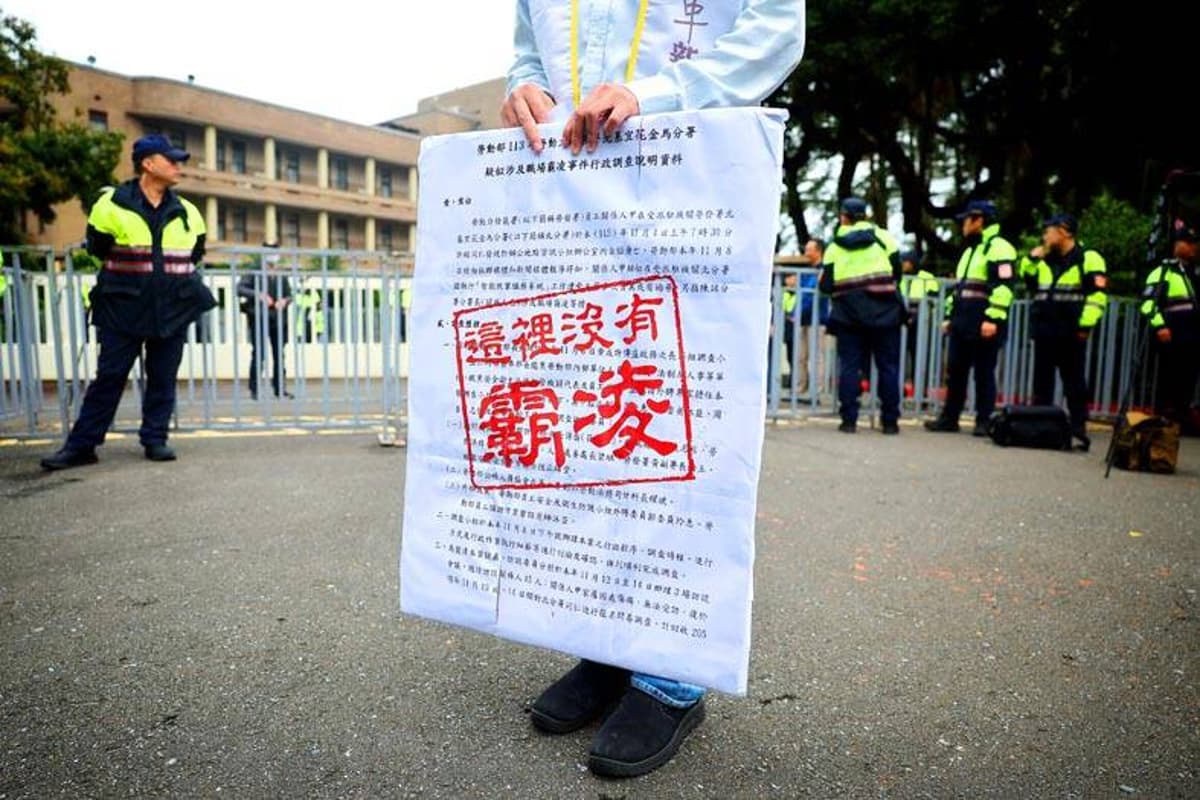
Act Targets Bullying in the Workplace
Why It Matters
The rule creates the first statutory duty in Taiwan to prevent and remediate workplace bullying, exposing employers to significant financial risk and prompting a shift toward formalized employee‑protection programs.
Key Takeaways
- •New OSH Act chapter defines workplace bullying explicitly.
- •Companies >10 employees must set up reporting channels.
- •Firms >100 employees need half‑external expert investigative task forces.
- •Violations can incur fines up to NT$3 million (≈US$95k).
- •Complaints must be filed within three years, one year after leaving.
Pulse Analysis
Across Asia, governments are tightening labor standards to address the hidden cost of psychological harassment, and Taiwan is joining that wave with its latest amendment to the Occupational Safety and Health Act. By codifying workplace bullying—ranging from verbal abuse to unreasonable performance demands—the Ministry of Labor signals that mental‑health risks are no longer a managerial afterthought. The law’s definition hinges on the impact on the employee rather than the intent of the supervisor, a nuance that aligns with emerging best‑practice guidelines from the International Labour Organization.
From a compliance standpoint, the new chapter imposes a tiered framework that scales with company size. Organizations with more than ten staff must install a confidential reporting channel, while those exceeding thirty employees need written preventive policies and a designated response unit. Enterprises employing over one hundred workers are required to assemble investigative task forces, half of whose members must be independent experts, and to ensure investigators complete at least three hours of bullying‑prevention training. Failure to act within the two‑month investigation window can trigger fines up to NT$3 million, a penalty that can swell by half for egregious cases.
The Taiwanese model mirrors recent reforms in the United Kingdom and Canada, where statutory bullying provisions have already reshaped HR practices. For multinational firms, the amendment adds another jurisdictional layer to an increasingly complex global compliance matrix, prompting a review of existing conduct‑code programs and a push for uniform reporting mechanisms. Early adopters who integrate third‑party mediation and proactive culture‑building initiatives stand to reduce litigation exposure and improve employee retention. As the law takes effect, labor courts are likely to interpret the “reasonable performance” clause, making precise documentation of workload expectations essential.
Act targets bullying in the workplace
Comments
Want to join the conversation?
Loading comments...