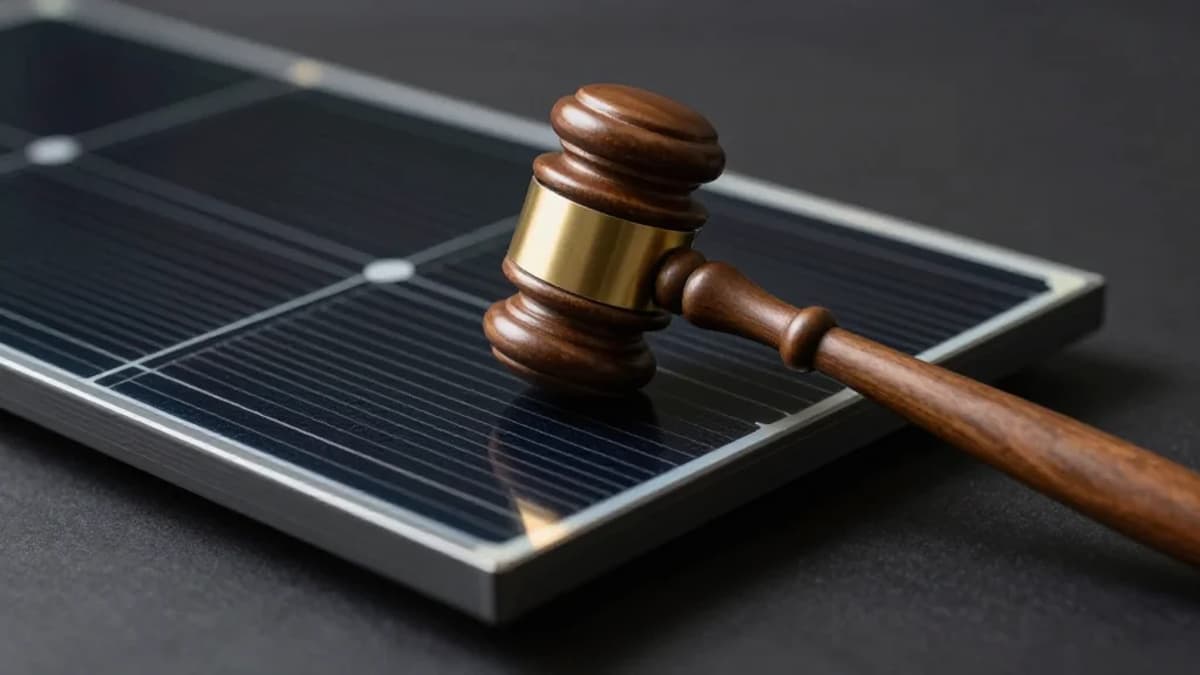
Appellate Decision Sends Storm Clouds to California Solar Panel Customers
•March 10, 2026
0
Why It Matters
The ruling curtails lucrative solar subsidies, reshaping California’s clean‑energy economics and potentially slowing residential renewable adoption while easing cost pressure on non‑solar households.
Key Takeaways
- •Appeals court upholds NEM 3.0 tariff, limiting solar credits.
- •Full‑retail rate credit reduced by roughly 75% for rooftop solar.
- •Decision favors utility profit model over low‑income customer relief.
- •Court relies on Yamaha case, not Greyhound precedent.
- •Solar subsidy shift may slow California renewable growth.
Pulse Analysis
California’s net‑energy metering system, introduced three decades ago, granted rooftop solar owners a full‑retail rate credit for excess electricity fed back into the grid. Over time, that structure created a cross‑subsidy where non‑solar customers bore a disproportionate share of fixed grid costs. In 2022, the Public Utilities Commission rolled out NEM 3.0, cutting those credits by roughly 75% and adding modest fees, aiming to align compensation with actual system costs. The appellate panel’s recent decision validates that shift, citing the Yamaha Corp. v. State Board of Equalization framework, which treats the tariff as a quasi‑legislative agency action.
The immediate impact falls on residential solar owners who now face higher net‑metering bills and a longer payback period for their installations. Utilities, meanwhile, gain a pricing model that better reflects infrastructure expenses and reduces the incentive for customers to export power. Low‑income households without solar panels benefit from a more equitable cost distribution, addressing concerns raised by consumer advocates about the previous subsidy’s regressive effects. However, industry groups warn that the reduced financial return could dampen rooftop solar adoption, a key component of California’s aggressive clean‑energy targets.
Beyond the state level, the ruling signals a broader judicial willingness to defer to utility regulators on rate design, potentially influencing other jurisdictions wrestling with similar net‑metering debates. Policymakers may need to explore alternative incentives—such as targeted rebates or community solar programs—to sustain renewable growth without re‑introducing cross‑subsidies. As California strives to meet its 2030 carbon‑free electricity goal, the balance between utility profitability, ratepayer equity, and renewable deployment will remain a focal point of future regulatory and legislative action.
Appellate decision sends storm clouds to California solar panel customers
0
Comments
Want to join the conversation?
Loading comments...