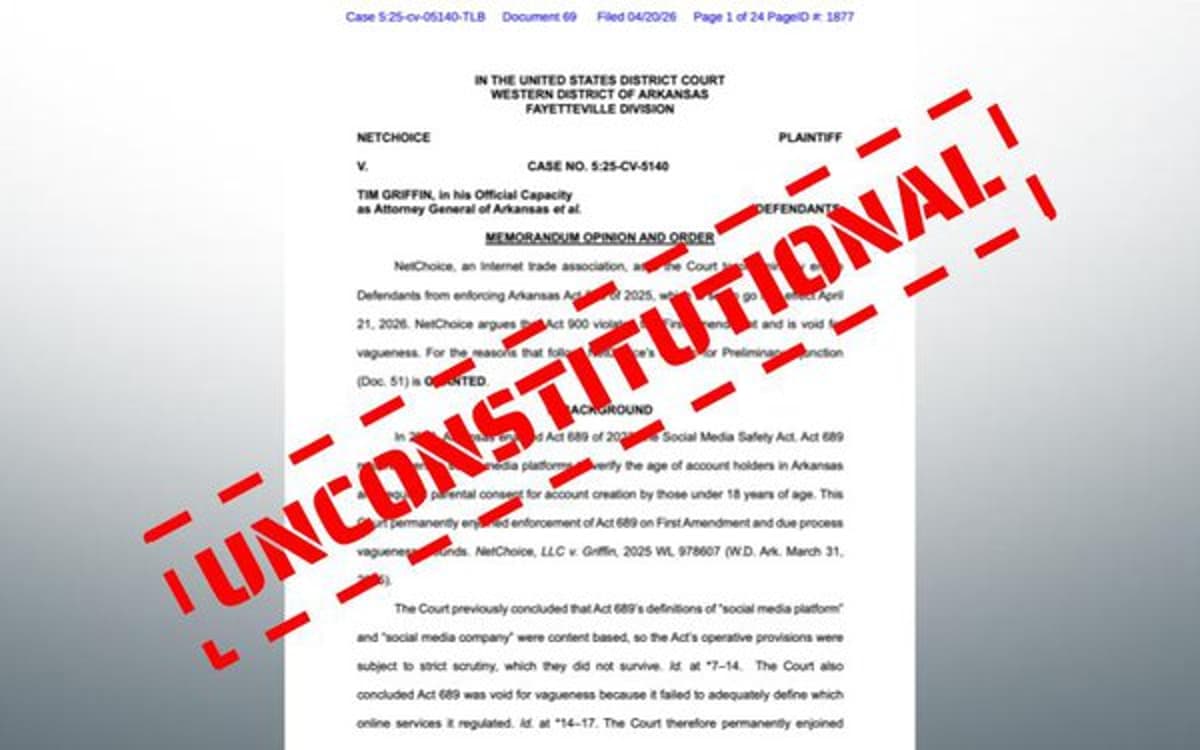
Arkansas 'Addictive Practices' Law Likely Unconstitutional, Judge Rules
Companies Mentioned

Why It Matters
The decision underscores the constitutional limits on state attempts to regulate digital platform design, signaling challenges for similar child‑protection laws nationwide.
Key Takeaways
- •Judge Brooks deems Arkansas “addictive practices” ban likely unconstitutional.
- •Law required platforms to prevent addiction‑inducing features for users under 16.
- •Ruling cites vagueness and violation of First Amendment free speech.
- •Similar Arkansas social‑media restrictions were previously blocked by the same judge.
- •NetChoice’s members, including Meta and YouTube, are shielded from enforcement.
Pulse Analysis
Arkansas’s Act 900 sought to curb what lawmakers described as "addictive practices" on social‑media sites, mandating platforms to ensure minors under 16 would not be exposed to notifications, recommendation algorithms, or gamified features that could spark compulsive use. The legislation also imposed nighttime notification bans and privacy‑default settings, positioning the state as a pioneer in aggressive digital‑wellness regulation. While the intent aligns with growing parental concerns about screen time, the statutory language left platforms uncertain about which specific design elements could trigger liability.
Judge Timothy Brooks’s ruling pivots on two constitutional pillars: vagueness and free speech. By requiring platforms to "ensure" they do not evoke addiction without defining the precise conduct, the law fails the due‑process notice requirement, exposing companies to arbitrary enforcement. Moreover, the injunction frames the restrictions as content‑based limits on speech, invoking the First Amendment’s heightened scrutiny. In his opinion, the state’s approach effectively silences platform communication for a third of the day without demonstrable evidence that such silencing advances a compelling governmental interest, a stance that mirrors earlier decisions striking down Arkansas’s Social Media Safety Act.
The broader impact reverberates beyond Arkansas. As states grapple with how to protect minors online, this ruling signals that overly broad or ill‑defined mandates risk judicial rebuke. Tech firms can cite the decision when contesting similar bills in other jurisdictions, while legislators may need to craft more narrowly tailored, evidence‑based measures that survive constitutional review. For investors and industry leaders, the case highlights the delicate balance between regulatory compliance costs and the strategic value of maintaining open, user‑driven platform designs.
Arkansas 'Addictive Practices' Law Likely Unconstitutional, Judge Rules
Comments
Want to join the conversation?
Loading comments...