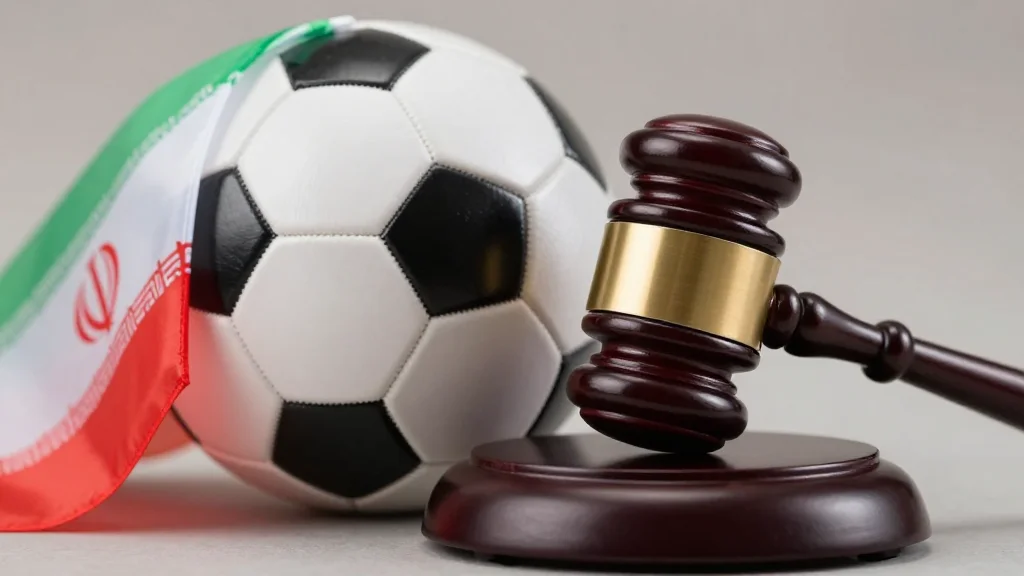
Attorneys Prepare Lawsuit Over FIFA's Ban on Iran's Historic Flag at 2026 World Cup

Companies Mentioned
Why It Matters
The dispute sits at the intersection of international sports governance and U.S. constitutional rights. A court ruling could compel FIFA to align its stadium policies with host‑nation free‑speech standards, influencing how future global events manage political symbols. Moreover, the case highlights the power of diaspora communities to shape international discourse, as Iranian‑American activists leverage U.S. law to challenge perceived censorship. Beyond the immediate legal battle, the lawsuit may set a precedent for how private, non‑governmental organizations like FIFA are held accountable under domestic constitutional frameworks when operating abroad. This could ripple across other sports and entertainment entities that enforce conduct codes in jurisdictions with strong free‑expression protections.
Key Takeaways
- •Attorneys for Institute for Voices of Liberty plan to sue FIFA over flag ban
- •FIFA cites Stadium Code of Conduct to prohibit the Lion and Sun flag
- •Legal challenge argues the ban violates First Amendment free‑speech rights
- •FIFA currently allows the Palestinian flag, prompting double‑standard accusations
- •Potential injunction sought before the World Cup opening on June 8
Pulse Analysis
FIFA's attempt to enforce a uniform political‑symbol policy at the 2026 World Cup collides with the United States' entrenched free‑speech jurisprudence. Historically, the organization has navigated political sensitivities by imposing blanket bans, as seen in Qatar 2022, but those measures were applied in authoritarian contexts where local law did not challenge them. In the U.S., however, any private rule that curtails political expression risks constitutional scrutiny, especially when the rule is enforced by an international body with no sovereign authority.
If the courts side with the Institute, FIFA may be forced to adopt a venue‑specific approach, tailoring its code to the legal environment of each host nation. This could fragment the organization’s branding consistency but would reinforce respect for host‑nation legal norms, potentially easing future negotiations with governments wary of perceived overreach. Conversely, a ruling favoring FIFA could embolden the body to assert its code globally, prompting other rights groups to mount similar challenges in Europe, Canada, and Australia, where constitutional protections also exist.
Strategically, the lawsuit underscores the growing influence of diaspora advocacy in shaping international policy. Iranian‑American activists are leveraging U.S. courts to protect a symbol they view as a banner of dissent, turning a sports‑related dispute into a broader human‑rights narrative. The outcome will likely reverberate beyond soccer, informing how global federations balance neutrality with the political realities of their diverse fan bases.
Attorneys Prepare Lawsuit Over FIFA's Ban on Iran's Historic Flag at 2026 World Cup
Comments
Want to join the conversation?
Loading comments...