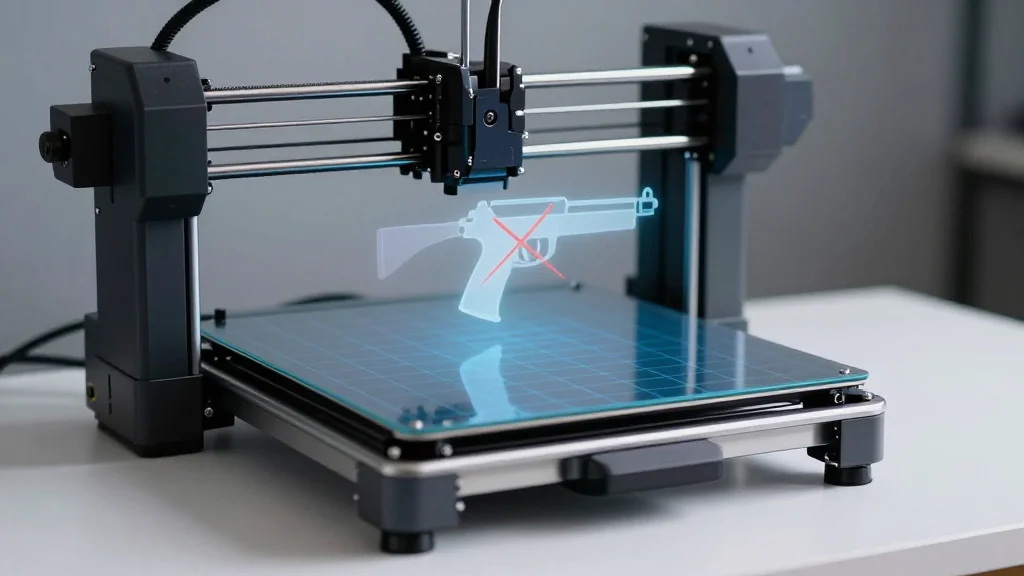
California Ghost-Gun Bill Wants 3D Printers To Play Cop, EFF Says

Why It Matters
The bill could reshape the 3D‑printing ecosystem, limiting user freedom and setting a precedent for digital‑content policing. Its enforcement risks stifling innovation while exposing users to legal and privacy risks.
Key Takeaways
- •AB 2047 mandates state-certified detection software for 3D printers
- •EFF argues the law is technically infeasible and invites surveillance
- •Proprietary slicer software could become default, marginalizing open source
- •False positives risk penalizing legitimate hobbyists and small businesses
Pulse Analysis
The rise of inexpensive desktop 3D printers has sparked a regulatory backlash as lawmakers grapple with the so‑called “ghost‑gun” problem. California’s AB 2047 joins similar proposals in New York and Washington, seeking to embed a state‑approved algorithm that flags and blocks digital files capable of producing firearm parts. Proponents argue the measure will curb the untraceable weapons market, but the legislation also marks a broader shift toward pre‑emptive digital content control, raising questions about the balance between public safety and technological freedom.
From a technical standpoint, the EFF’s analysis highlights fundamental flaws in the bill’s approach. 3D printers rely heavily on slicer software to translate models into G‑code, and minor alterations to either the geometry or the code can easily evade pattern‑matching algorithms. Moreover, mandating a single, state‑certified software stack would effectively outlaw open‑source tools, forcing manufacturers to adopt proprietary solutions that may lack transparency. The resulting ecosystem could generate false positives, inadvertently penalizing users who simply print household items or commercial prototypes, and create a chilling effect on innovation within the rapidly expanding additive‑manufacturing sector.
Beyond the immediate hardware implications, AB 2047 sets a concerning precedent for digital rights. By criminalizing the circumvention of scanning software, the bill blurs the line between legitimate safety measures and invasive surveillance, potentially extending to other content categories such as copyrighted material. Industry stakeholders warn that such regulatory overreach could drive developers offshore or spur the creation of underground workarounds, undermining the very security goals the legislation seeks to achieve. As the debate unfolds, the intersection of technology, law, and civil liberties will remain a focal point for policymakers and the maker community alike.
California Ghost-Gun Bill Wants 3D Printers To Play Cop, EFF Says
Comments
Want to join the conversation?
Loading comments...