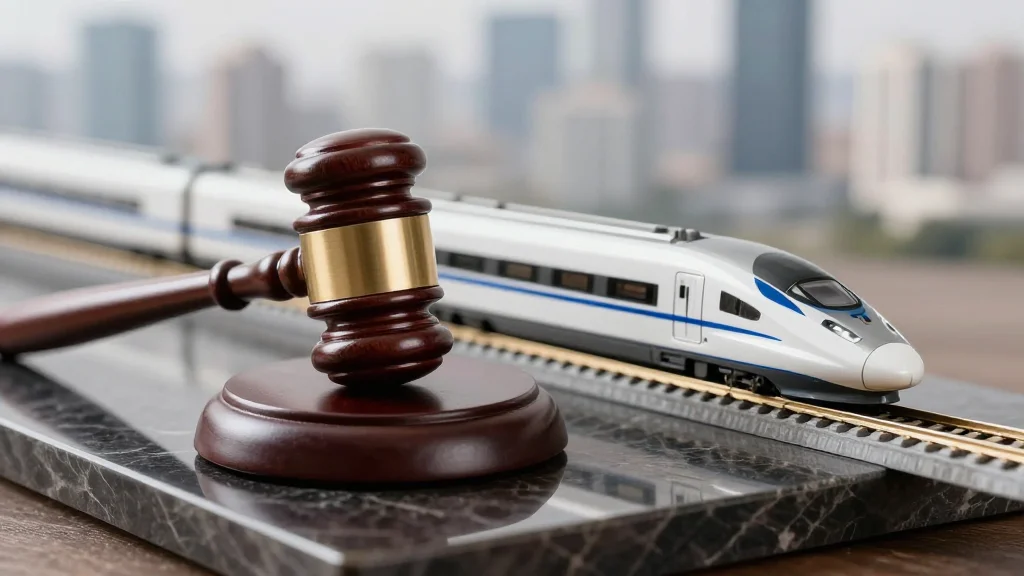
California Mayors Threaten Lawsuit Over High‑Speed Rail Tax‑Capture Plan

Why It Matters
The confrontation pits a statewide infrastructure ambition against constitutional protections for local tax revenues, highlighting a broader tension in California over how megaprojects are financed. A successful lawsuit could halt or reshape the high‑speed rail’s funding model, forcing the state to find new revenue streams or risk further delays. Beyond the rail project, the case may set precedent for any future state‑level initiative that seeks to tap local tax increments, influencing the balance of power between state agencies and municipal governments across the nation. For investors and developers, the outcome will affect the risk calculus of large‑scale public‑private partnerships in California. Uncertainty over funding mechanisms can delay construction, increase costs and deter private capital, while a clear legal framework could unlock new financing opportunities for infrastructure projects nationwide.
Key Takeaways
- •Nine California mayors, led by Fresno Mayor Jerry Dyer, threaten to sue the CHSRA over a tax‑capture proposal.
- •The plan would divert a share of future property and sales‑tax growth within a half‑mile of stations.
- •Mayors cite Proposition 1A, arguing the scheme violates constitutional protection of local tax revenues.
- •CHSRA estimates the Merced‑to‑Bakersfield segment will cost $34.76 billion; total project could rise to $231 billion.
- •$14 billion has already been spent on the high‑speed rail project.
Pulse Analysis
The high‑speed rail dispute is more than a local budgeting skirmish; it is a litmus test for California’s ability to fund massive infrastructure without overstepping constitutional boundaries. Historically, the state has relied on a patchwork of federal grants, state bonds and local contributions to keep projects moving. The CHSRA’s turn to tax‑increment financing reflects a growing trend of agencies seeking to monetize future revenue streams, a practice that has worked for transit corridors in other states but remains contentious when it encroaches on locally protected funds.
If the courts side with the mayors, the CHSRA will be forced to abandon its most aggressive financing tool, likely pushing the agency back toward the ballot‑initiative route that has historically been California’s fallback for large projects. That could delay the rail’s completion by years, increase reliance on uncertain federal funding, and raise the overall cost due to inflation and financing charges. Conversely, a ruling in favor of the CHSRA could embolden other state entities to adopt similar tax‑capture models, potentially reshaping the fiscal landscape for everything from water projects to broadband expansion.
From an investor perspective, the case underscores the importance of regulatory risk assessment in infrastructure deals. Projects that hinge on novel financing mechanisms must now factor in the possibility of constitutional challenges, which can erode expected cash flows and trigger costly litigation. In the longer term, the outcome may drive a shift toward more transparent, voter‑approved financing structures, ensuring that large‑scale public works align with both legal constraints and public sentiment.
California Mayors Threaten Lawsuit Over High‑Speed Rail Tax‑Capture Plan
Comments
Want to join the conversation?
Loading comments...