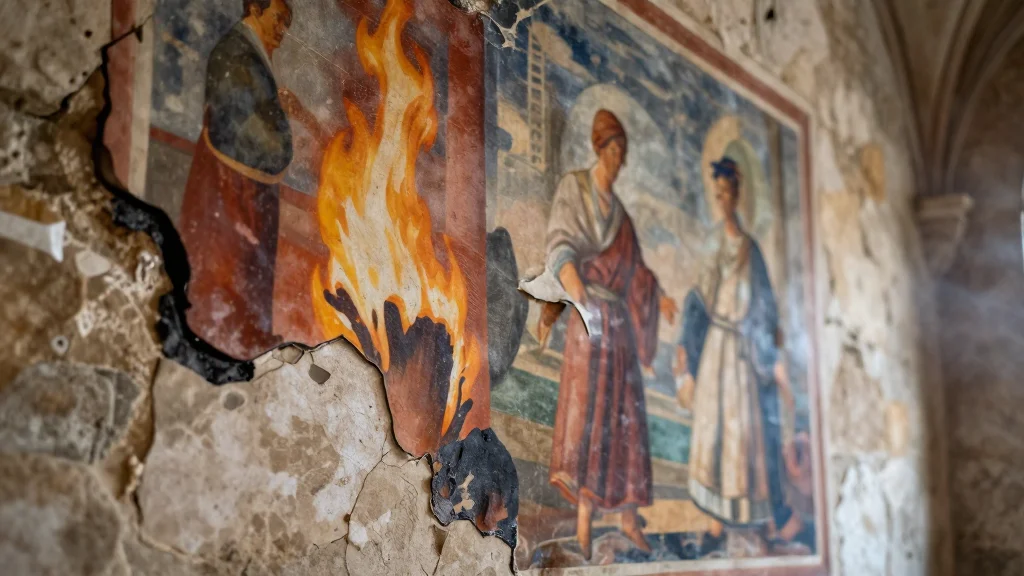
Catalan Museum Has Yet to Follow Through on Court Order to Return Contested Murals to Aragon Monastery
Why It Matters
The stalemate pits legal restitution rights against conservation risks, setting a precedent for how European museums handle contested historic artworks. It also pressures institutions to balance public access with the duty to preserve fragile cultural assets.
Key Takeaways
- •Supreme Court ordered MNAC to return Sijena murals to Aragon
- •Murals removed in 1936, restored and displayed since 1961
- •Museum cites climate‑control concerns over transport and new venue
- •Transfer would involve 150‑mile journey to Villanueva de Sijena
- •Delay highlights tension between heritage claims and conservation logistics
Pulse Analysis
The Sijena murals, often dubbed the "Sistine Chapel of Romanesque art," represent a rare convergence of English miniature and Byzantine influences, making them a cornerstone of medieval European heritage. Their removal during the 1936 fire and subsequent restoration by MNAC created a complex ownership narrative that culminated in a 2025 Supreme Court ruling mandating their return to the Royal Monastery in Aragon. While the legal victory affirmed regional claims, it also revived a debate over the stewardship responsibilities of national museums when handling artifacts with contested provenance.
Conservation experts warn that the murals' delicate condition demands strict climate control, a factor MNAC emphasizes as a barrier to relocation. The works currently reside in a sealed, climate‑regulated section of the museum's Oval Hall, a setting that protects them from humidity fluctuations and temperature swings. Transporting the canvases 150 miles to Villanueva de Sijena would expose them to vibration, light, and varying environmental conditions, potentially accelerating deterioration. These technical arguments illustrate the broader challenge museums face: reconciling legal obligations with the scientific imperatives of preservation.
Beyond the immediate dispute, the case signals a shifting landscape for cultural property disputes across Europe. Courts are increasingly willing to enforce restitution, prompting museums to re‑evaluate acquisition histories and develop robust de‑accession protocols. At the same time, the incident underscores the need for collaborative solutions—such as joint custodianship or temporary loans—to satisfy both legal mandates and conservation standards. As heritage institutions navigate these pressures, the Sijena saga may become a benchmark for balancing rightful ownership with the practicalities of safeguarding irreplaceable art for future generations.
Catalan Museum Has Yet to Follow Through on Court Order to Return Contested Murals to Aragon Monastery
Comments
Want to join the conversation?
Loading comments...