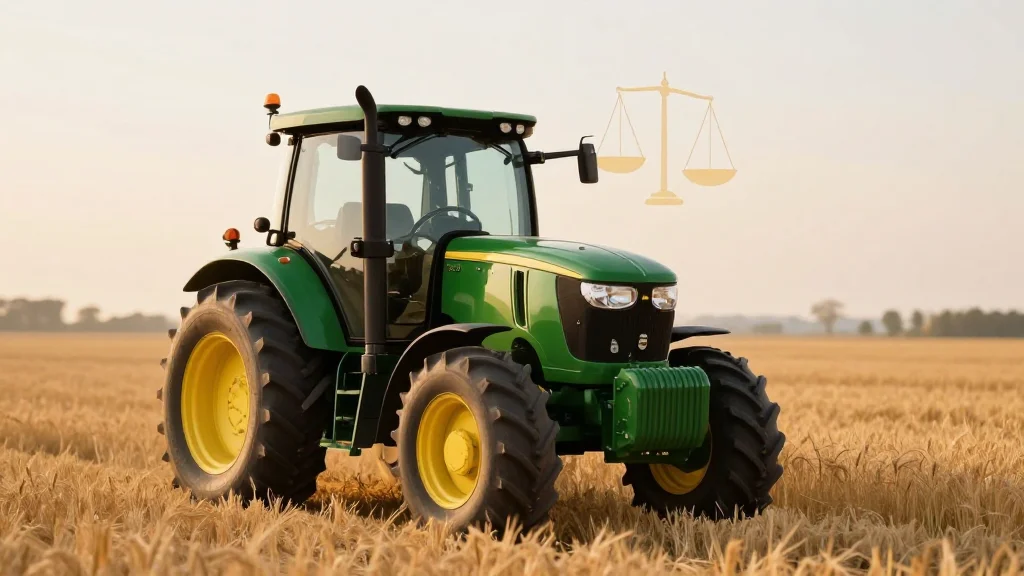
Deere Agrees to Pay $99M to Settle 'Right to Repair' Lawsuit
Why It Matters
The settlement underscores mounting pressure on manufacturers to open repair ecosystems, potentially reshaping aftermarket revenue streams and competitive dynamics in agriculture technology.
Key Takeaways
- •Deere settles right-to-repair case for $99 million
- •Settlement covers repairs from Jan 2018 onward
- •Injunctive relief mandates broader diagnostic tool access
- •FTC lawsuit against Deere remains unresolved
- •Industry pressure may force more open repair policies
Pulse Analysis
The right‑to‑repair movement has gained traction across sectors, but its impact is especially pronounced in agriculture where equipment downtime directly affects food supply chains. John Deere, the dominant player in farm machinery, has long relied on proprietary software and dealer networks to control maintenance services. Critics argue that such practices inflate repair costs and limit farmers’ autonomy, prompting class‑action suits that challenge the status quo and push for more transparent service models.
Deere’s $99 million settlement, while not an admission of guilt, signals a strategic shift toward appeasing regulators and customers alike. By establishing a fund for affected owners and agreeing to injunctive measures that require broader access to diagnostic data, the company may see a modest erosion of its aftermarket monopoly. However, the financial hit is modest relative to Deere’s multi‑billion‑dollar revenue, and the pending FTC case could introduce further compliance costs or mandate structural changes to its service ecosystem.
Legislators in several states are drafting right‑to‑repair bills that could impose mandatory data‑sharing standards, echoing similar efforts in the electronics and automotive industries. If such laws gain traction, manufacturers like Deere will need to redesign hardware and software architectures to accommodate third‑party repairs without compromising safety or performance. The settlement thus serves as a bellwether, suggesting that proactive concessions may be preferable to protracted litigation as the industry navigates evolving regulatory expectations and consumer demand for affordable, timely equipment repairs.
Deere Agrees to Pay $99M to Settle 'Right to Repair' Lawsuit
Comments
Want to join the conversation?
Loading comments...