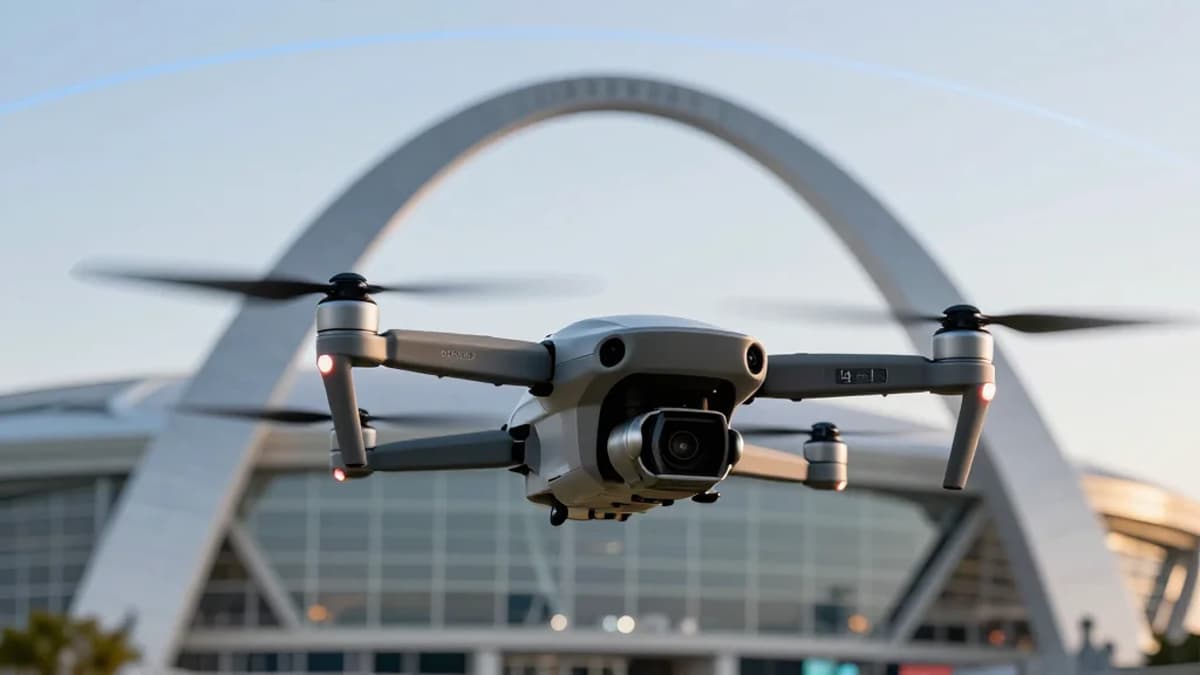
Drone Operator Who Flew Near California Football Game Charged with Criminal Flight Violations
•February 27, 2026
0
Companies Mentioned


Why It Matters
The case signals heightened federal enforcement of no‑drone zones at large venues, underscoring legal risks for hobbyists and commercial operators alike.
Key Takeaways
- •Guo charged with Class A misdemeanor for airspace violation
- •Flew DJI Mavic Pro above 2,300 feet near stadium
- •FAA TFR prohibited drones within 3‑nautical‑mile radius
- •First criminal prosecution for drone use at major sports event
- •FBI expanding no‑drone zones for upcoming 2026 World Cup
Pulse Analysis
The Federal Aviation Administration’s temporary flight restrictions (TFRs) have become a cornerstone of event security, especially for venues drawing tens of thousands of spectators. By designating a three‑nautical‑mile exclusion zone, the FAA aims to prevent airborne threats and preserve air traffic control integrity. Recent years have seen a surge in unauthorized drone activity at concerts, stadiums, and political rallies, prompting agencies to tighten monitoring and impose steep penalties for violations.
Guo’s prosecution marks a rare instance where a drone operator faces criminal charges for breaching a TFR at a high‑profile sports event. While most infractions result in civil fines or warnings, the government pursued a Class A misdemeanor, reflecting concerns over public safety and the potential for interference with emergency response aircraft. The case also highlights procedural nuances, such as the requirement for a remote‑pilot certificate and the legal consequences of providing false statements to law‑enforcement officials. If convicted, Guo could face up to one year in prison, supervised release, and a $100,000 fine, setting a precedent for future enforcement actions.
Looking ahead, the enforcement landscape is poised to intensify as the 2026 FIFA World Cup approaches, with the FBI already establishing permanent no‑drone zones around stadiums exceeding 30,000 seats. Operators must stay informed about evolving regulations, obtain proper certifications, and respect altitude limits to avoid severe penalties. For businesses that incorporate drones into marketing or logistics, implementing compliance protocols and real‑time geofencing technology will be essential to mitigate legal exposure and maintain operational continuity.
Drone operator who flew near California football game charged with criminal flight violations
0
Comments
Want to join the conversation?
Loading comments...