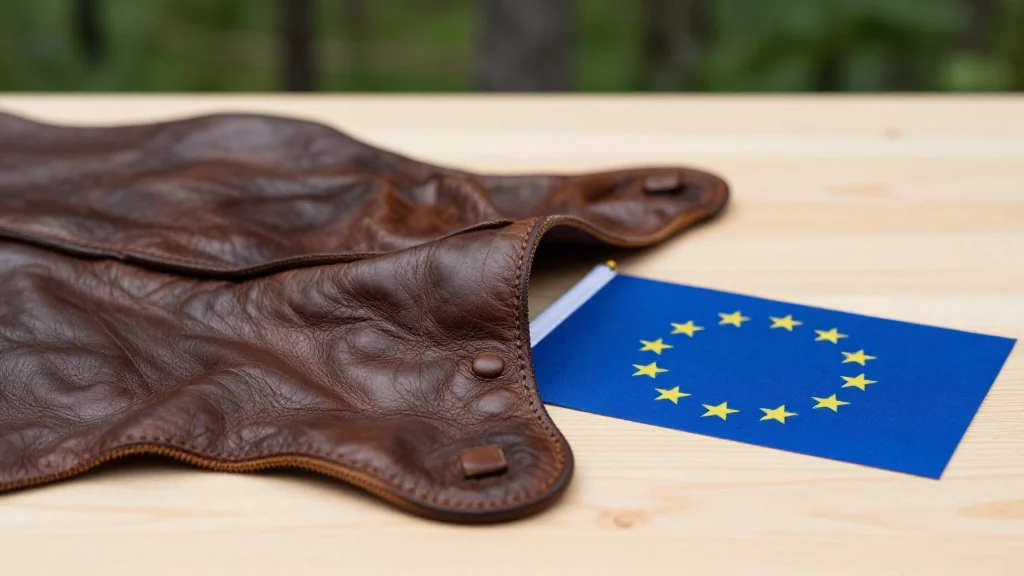
EU Moves to Drop Leather From Deforestation Law After Industry Lobbying
Companies Mentioned

Louis Vuitton
Tiffany & Co.
TIF
Why It Matters
Excluding leather weakens the EU’s deforestation safeguards and allows hides from deforested land to enter the market unchecked, undermining climate and human‑rights objectives.
Key Takeaways
- •EU proposes leather exemption via delegated act.
- •Lobbying groups met EU officials 22+ times last year.
- •Studies link leather supply to 42% of deforestation drivers.
- •Exemption could let hides bypass due‑diligence requirements.
- •€125 bn industry (~$147 bn) may avoid regulation.
Pulse Analysis
The European Union’s Deforestation Regulation (EUDR) was adopted to break the link between EU consumption and forest loss abroad. Effective Dec. 30 for large firms, it obliges importers of seven high‑risk commodities—cattle, wood, cocoa, soy, palm oil, coffee and rubber—to prove their products are not tied to recent deforestation. On May 4, the European Commission introduced a delegated act that would remove leather, hides and skins from Annex I, the list of covered goods. By using a delegated act, the Commission can amend non‑essential parts of the law without a full parliamentary debate, accelerating the change before the end‑year rollout.
The move follows an intensive lobbying campaign by the leather sector, whose trade groups COTANCE and UNIC logged more than 22 meetings with EU officials in 2023 alone. Scientists, however, have repeatedly shown that the leather chain is a major driver of forest conversion. A Nature Food study attributes 42 % of global commodity‑driven deforestation between 2001‑2022 to pasture expansion for meat and leather, while other estimates link hides to the loss of roughly 31,000 hectares each year. Excluding leather therefore creates a regulatory loophole: beef from deforested land stays restricted, but the same animal’s hide could circulate freely.
If the exemption is finalized, a €125 billion (≈$147 billion) industry could sidestep the EU’s toughest supply‑chain due‑diligence rules, weakening the credibility of the EUDR and encouraging green‑washing by luxury brands that source leather from high‑risk regions such as the Amazon and Gran Chaco. Environmental NGOs warn that the gap will undermine climate targets and Indigenous rights, while businesses that have invested in certified leather may face competitive disadvantages. Policymakers will need to balance industry pressure with scientific evidence, possibly by tightening traceability requirements for hides or keeping leather within the regulation’s scope.
EU moves to drop leather from deforestation law after industry lobbying
Comments
Want to join the conversation?
Loading comments...