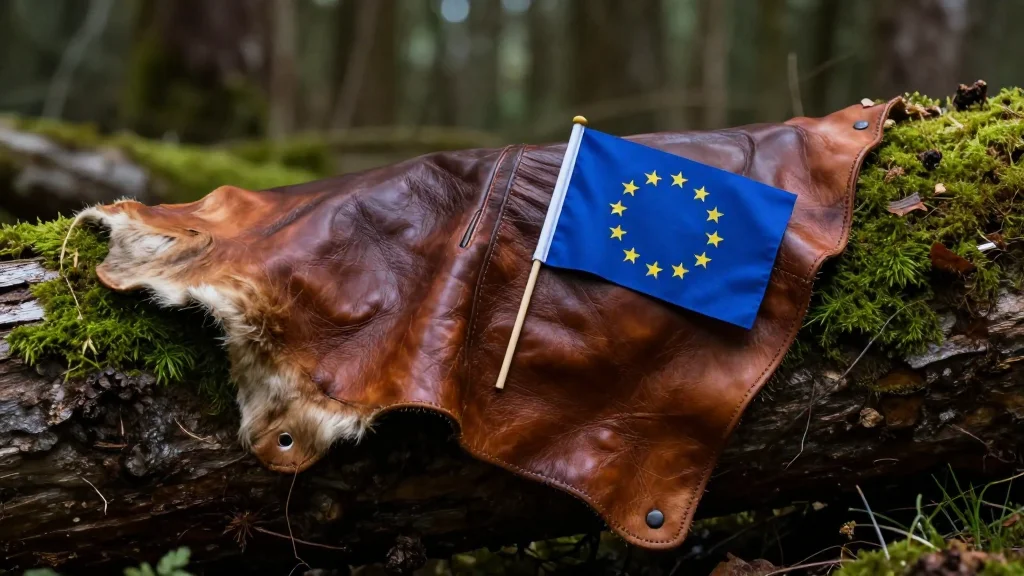
European Commission Linked Leather to Deforestation, Then Ignored It
Why It Matters
Removing leather from the EUDR undermines the EU’s strategy to curb commodity‑driven deforestation and sets a precedent for industry‑driven carve‑outs, potentially eroding global supply‑chain standards.
Key Takeaways
- •Leather linked to 390 km² (149 sq mi) forest loss yearly
- •Commission proposes dropping leather from EUDR despite evidence
- •Industry lobbying held 22+ meetings with EU officials since 2021
- •Exclusion could create traceability loophole for high‑value hides
Pulse Analysis
The EU’s Deforestation Regulation is a cornerstone of its climate agenda, aiming to halt forest loss linked to imported commodities. Recent Commission staff work reveals that leather, derived from bovine hides, could be responsible for up to 390 km² of forest cleared annually—an area twice the size of Pisa—accounting for roughly 17 % of the regulation’s total deforestation footprint. Economic analyses estimate that keeping leather in the scope could generate €979 million to €1.96 billion ($1.1 billion to $2.28 billion) in environmental benefits each year, while compliance costs would be modest, around €16.7 million ($19.4 million).
Despite these figures, the Commission is moving to carve leather out of the EUDR, citing its lower economic value and the complexity of its supply chain. The decision follows a concerted lobbying effort by the leather industry, which has logged more than 22 meetings with EU lawmakers since 2021, many in the past year as the regulation neared implementation. Industry groups argue that leather is merely a by‑product of beef production and should not be treated as a primary driver of deforestation, a stance supported by a single industry‑funded study lacking peer review. In contrast, peer‑reviewed research published in Nature Food and other journals identifies cattle production—including leather—as a leading cause of commodity‑driven forest loss worldwide.
The exclusion of leather threatens to create a regulatory loophole, allowing a high‑value product to bypass the stringent traceability and sustainability checks applied to beef. This could dilute the EUDR’s impact, encourage similar carve‑outs in other sectors, and weaken the EU’s credibility as a climate leader. Policymakers must balance economic concerns with environmental imperatives, ensuring that decisions are transparent and adaptable as scientific evidence evolves. Maintaining leather within the EUDR would close the gap, reinforce supply‑chain integrity, and signal a firm commitment to ending deforestation linked to European consumption.
European Commission linked leather to deforestation, then ignored it
Comments
Want to join the conversation?
Loading comments...