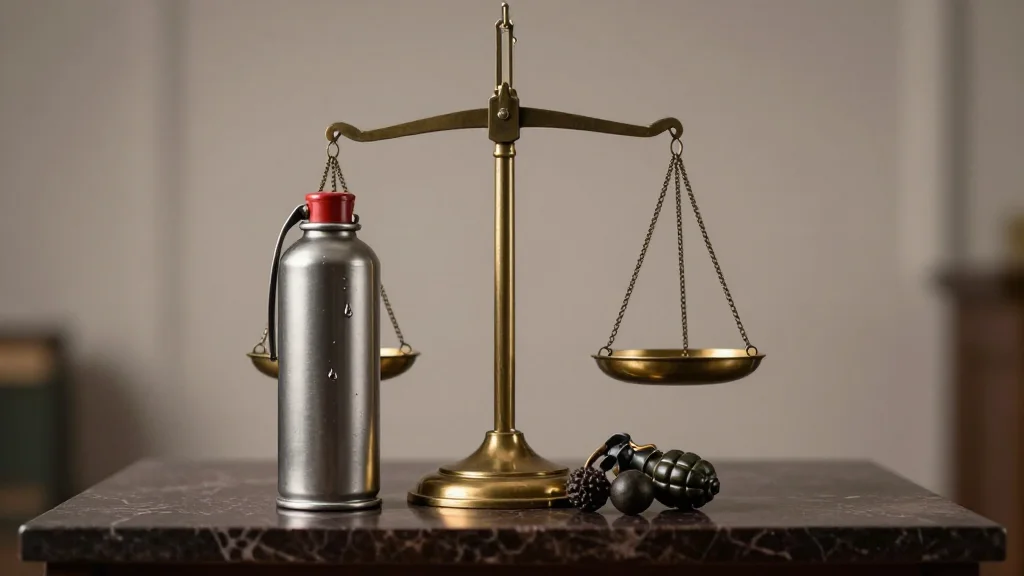
Feds Clear to Use Tear Gas, Chemicals at Portland ICE Facility
Why It Matters
Restoring chemical‑weapon use gives ICE broader authority to manage protests, shaping civil‑rights litigation and public‑order policy nationwide. The ruling also delineates the limits of judicial injunctions on federal law‑enforcement tactics.
Key Takeaways
- •Ninth Circuit rejected plaintiffs' claim of constitutional bodily‑integrity right
- •Injunctions deemed too vague, hindering practical crowd‑control operations
- •Split court: Trump appointees in majority, Biden judge dissented
- •Decision re‑enables tear‑gas, pepper‑ball deployment at Portland ICE site
- •Ruling may influence similar protests and federal injunctions elsewhere
Pulse Analysis
The legal battle over Portland’s ICE facility began in early 2026 when protesters, journalists and nearby residents sued the federal government, alleging that tear‑gas, pepper‑ball and other chemical munitions violated First Amendment rights and a claimed right to bodily integrity. District judges issued temporary restraining orders that barred any chemical deployment near the building and the adjacent low‑income housing complex. Those orders sparked a rapid appeal to the Ninth Circuit, where the government argued the injunctions were overly broad and threatened public safety.
In its 2026 rulings, the Ninth Circuit majority held that the Constitution does not guarantee a substantive due‑process right to avoid exposure to crowd‑control chemicals. The judges also found the lower‑court orders vague—requiring agencies to predict wind patterns and chemical dispersion—making compliance impossible. By siding with the government, the panel underscored the principle that courts should not impede law‑enforcement tools essential for protecting federal facilities, especially when the threat of violent disruption exists. The dissent warned of health risks, highlighting the tension between operational flexibility and civil‑rights protections.
The decision reverberates beyond Portland. Federal agencies across the country now have a stronger precedent to challenge restrictive injunctions that limit non‑lethal force. Civil‑rights groups may need to craft more narrowly tailored claims, focusing on specific instances of excessive force rather than broad constitutional arguments. For policymakers, the case signals a judicial willingness to prioritize public‑order considerations over expansive interpretations of bodily‑integrity rights, shaping future debates on protest policing and the permissible scope of chemical crowd‑control measures.
Feds clear to use tear gas, chemicals at Portland ICE facility
Comments
Want to join the conversation?
Loading comments...