Florida Supreme Court Tackles AI Hallucinations with New Rule Applicable to All State Courts
Key Takeaways
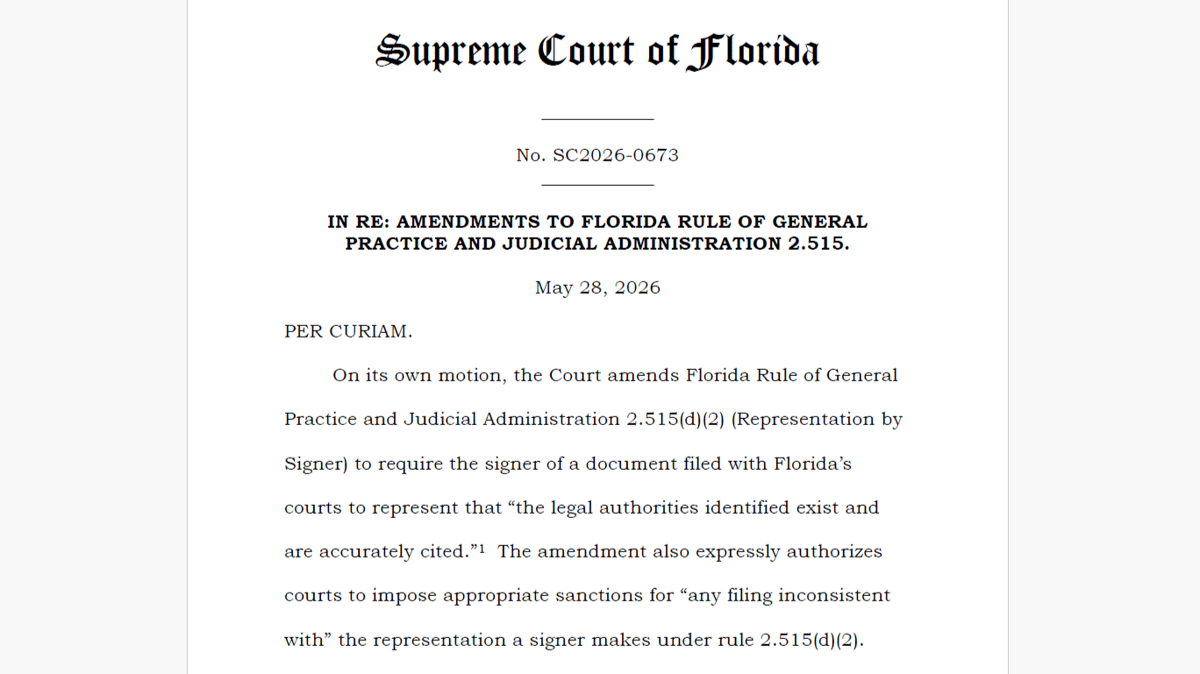
- •New rule mandates accurate citation certification for all court filings
- •Applies to attorneys and unrepresented parties alike
- •Courts can sanction false citations with fines, contempt, or dismissal
- •Effective June 15, 2026; comments due Aug. 11
- •Addresses AI‑generated “hallucinations” in legal documents
Pulse Analysis
Generative AI tools have surged in legal research, but their propensity to fabricate non‑existent case law—known as "hallucinations"—has begun to clutter court dockets. Judges across the nation report an uptick in filings riddled with bogus citations, forcing clerks to spend valuable time verifying references. Florida’s Supreme Court, recognizing the systemic risk, introduced a uniform certification requirement to restore confidence in the record and deter reliance on unchecked AI outputs.
The new amendment to Rule 2.515(d)(2) expands the traditional attorney certification to include pro se litigants, demanding a sworn statement that every authority cited truly exists and is correctly quoted. By granting courts explicit authority to sanction violations—ranging from reprimands and contempt findings to striking documents or dismissing cases—the rule creates a tangible deterrent. Practitioners must now double‑check AI‑generated footnotes, incorporate manual verification steps, and be prepared to defend the accuracy of every citation, lest they face costly fees or procedural setbacks.
Beyond Florida, the decision signals a broader regulatory shift as courts grapple with AI’s rapid integration. Legal tech vendors may respond by enhancing citation‑validation features, while law schools could amplify training on AI ethics and verification. Other states observing Florida’s approach might adopt similar statutes, fostering a national move toward stricter oversight of AI‑assisted legal drafting. Ultimately, the rule underscores the balance courts seek: leveraging AI efficiency while safeguarding the fidelity of the judicial record.
Florida Supreme Court Tackles AI Hallucinations with New Rule Applicable to All State Courts
Comments
Want to join the conversation?