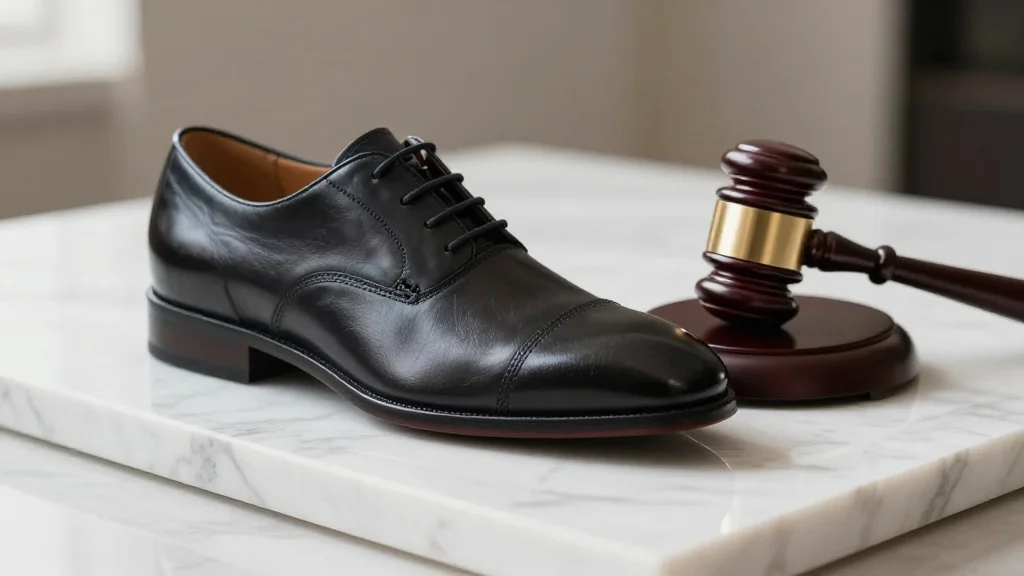
FTC Slaps Oak Street Bootmakers Over ‘More Than Made in USA’ Claims
Why It Matters
False Made‑in‑USA claims erode consumer trust and give unfair advantage to brands that falsely tout domestic production, prompting tighter enforcement that will reshape labeling practices across U.S. manufacturers.
Key Takeaways
- •FTC fined Oak Street Bootmakers $75,000 for false Made‑in‑USA claims.
- •Company used Dominican Republic uppers and Brazilian outsoles in “American” shoes.
- •Settlement requires clear origin labeling and proof before future claims.
- •FTC crackdown follows Trump’s executive order on truthful American‑origin advertising.
- •Consumers misled paid hundreds per pair for partially foreign‑made footwear.
Pulse Analysis
The FTC’s recent action against Oak Street Bootmakers underscores a growing regulatory focus on the integrity of Made‑in‑USA claims. Under the FTC Act and the Made‑in‑U.S.A. Labeling Rule, any product bearing the phrase must be "all or virtually all" domestic, a standard the bootmaker failed to meet by importing key components from the Dominican Republic and Brazil. By enforcing a $75,000 penalty and demanding transparent labeling, the agency signals that deceptive origin statements will no longer be tolerated, especially as consumer demand for American‑made goods rises.
For Oak Street, the settlement forces a rapid overhaul of its marketing and supply‑chain verification processes. The brand, known for its Goodyear‑welted construction and use of premium U.S. leathers, now must disclose the foreign origin of uppers and outsoles on each product page, and it must retain documented proof before any future claims. This shift not only impacts its pricing strategy—customers paid $286 to $524 per pair under the false premise of full domestic production—but also pressures other niche footwear companies that rely on mixed‑origin sourcing to reassess their labeling to avoid similar penalties.
Looking ahead, the FTC’s enforcement aligns with President Trump’s March executive order that elevated truthful American‑origin advertising as a priority, even though the legal standard remains unchanged. Brands across apparel, electronics, and home goods should anticipate stricter scrutiny, higher fines, and possible DOJ involvement for repeat offenders. Companies can mitigate risk by implementing robust provenance tracking, using third‑party verification, and adopting clear, qualified language such as "Made in the USA with imported components" to maintain consumer confidence while complying with evolving regulations.
FTC Slaps Oak Street Bootmakers Over ‘More Than Made in USA’ Claims
Comments
Want to join the conversation?
Loading comments...