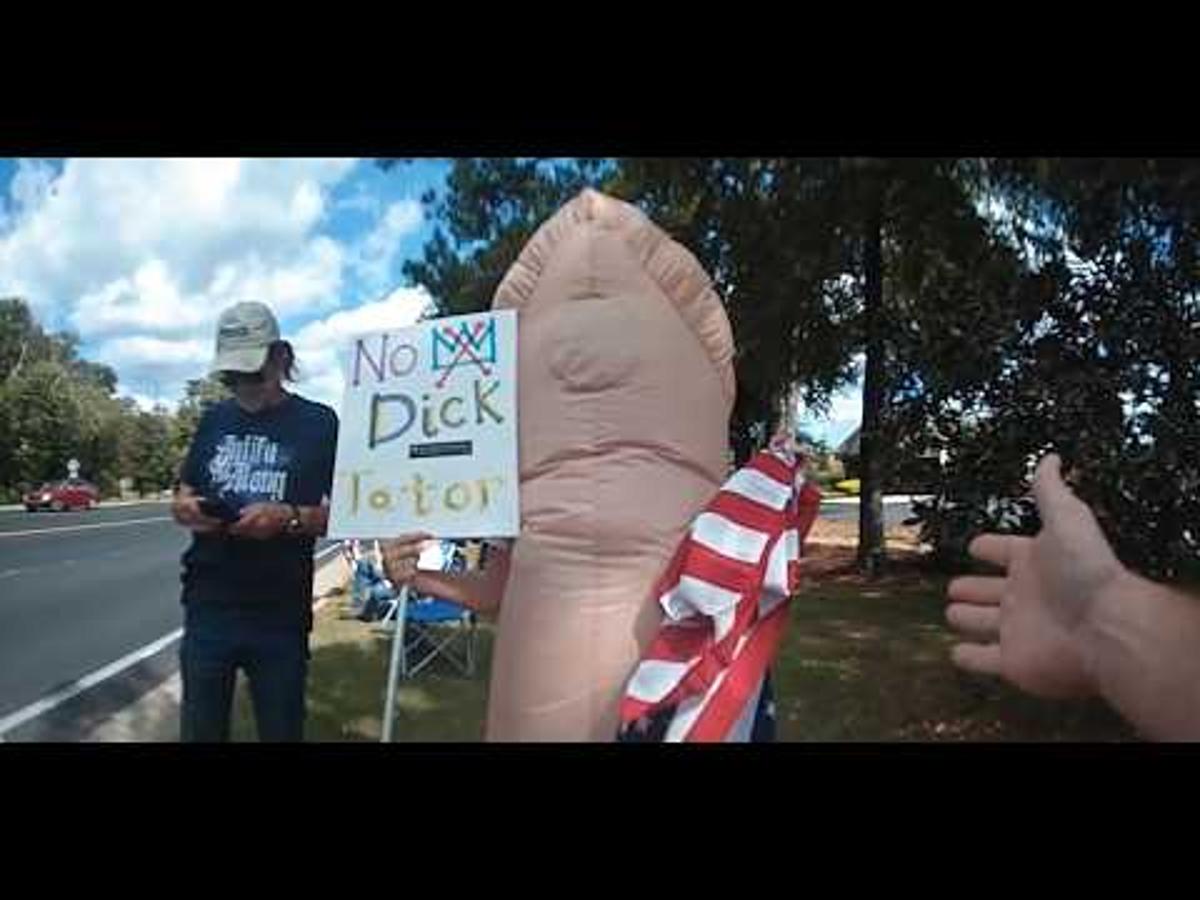
Judge Acquits Penis Costume-Wearing Grandma While Saying Some Dumb Stuff About Probable Cause
Why It Matters
The ruling highlights how courts can interpret probable cause to limit First Amendment protections, affecting future protests and police accountability nationwide.
Key Takeaways
- •Judge acquits Alabama protester, cites possible probable cause.
- •Officer’s “family town” rationale highlights subjective free‑speech enforcement.
- •Case underscores challenges of civil‑rights suits after acquittal.
- •Local officials labeled costume “obscene,” sparking community standards debate.
- •Prosecutor’s claim “no right to wear erect penis” draws national criticism.
Pulse Analysis
The Fairhope incident underscores a growing clash between expressive protest and local law enforcement. When Renea Gamble donned an inflatable penis and a "No Dick‑Tator" sign at an anti‑Trump rally, officers arrested her, citing public safety and community standards. Video evidence later revealed the officer’s personal offense, yet the municipal judge’s acquittal hinged on a narrow probable‑cause analysis, illustrating how courts may prioritize officer discretion over clear First Amendment rights. This case adds to a litany of recent disputes where symbolic speech—whether a flag, a mask, or a novelty costume—faces legal scrutiny.
Legal experts note that the judge’s reference to probable cause, despite acknowledging the officer’s bias, creates a precarious precedent. Probable cause traditionally requires an objective basis for arrest, not merely a subjective belief that speech is offensive. By allowing that standard to stand, the ruling may deter plaintiffs from pursuing civil‑rights claims, as the burden to prove constitutional violation becomes higher. Moreover, the acquittal does not erase the potential for future litigation; Gamble could still seek damages in federal court, where the probable‑cause argument may be examined under a stricter First Amendment lens.
Beyond the courtroom, the episode reflects broader tensions over community standards and police authority. Local officials labeled the costume "obscene," prompting a listener poll that humorously crowned the inflatable penis "Alabamian of the Year," signaling public pushback against censorship. As municipalities grapple with defining acceptable protest conduct, the Fairhope case serves as a cautionary tale: subjective moral judgments by officers can quickly become national flashpoints, prompting policy reviews, body‑camera mandates, and renewed advocacy for robust free‑speech protections. Stakeholders—from civil‑rights groups to law‑enforcement agencies—must balance public order with constitutional guarantees to avoid eroding public trust.
Judge Acquits Penis Costume-Wearing Grandma While Saying Some Dumb Stuff About Probable Cause
Comments
Want to join the conversation?
Loading comments...