Judge Overturns H-1B Visa Fee Barrier to Foreign-Born Physicians
Why It Matters
Eliminating the prohibitive fee removes a major obstacle to recruiting foreign physicians, directly addressing acute provider shortages in underserved areas. The case also sets a legal precedent on the limits of executive authority over immigration fees.
Key Takeaways
- •Judge nullifies $100,000 H‑1B fee for foreign physicians
- •Fee would have raised total H‑1B cost to $3,380 normally
- •250,000 international medical graduates represent 24.7% of U.S. doctors
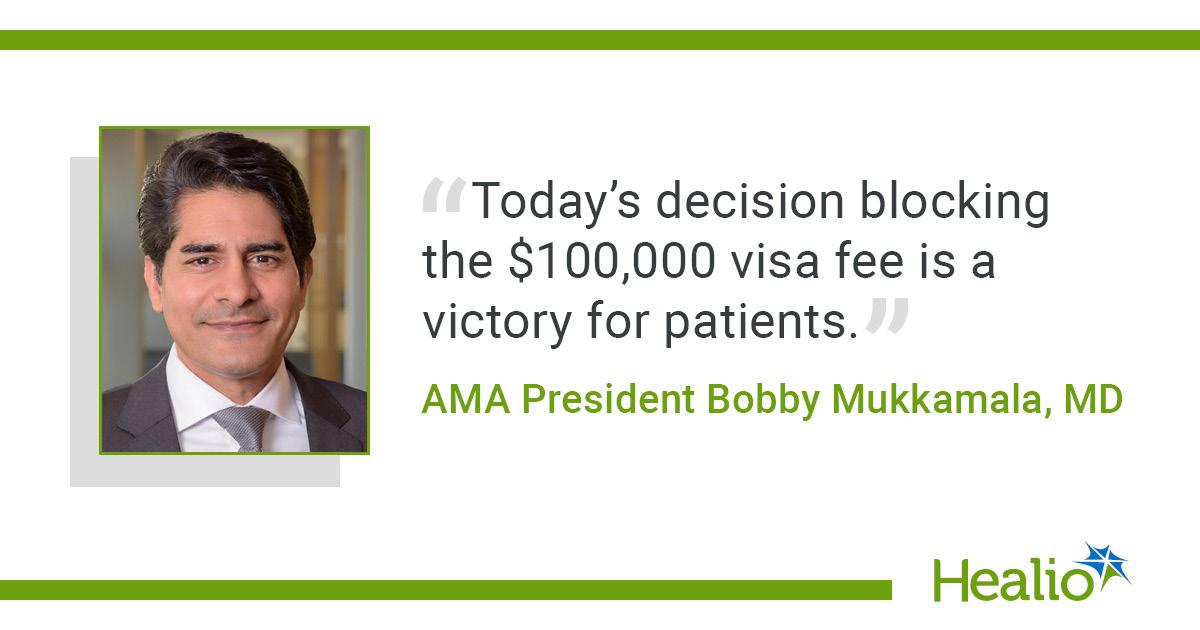
- •AMA hails ruling as win for underserved communities
- •Bipartisan H.R. 7961 aims to exempt health‑care workers from fees
Pulse Analysis
The federal court’s decision overturning the $100,000 H‑1B surcharge underscores the tension between immigration policy and health‑care workforce needs. While the administration argued the fee would fund broader immigration enforcement, the judge found it functioned as a tax that only Congress can impose. This legal reasoning reaffirms the Administrative Procedure Act’s guardrails, reminding agencies that fee structures must be grounded in statutory authority rather than executive fiat.
Physician shortages have intensified across rural and low‑income communities, with international medical graduates (IMGs) filling nearly a quarter of all U.S. doctor positions. The proposed fee would have added roughly $96,620 to the cost of hiring each IMG, a price many hospitals could not absorb. By restoring the standard $3,380 fee, the ruling preserves a critical pipeline of talent, supporting the American Medical Association’s call for policies that expand, not restrict, access to care.
Legislatively, the controversy has spurred bipartisan action. H.R. 7961, introduced in March, seeks to carve out a permanent exemption for health‑care workers from any future fee hikes, signaling broad consensus on the sector’s unique labor demands. Although the Trump administration may appeal, the case highlights how immigration fees can become flashpoints for broader debates on executive power, labor market flexibility, and the nation’s capacity to meet health‑care needs. Stakeholders will watch the appellate process closely, as its outcome could shape immigration fee policy for years to come.
Judge overturns H-1B visa fee barrier to foreign-born physicians
Comments
Want to join the conversation?
Loading comments...