Kirk‑Named Bills Grant Students Free‑Speech Suits and Mandate Religion in History Classes

Companies Mentioned
Why It Matters
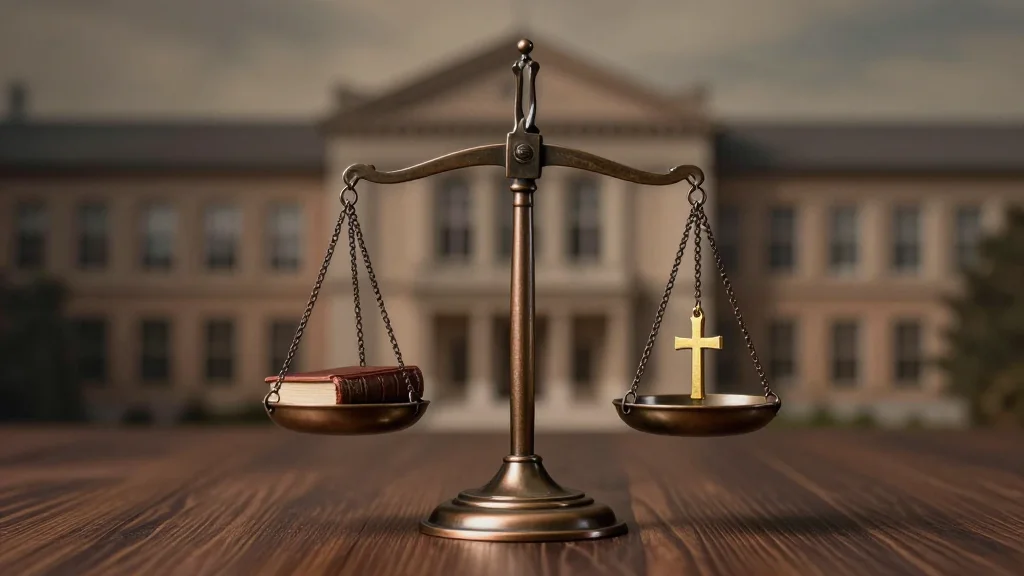
The Kansas and Tennessee statutes sit at the intersection of First Amendment jurisprudence and the longstanding debate over church‑state separation. By granting students a private right of action against colleges, Kansas effectively creates a new legal pathway that could flood courts with free‑speech lawsuits, potentially reshaping campus policies and prompting universities to adopt more restrictive speech codes to avoid litigation. In Tennessee, the mandated inclusion of religious contributions in history curricula raises questions about whether the state is endorsing a particular faith tradition, a point that could trigger Establishment Clause challenges and force courts to delineate the permissible scope of religious content in public education. Together, these laws illustrate how political branding—using Charlie Kirk’s name—can translate into concrete legal mechanisms that alter the rights and responsibilities of institutions and individuals. Beyond the courtroom, the legislation reflects a broader strategy by conservative activists to embed ideological priorities into statutory frameworks, leveraging the legislative process to achieve cultural objectives. If upheld, the laws could embolden similar efforts in other states, accelerating a nationwide shift toward legislatively driven definitions of free speech and religious education. Conversely, successful legal challenges could reaffirm judicial limits on state power, preserving existing constitutional balances.
Key Takeaways
- •Kansas enacted the "Charlie Kirk Free‑Speech Protection Act," allowing college students to sue schools for speech violations.
- •Tennessee’s "Charlie Kirk Act" requires public‑school curricula to highlight religion’s positive impact on American history.
- •More than 60 Kirk‑named bills have been introduced in over 20 states, covering everything from road naming to official remembrance days.
- •Democratic Rep. Sam McKenzie criticized the Kansas law, calling the legislation "the Charlie Kirk Saves America Act."
- •Turning Point USA spokesperson Matt Shupe said the bills show Kirk’s deep influence on efforts to restore intellectual diversity.
Pulse Analysis
The rapid rollout of Kirk‑named legislation underscores a tactical evolution in conservative lawmaking: rather than relying solely on judicial appointments or executive orders, activists are now embedding their agenda directly into state statutes. This approach offers two strategic advantages. First, it creates a durable legal infrastructure that survives changes in the executive branch, as statutes are harder to overturn than policy directives. Second, it leverages the symbolic capital of a martyr figure—Charlie Kirk—to rally grassroots support and deflect criticism, framing the bills as tributes rather than policy choices.
Historically, attempts to legislate curriculum content have met with mixed success. The 1995 "Miller v. Alabama" decision, for example, limited state control over school curricula when it intersected with religious instruction. The Tennessee law may therefore become a litmus test for how far states can go before the courts intervene. If federal courts strike down the religion‑in‑history requirement, it could signal a ceiling for similar bills, prompting activists to pivot toward more subtle policy levers, such as funding incentives for private religious schools.
In Kansas, the free‑speech suit provision could have a chilling effect on campus discourse, not by suppressing speech directly but by incentivizing institutions to pre‑emptively limit controversial speakers to avoid costly litigation. This indirect form of speech regulation mirrors the "soft censorship" tactics highlighted in earlier Supreme Court cases, where the threat of legal action, rather than an outright ban, curtails expression. Legal scholars will be watching the early cases that emerge from this law closely; a decisive ruling could either empower a new wave of student‑driven litigation or reaffirm the principle that universities retain broad discretion over campus speech. Either outcome will reshape the legal landscape for higher‑education institutions across the country.
Kirk‑Named Bills Grant Students Free‑Speech Suits and Mandate Religion in History Classes
Comments
Want to join the conversation?
Loading comments...