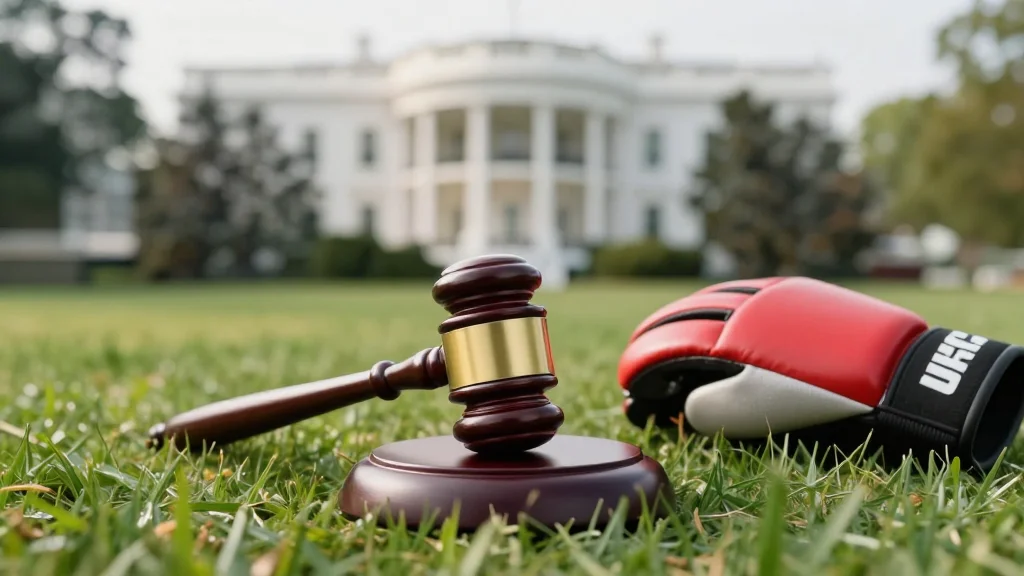
Lawsuit Targets Trump‑Backed UFC Fight on White House Lawn Over Federal Land Violations

Why It Matters
The lawsuit raises fundamental questions about the permissible use of federal parkland for private, profit‑driven events. If the court upholds the plaintiffs’ claims, it could tighten enforcement of National Park Service regulations, requiring congressional approval and environmental review for any large‑scale commercial activity on the White House grounds or other protected sites. A ruling in favor of the administration, however, would broaden executive discretion, potentially opening the door for future private spectacles on public monuments, blurring the line between state ceremony and commercial promotion. The case also spotlights the intersection of politics, celebrity culture, and legal safeguards designed to protect national heritage. Beyond the immediate fight, the dispute could influence how future administrations approach the use of iconic federal spaces for fundraising, branding, or political messaging. Stakeholders ranging from preservationists to event promoters will watch the proceedings closely, as the decision may set a legal benchmark for balancing public access, historic preservation, and private enterprise on America’s most symbolic lands.
Key Takeaways
- •Federal lawsuit filed by the Public Integrity Project on behalf of two Virginia residents seeks to block UFC Freedom 250 on the White House South Lawn.
- •Event scheduled for June 14, President Trump’s 80th birthday, features a 5,000‑seat arena and a 600‑ton steel arch built without congressional approval or an environmental review.
- •Plaintiffs allege violations of National Park Service regulations that prohibit commercial sporting events on federal parklands.
- •White House calls the suit “obstructionist, baseless, and dilatory,” arguing the fight is a properly permitted celebration of the nation’s 250th anniversary.
- •Judge Amit Mehta has been assigned; a ruling could set precedent for future private events on federal property.
Pulse Analysis
The UFC Freedom 250 case is a flashpoint for a broader tug‑of‑war between executive flexibility and statutory constraints on federal land use. Historically, the White House has hosted concerts, rallies, and diplomatic gatherings, but those events have typically been non‑commercial or directly tied to official government business. By inviting a for‑profit mixed‑martial‑arts promotion, the Trump administration is testing the elasticity of the temporary “America 250” rule, which was intended to facilitate patriotic celebrations, not private branding exercises. If the court finds the rule insufficient to bypass the National Park Service’s permitting regime, it could force future administrations to seek explicit congressional authorization for any commercial venture on the South Lawn, effectively re‑asserting legislative oversight.
From a legal strategy perspective, the plaintiffs have framed the dispute around three pillars: statutory violation, lack of environmental review, and procedural harm. Their reliance on the National Environmental Policy Act is particularly potent, as courts have repeatedly mandated NEPA compliance for large‑scale federal actions. The defense’s counterargument—that the event is a permissible celebration under an executive‑issued temporary rule—will hinge on the rule’s statutory authority and its scope. Should the judiciary side with the plaintiffs, it would reinforce NEPA’s reach and signal that even high‑profile political events cannot sidestep environmental safeguards.
Politically, the lawsuit underscores the growing scrutiny of how public symbols are leveraged for private gain. The involvement of a sitting president, a major sports franchise, and a billionaire‑backed media partner amplifies the stakes. A dismissal would embolden future administrations to blur the lines between state ceremony and commercial spectacle, potentially eroding public trust in the stewardship of national monuments. Conversely, an injunction could reaffirm the principle that America’s most sacred spaces remain insulated from commercial exploitation, preserving their historic integrity for future generations.
Lawsuit Targets Trump‑Backed UFC Fight on White House Lawn Over Federal Land Violations
Comments
Want to join the conversation?
Loading comments...