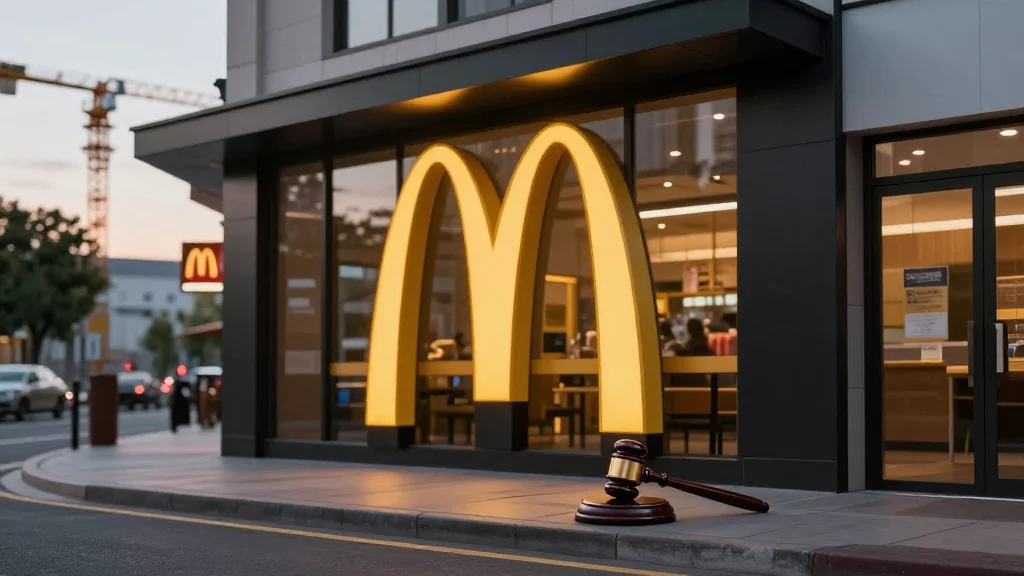
Maccas Wins Battle to Set up in 'World's Coolest Street'
Why It Matters
The decision sets a legal precedent that limits municipal power to reject large‑scale commercial projects on aesthetic grounds, while injecting significant employment and economic activity into a high‑profile urban precinct.
Key Takeaways
- •VCAT overturned Darebin Council’s rejection of McDonald’s High Street plan.
- •$2 million AUD (~$1.3 million USD) investment approved for 24/7 outlet.
- •Project promises 200 jobs during construction and operation.
- •Petition gathered 11,000 signatures opposing “cool‑vibe” disruption.
- •Decision highlights limits of councils over corporate land‑use approvals.
Pulse Analysis
The Victorian Civil and Administrative Tribunal’s (VCAT) decision underscores a growing tension between local planning autonomy and state‑level commercial interests. By ruling that it cannot assess a developer’s brand image or perceived cultural fit, VCAT effectively narrows the scope of council objections, reinforcing a legal framework that favors economically driven projects. This shift may encourage other fast‑food giants and large retailers to challenge community‑based rezoning decisions, especially in heritage‑rich or boutique districts where character arguments have traditionally held sway.
Economically, the approved site represents a modest but notable infusion of capital into Melbourne’s inner‑north. McDonald’s estimates a $2 million AUD outlay—roughly $1.3 million USD—covering fit‑out, equipment, and local supply contracts. The promise of 200 jobs, split between construction and ongoing service roles, aligns with the chain’s broader strategy to position franchisees as community employers. For a suburb grappling with post‑pandemic retail strain, the development could stimulate foot traffic and ancillary spending, offering a counterbalance to the vacancy left by the fire‑damaged property.
Culturally, the controversy highlights how “cool” branding can clash with corporate expansion. High Street’s reputation, cultivated by independent cafés, record stores, and artisanal eateries, is perceived by many residents as fragile. While some locals anticipate increased vibrancy and convenience, others fear a homogenizing effect that could marginalize existing businesses. The outcome may serve as a bellwether for future debates on preserving urban identity while accommodating growth, prompting city planners to refine criteria that reconcile economic development with cultural stewardship.
Maccas wins battle to set up in 'world's coolest street'
Comments
Want to join the conversation?
Loading comments...