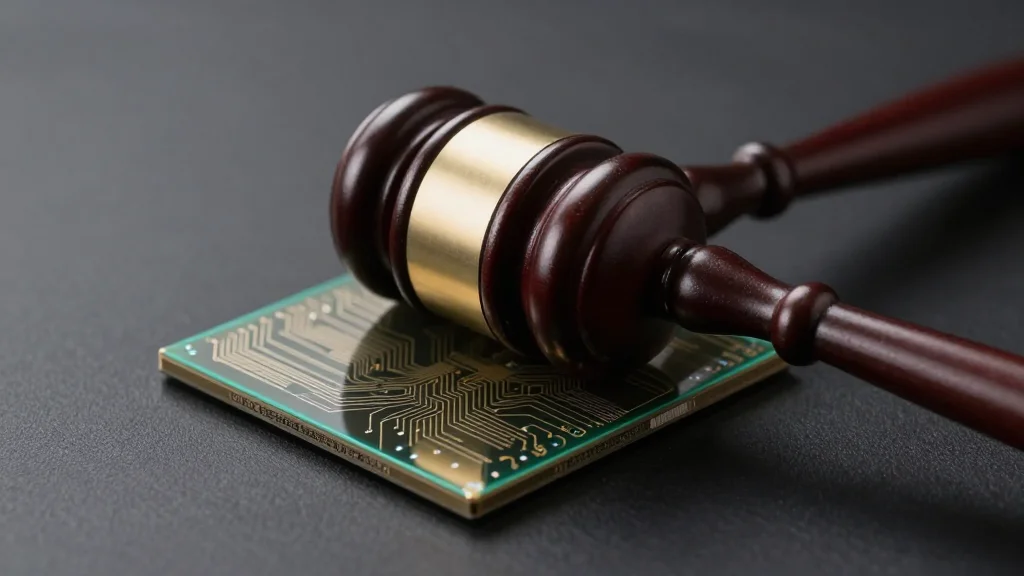
Micron Defends Patent Challenge, Federal Circuit Upholds Invalidity of Key Semiconductor Patents

Why It Matters
The Federal Circuit’s affirmation of the PTAB’s invalidation of Micron’s patents sends a clear message to non‑practicing entities that obviousness challenges can succeed when the underlying technology is well‑understood in the industry. By removing two patents from the enforcement landscape, the ruling reduces the litigation risk for semiconductor manufacturers and may encourage broader use of IPR proceedings as a cost‑effective defense. Moreover, the decision contributes to ongoing policy debates about patent quality and the role of NPEs in the innovation ecosystem. For investors and market participants, the outcome removes a potential liability from Micron’s balance sheet, preserving its financial outlook and reinforcing confidence in its ability to defend its product roadmap against patent encumbrances. The broader tech sector may see a shift toward pre‑emptive challenges of questionable patents, potentially lowering the overall volume of infringement suits and fostering a more predictable environment for research and development.
Key Takeaways
- •Federal Circuit upheld PTAB’s invalidation of U.S. Patents RE38,806 and 6,352,879.
- •Patents covered vertically stacked miniaturized chips and a bonding method.
- •Katana Silicon Technologies’ infringement claim against Micron is effectively nullified.
- •Decision highlights the effectiveness of inter partes review for large tech firms.
- •Potential deterrent effect on future non‑practicing entity litigation.
Pulse Analysis
Micron’s success illustrates a maturing strategy among major technology firms: leveraging the PTAB’s inter partes review to prune weak patents before they become costly litigation hurdles. Historically, NPEs have relied on the threat of expensive court battles to extract settlements, but the Federal Circuit’s deference to the PTAB’s obviousness analysis signals a judicial willingness to let administrative findings stand when the evidentiary record is robust. This trend could recalibrate the risk calculus for both patentees and challengers, prompting more aggressive pre‑emptive filings and defenses.
The semiconductor industry, characterized by rapid iteration and dense patent thickets, stands to benefit from clearer standards on what constitutes an inventive step. By reinforcing the obviousness bar, the ruling may encourage more focused R&D investments rather than defensive patent portfolios. However, NPEs may adapt by targeting newer, less-explored technology domains where the prior art is less established, shifting the battleground rather than retreating.
Investors should watch for a possible uptick in IPR filings from other chipmakers seeking to shield themselves from similar claims. The market may also respond with modest re‑rating of companies heavily exposed to NPE litigation risk, as the perceived defensive toolkit expands. In the longer term, the decision could influence legislative discussions on patent reform, especially proposals aimed at curbing abusive litigation while preserving legitimate enforcement.
Micron Defends Patent Challenge, Federal Circuit Upholds Invalidity of Key Semiconductor Patents
Comments
Want to join the conversation?
Loading comments...