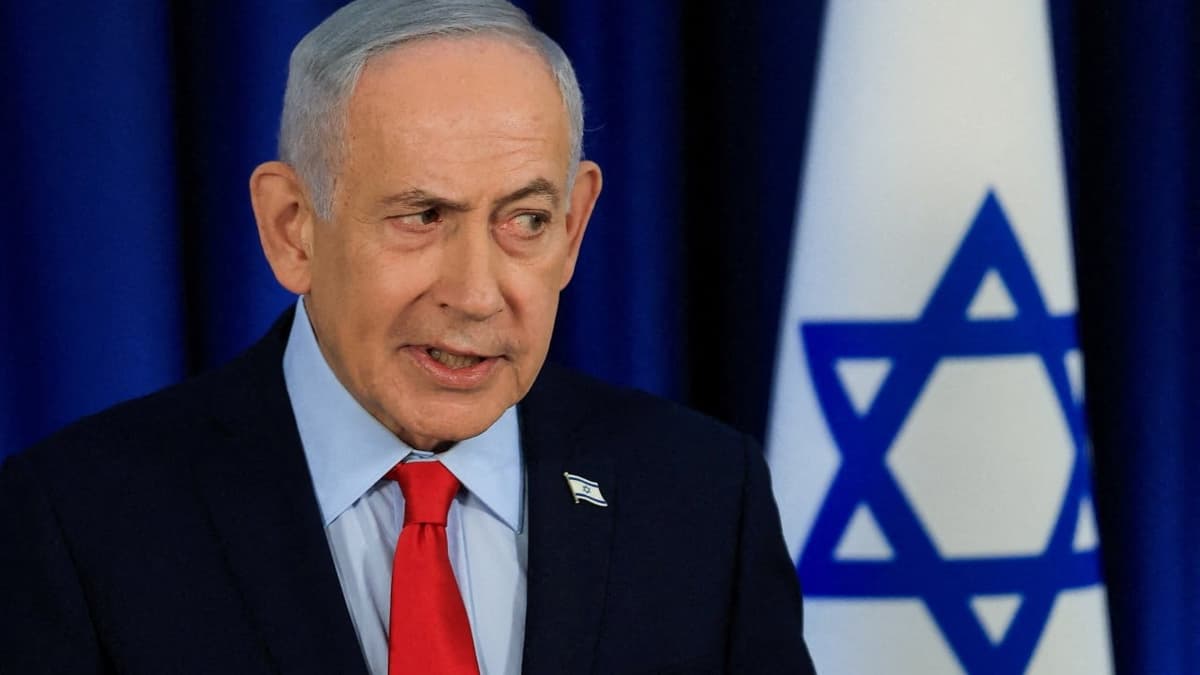
Netanyahu Corruption Trial to Resume on Sunday After Israel Eases War Restrictions
Why It Matters
The restart underscores the judiciary's resilience amid regional conflict and keeps political accountability front‑and‑center, potentially shaping Israel's domestic stability and international perception.
Key Takeaways
- •Trial resumes Sunday after war‑time court restrictions lifted
- •Defence witness testimony scheduled for first hearing
- •Netanyahu faces three corruption cases, including $260k in gifts
- •Fourth charge dismissed; he remains first sitting PM on trial
- •Judicial reopening follows US‑Iran temporary truce
Pulse Analysis
The resumption of Benjamin Netanyahu's corruption trial marks a rare convergence of high‑stakes politics and a fragile security environment. While the prime minister contends with three active indictments—alleged media manipulation, receipt of more than $260,000 in luxury gifts, and a third undisclosed charge—the court’s decision to lift wartime restrictions signals a deliberate effort to preserve judicial continuity. Observers note that Israel’s legal system, often tested by security emergencies, is now asserting its independence even as the nation navigates a tenuous cease‑fire between the United States and Iran.
During the recent Iran‑Israel confrontation, Israel’s Home Front Command imposed broad restrictions that halted many civil functions, including court proceedings. The temporary truce brokered by the United States allowed the Home Front Command to approve a phased reopening, enabling the judiciary to reconvene. This move not only restores procedural normalcy but also sends a message to domestic and foreign audiences that the rule of law remains operative despite external threats. Analysts argue that maintaining a functional court system under duress is crucial for democratic legitimacy and for preventing a power vacuum that could be exploited by adversaries.
Politically, the trial’s continuation could reverberate through Israel’s coalition dynamics and affect upcoming elections. A conviction—or even prolonged legal battles—might weaken Netanyahu’s bargaining power within his governing bloc, prompting shifts in policy direction and leadership composition. Moreover, investors watch these developments closely; perceived political instability can influence risk premiums on Israeli assets. Ultimately, the court’s handling of the case will serve as a barometer for how Israel balances security imperatives with institutional accountability in an increasingly volatile Middle‑East landscape.
Netanyahu corruption trial to resume on Sunday after Israel eases war restrictions
Comments
Want to join the conversation?
Loading comments...