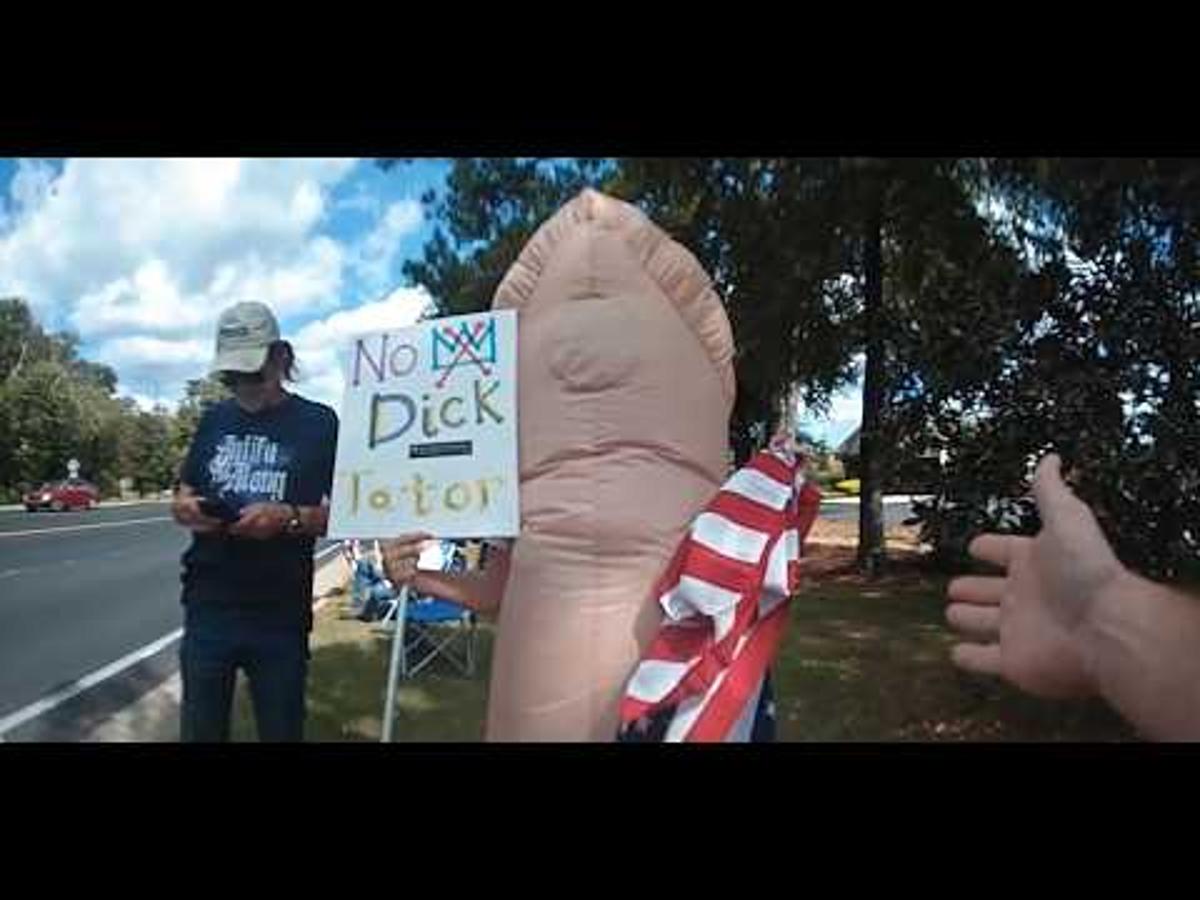
Prosecutors Still Trying To Convict 62-Year-Old Woman For Wearing Penis Costume To Anti-Trump Protest
Why It Matters
The prosecution tests the limits of free‑speech protections for political protest, potentially setting a precedent for how municipalities can police symbolic expression.
Key Takeaways
- •Fairhope police arrested 62‑year‑old Renea Gamble for inflatable penis protest.
- •Prosecutors added disturbing‑the‑peace and false‑name charges despite First Amendment protections.
- •Mayor and council labeled costume obscene, sparking national criticism and viral backlash.
- •Case underscores growing tension between local law enforcement and free‑speech rights.
- •Ongoing trial could set precedent for handling symbolic protest attire.
Pulse Analysis
The incident began on April 3 in Fairhope, Alabama, when 62‑year‑old Renea Gamble arrived at a “No Kings” anti‑Trump rally dressed in a seven‑foot inflatable penis holding an American flag and a sign that read “No Dick Tator.” Officers detained her, removed the costume, and placed her in a police vehicle. Prosecutors later filed disorderly‑conduct, disturbing‑the‑peace, and false‑name charges, arguing the display violated community standards, even though no specific law explicitly bans such symbolic speech.
Legal experts quickly flagged the case as a classic First Amendment clash. The Supreme Court has repeatedly protected political expression that is offensive or unconventional, from flag burning to satirical costumes. By treating the inflatable garment as “obscene” without a clear obscenity finding, Fairhope officials risk creating a chilling precedent that could deter dissenting speech nationwide. Similar disputes, such as the 2019 “Trump‑kiss” protest in New York, have been dismissed by courts that emphasize the high bar for government regulation of expressive conduct.
The fallout has already reshaped the town’s political landscape. Mayor Sherry Sullivan and City Council President Jack Burrell faced national ridicule, while the police department endured scrutiny over its use‑of‑force tactics. If the trial ends in a conviction, it could embolden other municipalities to pursue criminal charges for non‑violent protest attire, prompting legislative calls for clearer statutes on public order. Conversely, an acquittal would reinforce judicial protection of symbolic protest and add pressure on local law enforcement to respect constitutional speech rights.
Prosecutors Still Trying To Convict 62-Year-Old Woman For Wearing Penis Costume To Anti-Trump Protest
Comments
Want to join the conversation?
Loading comments...