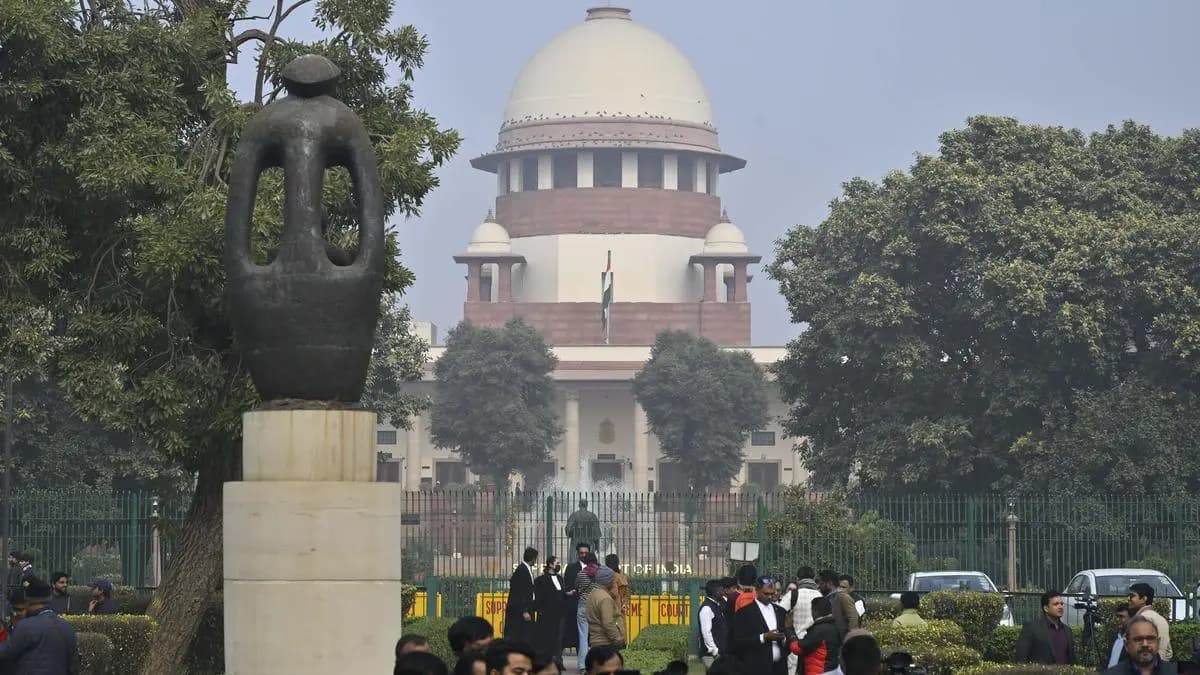
SC Regularises Interim Bail Granted to Gujarat-Based Journalist in Money Laundering Case
Why It Matters
The ruling underscores the delicate balance between press freedom and anti‑money‑laundering enforcement in India, setting a precedent for how journalists can be restrained during ongoing investigations. It also signals the Supreme Court’s willingness to enforce procedural rigor while safeguarding legal rights.
Key Takeaways
- •SC upheld Mahesh Langa's interim bail in PMLA case
- •Bail conditions bar Langa from publishing about his sub‑judice case
- •Trial ordered day‑to‑day, no adjournments permitted
- •ED must cooperate with special court; high court stay denied
- •Case stems from alleged fraud involving several lakh rupees (~$1,200 each)
Pulse Analysis
The Supreme Court’s decision to regularise Mahesh Langa’s interim bail highlights a pivotal moment for Indian media law. While the court affirmed the journalist’s right to liberty, it attached precise restrictions that prevent any public commentary on the ongoing money‑laundering investigation. By mandating a day‑to‑day trial schedule and barring adjournments, the apex court aims to curb procedural delays that often benefit defendants, ensuring the Enforcement Directorate and the special court can progress without undue interference.
In the broader context, this ruling reflects the tension between the Press Council’s advocacy for unfettered reporting and the government’s aggressive use of the Prevention of Money‑Laundering Act (PMLA) against alleged financial crimes. The conditions imposed on Langa—particularly the prohibition on publishing sub‑judice material—serve as a cautionary precedent for journalists covering sensitive legal matters. Legal analysts note that such constraints, while intended to protect the integrity of investigations, could set a de‑facto standard for limiting media coverage in high‑profile cases, raising concerns about potential chilling effects on investigative journalism.
For the enforcement community, the court’s directive that the Enforcement Directorate cooperate fully with the special judge underscores a push for coordinated, swift action in complex fraud cases. The emphasis on no adjournments and immediate witness examination signals an intent to streamline the judicial process, reducing opportunities for procedural stalling. Stakeholders in the financial compliance sector will watch closely, as the outcome may influence how future money‑laundering probes are balanced against constitutional freedoms, shaping both regulatory practice and media strategy in India.
SC regularises interim bail granted to Gujarat-based journalist in money laundering case
Comments
Want to join the conversation?
Loading comments...