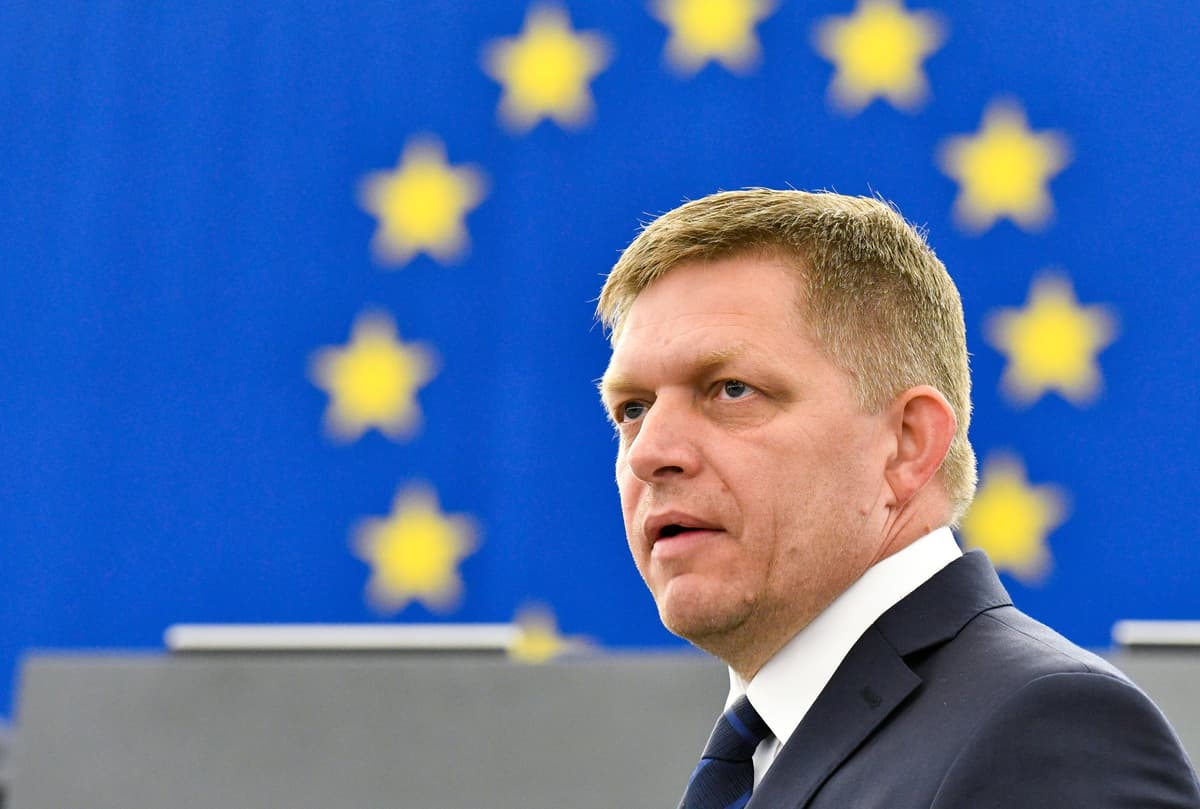
Slovakia May Lose EU Funds Like Hungary. MEPs Warned Fico Not to Follow Orbán’s Path
Why It Matters
A potential suspension of billions in EU aid would cripple Slovakia’s infrastructure spending and signals a tougher EU stance on rule‑of‑law breaches, raising stakes for other member states.
Key Takeaways
- •EU Parliament voted to trigger conditionality against Slovakia, 418‑207‑14.
- •Fico’s government abolished key anti‑corruption agencies, prompting EU concerns.
- •Up to 80% of Slovakia’s public investment depends on EU funds.
- •Hungary’s €22bn freeze led to market drop; Slovakia could face similar risk.
- •Final freeze requires Commission proposal and qualified‑majority Council vote.
Pulse Analysis
The EU’s rule‑of‑law conditionality regime, adopted in 2020, gives the bloc a legal lever to protect its budget when a member state fails to safeguard funds from misuse. It was first deployed against Hungary in late 2022, freezing roughly €22 bn (about $24 bn) of cohesion resources and triggering a sharp sell‑off in the Hungarian BUX index and forint. The episode highlighted the EU’s willingness to confront democratic backsliding, but also exposed the lengthy, politically fraught process required to actually withhold money.
In Slovakia, the controversy centers on Prime Minister Robert Fico’s recent moves to dissolve the National Criminal Agency and the Special Prosecutor’s Office, as well as an attempted abolition of the whistleblower protection office. Those steps prompted MEPs to label the country’s risk to EU finances as “significant,” leading to a 418‑207‑14 vote urging the Commission to activate the conditionality tool. If applied, the freeze could affect up to €20 bn (≈$22 bn) of current and future funding, a blow to a nation that relies on EU contributions for roughly 80 % of its road, school and agricultural projects. The Slovak president has framed the call as political scaremongering, while opposition lawmakers stress the real‑world impact on citizens.
The Slovak case underscores a broader EU trend toward stricter enforcement of democratic standards. By moving quickly—potentially within six to twelve months—the Commission can send a clear message that rule‑of‑law violations will have tangible financial consequences. This could deter similar actions in other states and reshape the political calculus of governments that depend heavily on EU money. Market observers will watch closely for any price movements in Central‑European equities, as the Hungarian precedent showed that fund freezes can quickly translate into investor anxiety. The outcome will also test the EU’s ability to balance sovereignty concerns with the integrity of its budgetary framework.
Slovakia may lose EU funds like Hungary. MEPs warned Fico not to follow Orbán’s path
Comments
Want to join the conversation?
Loading comments...