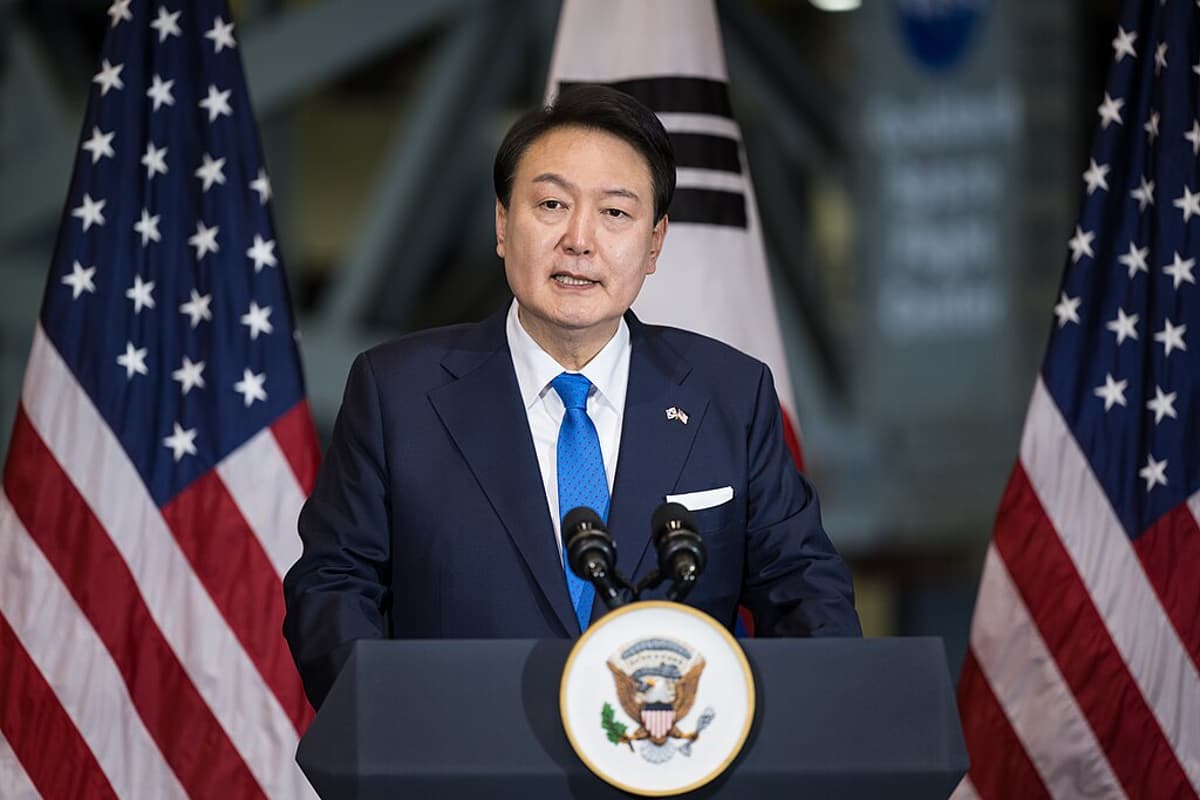
South Korea Prosecutors Seek 30-Year Sentence for Ex-President for Attempting to Provoke North Korea Attack
Why It Matters
A harsh sentence would set a historic precedent for holding a former head of state criminally liable for military provocations, reshaping South Korea’s civil‑military power dynamics and its security alliance with the United States.
Key Takeaways
- •Prosecutors request 30-year term for ex‑president Yoon Suk‑yeol
- •Alleged drone operation sent over 10 UAVs into Pyongyang, 2024
- •Defense argues drones were self‑defense response to North Korean balloon
- •Sentencing could reshape South Korea’s civil‑military power balance
Pulse Analysis
The drone episode unfolded against a backdrop of unprecedented political turbulence in South Korea. In December 2024, President Yoon invoked martial law under Article 77, citing an escalating threat from the North. His move sparked massive public backlash, leading to impeachment by the National Assembly and a historic conviction for insurrection. The subsequent drone flights, conducted in October‑November 2024, were framed by the administration as a countermeasure to a North Korean garbage‑balloon incursion, but prosecutors argue they crossed the line into provocation and illegal disclosure of military secrets.
Under South Korea’s penal code, "benefiting the enemy" carries severe penalties, reflecting the nation’s heightened sensitivity to any actions that could aid its adversary. By seeking a 30‑year term for Yoon and 25 years for former Defense Minister Kim Yong‑hyun, prosecutors aim to send a clear deterrent signal to current and future leaders about the limits of executive power in security matters. The case also tests the independence of the special counsel system, which was appointed by the current president to investigate Yoon’s martial‑law declaration, alleged corruption, and a marine’s death. A conviction could reinforce judicial oversight of the military, but it also risks deepening political fissures and complicating the South Korea‑U.S. alliance, which relies on a stable chain of command.
Regionally, the outcome will reverberate across the Korean Peninsula and beyond. North Korea could exploit a weakened South Korean leadership to amplify its own propaganda, while allies watch closely for signs of policy continuity. The trial underscores the delicate balance between deterrence and escalation in a nuclear‑armed neighborhood. Moreover, it establishes a legal benchmark for holding former heads of state accountable for security‑related decisions, a precedent that may influence other democracies grappling with post‑presidential liability.
South Korea prosecutors seek 30-year sentence for ex-president for attempting to provoke North Korea attack
Comments
Want to join the conversation?
Loading comments...