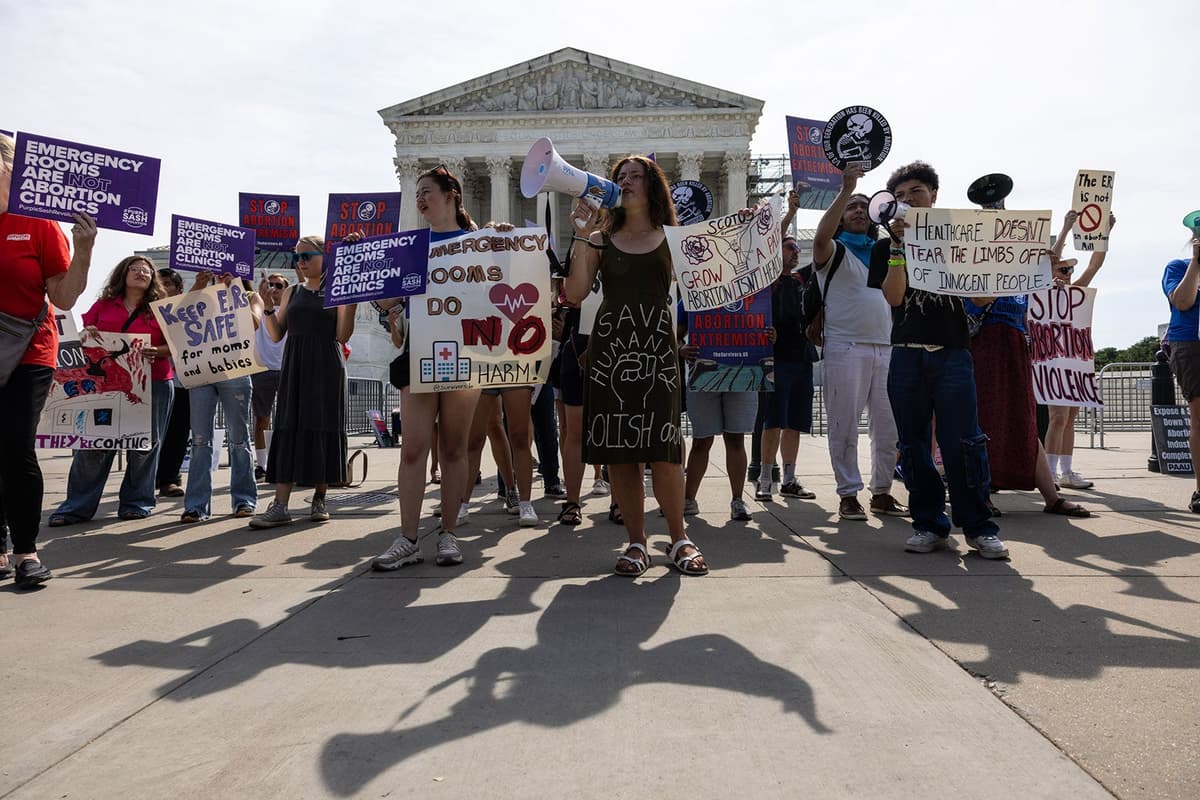
Supreme Court Conservatives Promised That Ending Roe Would Solve a Major Problem. They’ve Made It Infinitely Worse.
Why It Matters
The shifting legal landscape threatens nationwide access to safe, medication‑based abortions and highlights the broader clash between judicial authority and public opinion on reproductive rights.
Key Takeaways
- •5th Circuit blocked telemedicine mifepristone; SC temporarily restored it
- •Shield laws in Democratic states protect out‑of‑state doctors
- •Abortion‑rights support now about 66% nationally
- •Legal whiplash drives women to travel or seek risky alternatives
- •Anti‑abortion groups are changing court rules to maintain bans
Pulse Analysis
The fallout from the Supreme Court’s Dobbs ruling has reshaped America’s abortion framework far beyond the original promise of state‑level resolution. By overturning Roe, the Court ignited a cascade of trigger laws that instantly shuttered clinics in dozens of states, leaving patients scrambling for care. The resulting patchwork of restrictions has forced women to cross state lines, rely on out‑of‑state providers, or risk unsafe procedures. This fragmentation not only amplifies inequities but also fuels a new wave of litigation as states battle over jurisdiction, medical standards, and the authority of the FDA.
At the center of the current legal tug‑of‑war is the use of mifepristone, a cornerstone of medication abortions. The 5th Circuit’s decision to ban telemedicine distribution threatened to eliminate a safe, remote option for millions, prompting the Supreme Court to issue a stop‑gap order that preserves telehealth access pending a full review. Meanwhile, Democratic states have enacted shield laws to protect physicians who prescribe the pill to out‑of‑state patients, and organizations like Plan C and Aid Access continue to funnel thousands of prescriptions across borders. This regulatory clash illustrates how the anti‑abortion movement is shifting tactics from outright bans to manipulating procedural rules, aiming to curtail access without overtly defying public sentiment.
Public opinion remains a decisive factor: recent polls show roughly two‑thirds of Americans favor preserving abortion rights, even among many self‑identified pro‑life voters. Yet the legal uncertainty has tangible health consequences, including higher rates of maternal complications and infant mortality in restrictive states. As the Supreme Court deliberates the mifepristone case and the FDA prepares a new review, the nation stands at a crossroads where judicial decisions, state legislation, and grassroots advocacy will determine whether reproductive autonomy is restored or further eroded.
Supreme Court Conservatives Promised That Ending Roe Would Solve a Major Problem. They’ve Made It Infinitely Worse.
Comments
Want to join the conversation?
Loading comments...