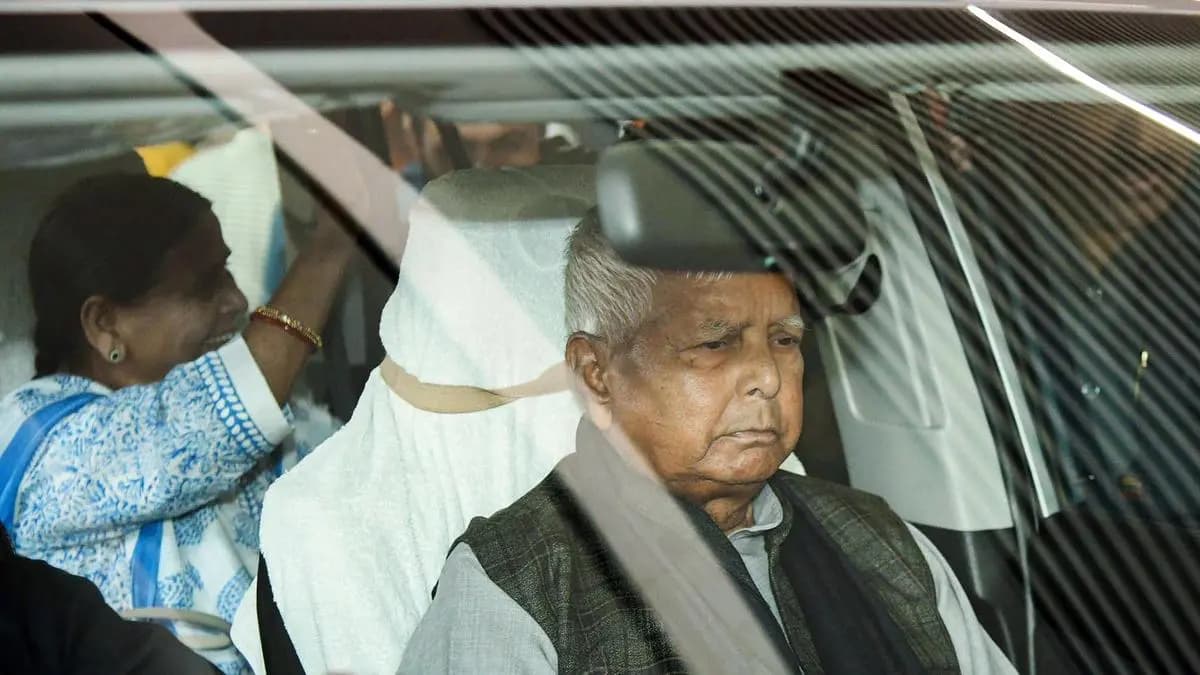
Supreme Court Refuses to Quash CBI FIR Against Lalu Prasad Yadav in Land-for-Jobs Case
Why It Matters
The ruling keeps a high‑profile corruption case alive, potentially reshaping political dynamics in Bihar and setting a precedent on the retroactive reach of anti‑corruption statutes.
Key Takeaways
- •Supreme Court denied Yadav's request to dismiss CBI FIR.
- •Court exempted 77‑year‑old Yadav from appearing in trial court.
- •Section 17A applicability will be decided during trial, not now.
- •Case centers on alleged rail appointments for land gifts (2004‑2009).
- •Delhi High Court ruled Section 17A does not apply retroactively.
Pulse Analysis
The Supreme Court’s decision to let the CBI’s FIR against Lalu Prasad Yadav proceed marks a pivotal moment in India’s anti‑corruption landscape. By refusing to quash the case, the apex court reaffirmed the investigative agency’s authority while carving out a procedural safeguard for the 77‑year‑old former Bihar chief minister, allowing him to avoid personal appearance until trial. This balance reflects the court’s effort to uphold due process without granting a blanket immunity to a senior political figure, underscoring the judiciary’s nuanced role in high‑stakes corruption probes.
At the heart of the dispute is Section 17A of the Prevention of Corruption Act, a provision introduced in 2018 that mandates prior sanction before a public servant can be investigated. The legal debate hinges on whether the provision applies retroactively to alleged offences dating back to Yadav’s tenure as railways minister (2004‑2009). While the Delhi High Court concluded that Section 17A has only prospective effect, the Supreme Court has left the question open for adjudication during the trial. This uncertainty could influence how future corruption cases are framed, especially those involving actions taken before the law’s enactment, and may prompt legislative clarification on the statute’s temporal scope.
Politically, the case carries weight far beyond the courtroom. Yadav remains a central figure in Bihar’s politics and a kingmaker at the national level; a conviction could destabilize the Rashtriya Janata Dal’s electoral calculus and alter coalition dynamics ahead of upcoming state and general elections. Moreover, the outcome will signal to other senior officials how aggressively the CBI can pursue legacy corruption allegations. Stakeholders—from investors monitoring governance risk to policy analysts tracking institutional integrity—should watch the trial’s progression, as it will likely set a benchmark for the enforceability of anti‑corruption safeguards in India’s democratic framework.
Supreme Court refuses to quash CBI FIR against Lalu Prasad Yadav in land-for-jobs case
Comments
Want to join the conversation?
Loading comments...