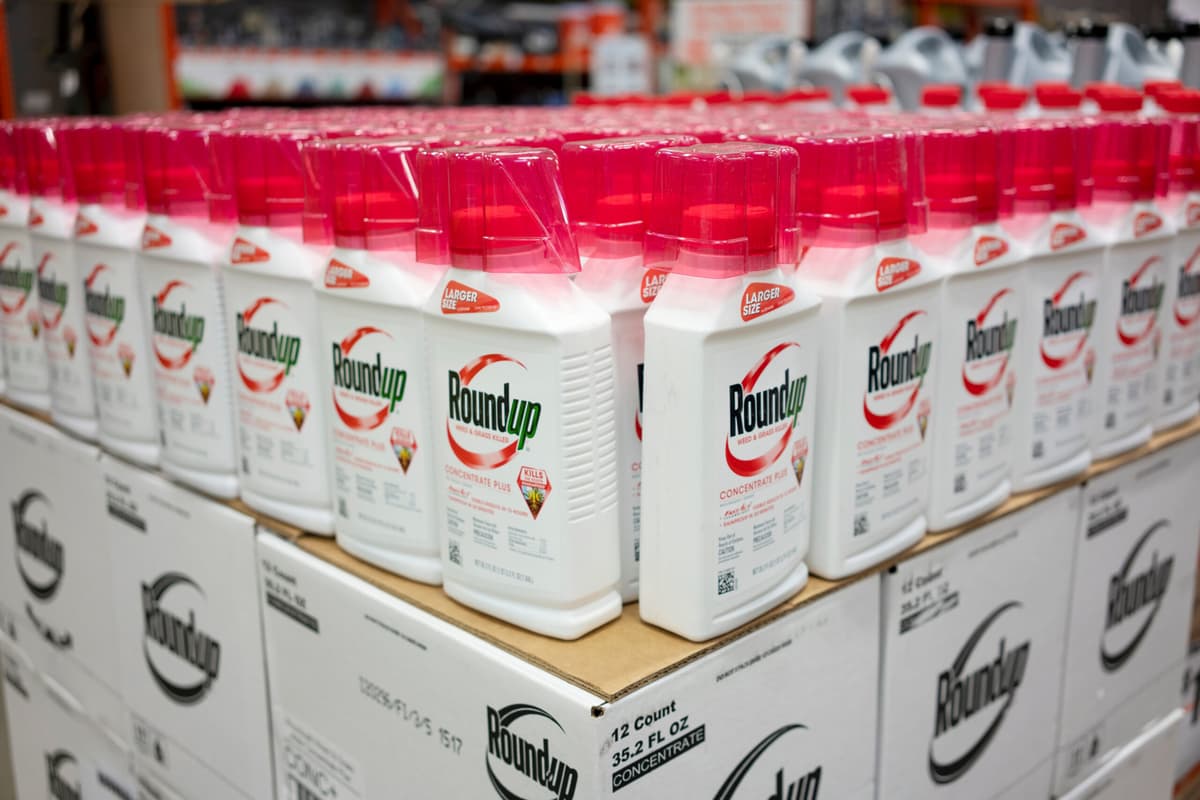
Supreme Court Split Over Bayer’s Fight Against Roundup Lawsuits
Why It Matters
A Supreme Court ruling will determine whether federal pesticide labeling standards can shield Bayer from state tort claims, potentially reshaping liability exposure for the agrochemical industry and setting a precedent for nationwide uniformity in product warnings.
Key Takeaways
- •Supreme Court split on Bayer's attempt to preempt state Roundup lawsuits
- •Bayer argues federal FIFRA preempts state failure‑to‑warn claims
- •Justice Gorsuch questioned consistency of allowing state tort suits under FIFRA
- •Proposed $7.25 billion settlement aims to end tens of thousands of cases
- •Ruling expected by June could shape pesticide labeling uniformity nationwide
Pulse Analysis
Bayer’s Roundup litigation has become a litmus test for the balance between federal regulatory authority and state consumer‑protection lawsuits. The company’s acquisition of Monsanto for $63 billion in 2018 brought the glyphosate controversy into the spotlight, and the Missouri verdict against Bayer underscores the growing pressure from plaintiffs alleging cancer links. While the EPA maintains that glyphosate does not cause cancer, state courts have allowed claims to proceed, creating a fragmented legal landscape that Bayer argues violates the preemption provisions of FIFRA.
At the Supreme Court, the debate centered on whether FIFRA’s uniform labeling mandate bars state‑law failure‑to‑warn actions. Justice Gorsuch probed the logic of permitting parallel state tort suits when the EPA can already enforce misbranding penalties, while Justices Roberts and Kagan highlighted the tension between national consistency and the need for states to act on emerging scientific evidence. The justices’ split signals that the Court may grapple with reconciling federal preemption with the public’s right to timely health warnings, a dilemma that could reverberate across other regulated industries.
The outcome will have immediate financial implications for Bayer, which has proposed a $7.25 billion settlement to cap its exposure, and strategic consequences for the broader agrochemical sector. A ruling favoring preemption could streamline liability defenses, encouraging companies to rely on federal approvals, whereas a decision allowing state claims could spur a wave of similar lawsuits against other pesticide manufacturers. Stakeholders—from farmers to investors—are watching closely, as the decision will shape regulatory risk, litigation costs, and the future of product‑labeling standards in the United States.
Supreme Court Split Over Bayer’s Fight Against Roundup Lawsuits
Comments
Want to join the conversation?
Loading comments...