Texas Sues Netflix Over 'Surveillance,' 'Addictive' Design
Companies Mentioned
Why It Matters
The case could establish new privacy standards for streaming services and pressure the industry to redesign user interfaces that may be deemed manipulative.
Key Takeaways
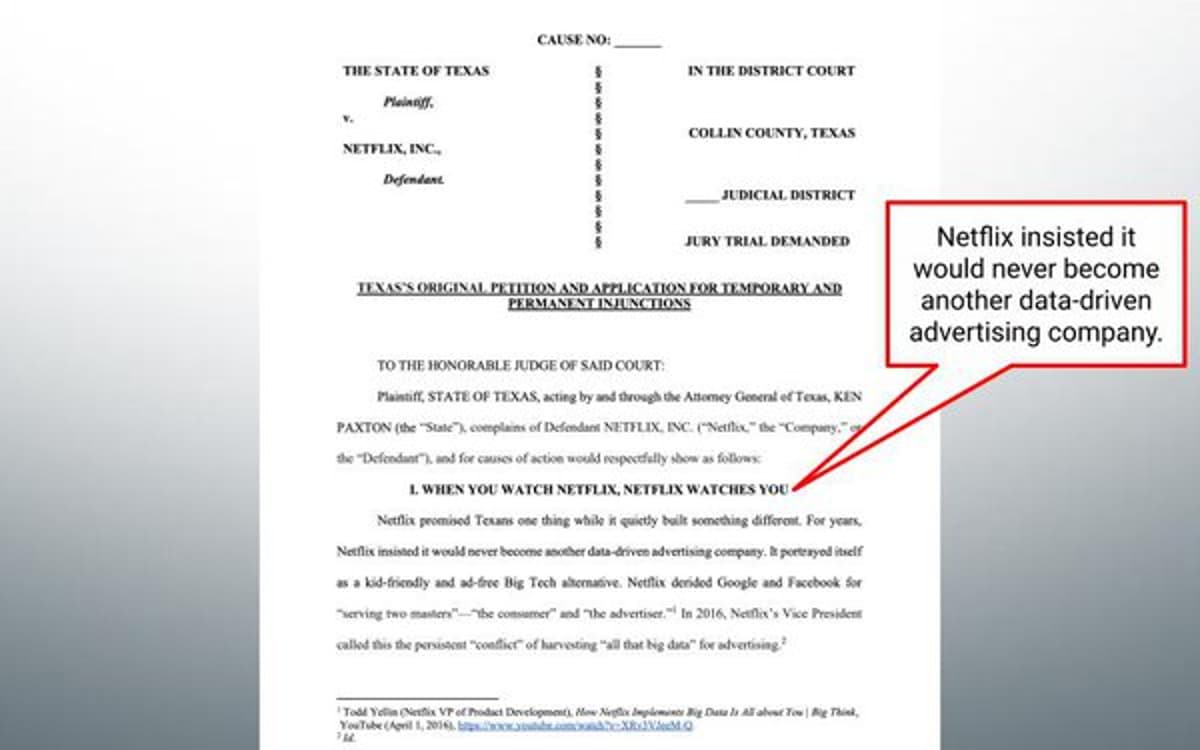
- •Texas AG alleges Netflix collected data without user consent since 2018
- •Lawsuit cites $5 million Dutch fine for GDPR violations
- •Autoplay feature claimed to encourage addictive viewing, especially for children
- •Netflix faces potential injunction to disable data tracking and default autoplay
- •Case could set precedent for privacy rules on streaming platforms
Pulse Analysis
The Texas lawsuit marks a rare foray of state regulators into the streaming arena, where consumer‑protection statutes have traditionally focused on telecom and broadband. Paxton’s complaint leans on the Texas Deceptive Trade Practices Act, alleging that Netflix misled subscribers by marketing its service as a privacy‑safe alternative while covertly harvesting viewing data. By invoking the Dutch Data Protection Authority’s 2024 fine—approximately $5 million—the AG underscores a pattern of alleged non‑compliance that spans continents, bolstering the case’s credibility in a climate of heightened scrutiny over digital surveillance.
Streaming platforms have increasingly monetized user data, especially after Netflix introduced an ad‑supported tier in 2022. That move required a privacy‑policy overhaul, yet the complaint claims the revised terms omitted critical details about behavioral logging and third‑party data sharing. Coupled with design choices like autoplay, which the suit characterizes as intentionally addictive, these practices echo broader concerns about “dark patterns” that nudge users toward longer screen time. Industry analysts note that while data‑driven personalization can boost engagement, it also raises red flags under emerging state privacy regimes that demand clear, opt‑in consent for behavioral advertising.
If the court grants Paxton’s requested injunction, Netflix may have to disable autoplay by default on children’s profiles and purge data collected without explicit consent—a precedent that could ripple across the OTT sector. Competitors such as Disney+ and HBO Max might preemptively adjust their interfaces to avoid similar litigation, accelerating a shift toward more transparent data practices. Moreover, the case could embolden other states to pursue comparable actions, prompting a patchwork of regulations that streaming services will need to navigate carefully. For consumers, the outcome promises greater visibility into how their viewing habits are tracked and potentially more control over the digital environments they inhabit.
Texas Sues Netflix Over 'Surveillance,' 'Addictive' Design
Comments
Want to join the conversation?
Loading comments...