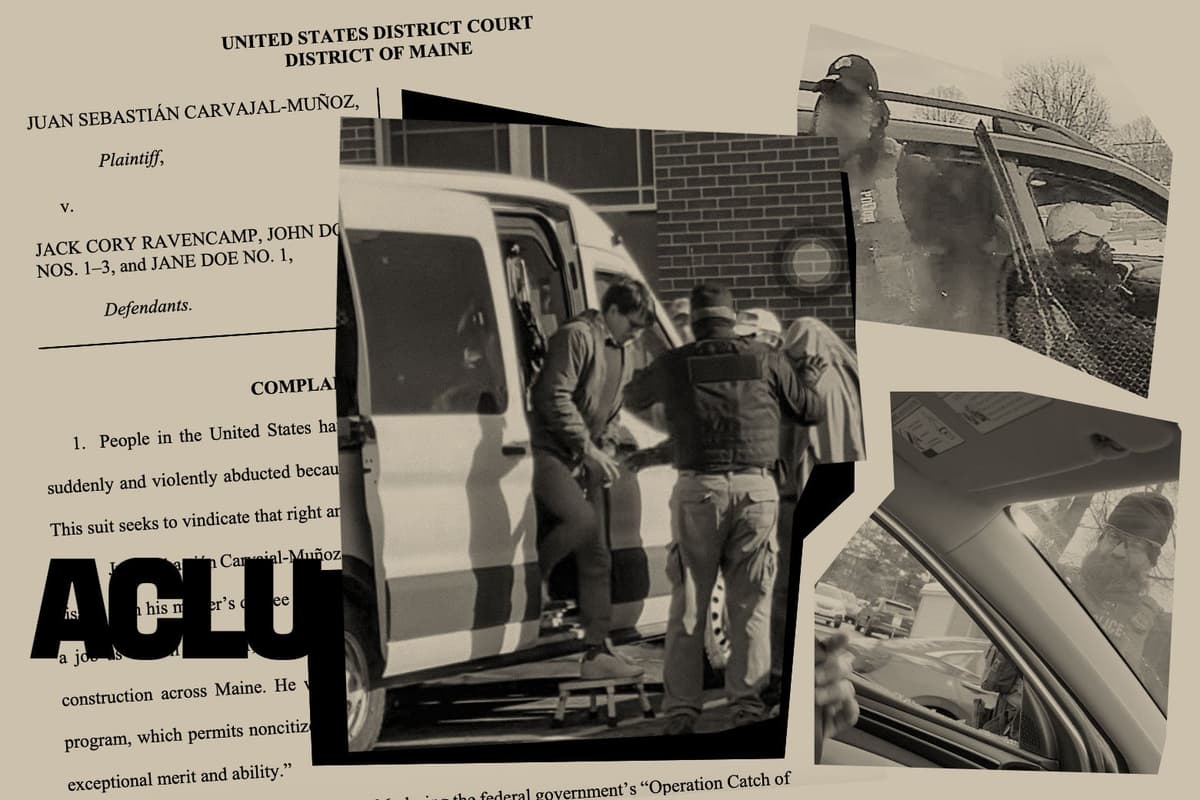
The Clever New Lawsuit That Could Finally End ICE’s Reign of Terror in Blue States
Why It Matters
A successful ruling would give individuals a practical tool to hold ICE accountable, potentially curbing aggressive immigration enforcement in blue states. It could also pressure Congress to clarify or amend federal immunity statutes.
Key Takeaways
- •ACLU files lawsuit in Maine against ICE agents for constitutional violations
- •Plaintiffs rely on state law to bypass limited Bivens remedies
- •Maine’s 1989 statute could allow damages for Fourth and Fifth Amendment breaches
- •Success could trigger similar suits in other blue states like California
- •Case tests Westfall Act’s exception for constitutional claims against federal officials
Pulse Analysis
The Maine filing marks a strategic shift in how civil‑rights advocates confront ICE’s increasingly aggressive tactics. By anchoring the claim in state law rather than the dwindling Bivens framework, plaintiffs aim to exploit a legal loophole that has been largely dormant since the 1980s. Maine’s statute, mirrored in California and recently adopted in Illinois, expressly authorizes monetary relief when federal officers violate constitutional rights, sidestepping the federal immunity shield erected by the Westfall Act. Legal scholars argue that this approach aligns with the Constitution’s supremacy clause, allowing states to provide remedies where federal law is silent.
If the district court permits the suit to proceed, it could set a precedent that encourages a wave of similar actions across the nation. Victims of ICE’s so‑called "Operation Catch of the Day" and other detention programs would gain a tangible avenue for compensation and deterrence, potentially reshaping the risk calculus for immigration officers. Judges in the First Circuit, known for their progressive jurisprudence, may be inclined to interpret the Westfall Act’s constitutional exception broadly, especially given recent lower‑court opinions that affirm state‑level claims against federal actors.
Beyond the courtroom, the case carries significant political weight. A ruling that validates state‑based damages could pressure Congress to revisit the balance between federal enforcement authority and individual rights, prompting legislative proposals to either reinforce or further limit federal immunity. For policymakers, businesses, and advocacy groups, the outcome will signal how far the federal government can push immigration enforcement without facing financial accountability, making it a bellwether for future civil‑rights litigation against federal agencies.
The Clever New Lawsuit That Could Finally End ICE’s Reign of Terror in Blue States
Comments
Want to join the conversation?
Loading comments...