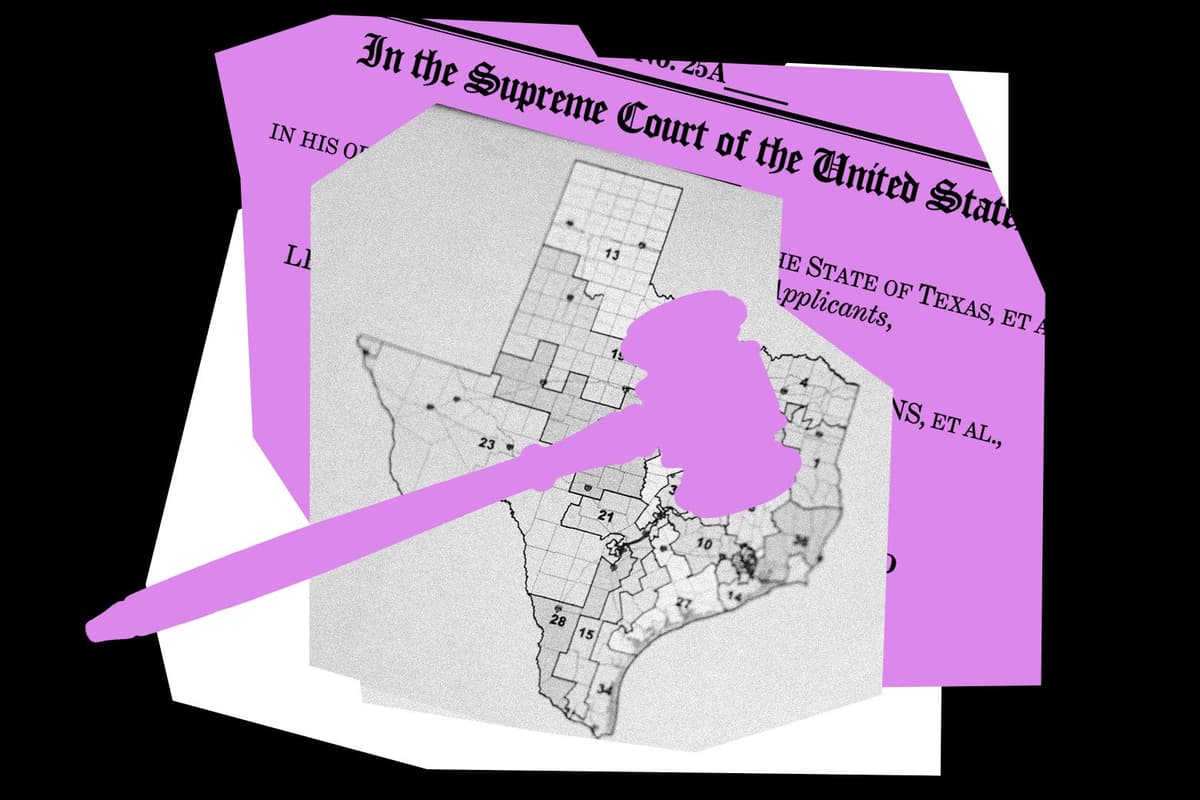
The Supreme Court Just Greenlit a Gerrymander That Even a Trump Judge Thought Was Too Racist
Why It Matters
By endorsing a map deemed racially discriminatory, the Court signals that federal courts will not curb extreme gerrymandering, threatening fair representation in upcoming elections and prompting calls for congressional reform.
Key Takeaways
- •SCOTUS reversed lower court, allowing Texas 2026 map to stand
- •Decision was 6‑3, with Alito, Thomas, Gorsuch in majority
- •Lower court found racial vote dilution after 3,000‑page evidence review
- •Rucho precedent leaves partisan gerrymandering beyond judicial reach
- •Future reforms may require Congress or independent commissions
Pulse Analysis
The Supreme Court’s abrupt reversal of a lower‑court finding that Texas’ 2025 redistricting violated the Voting Rights Act underscores the high court’s willingness to prioritize legislative intent over detailed evidentiary records. The 6‑3 shadow‑docket order, issued without a full opinion, effectively green‑lights a map crafted after a Trump‑era push to secure Republican seats in the 2026 midterms. By treating the legislature’s claim of political motive as sufficient, the Court sidestepped the extensive trial testimony that demonstrated race as the dominant factor in drawing district lines.
Legally, the decision revives the tension created by the 2019 *Rucho v. Common Cause* ruling, which declared partisan gerrymandering a political question beyond judicial review while preserving the Court’s authority to police racial gerrymandering. The Texas case illustrates how that split doctrine can be exploited: courts may intervene when race is overtly used, yet the high court can retreat to a deferential stance, effectively insulating extreme partisan map‑making from scrutiny. This creates a loophole where legislators can disguise racial considerations as partisan strategy, eroding the protections of the 15th Amendment and the Equal Protection Clause.
Politically, the ruling sets the stage for a heavily skewed 2026 election cycle in Texas, where Democratic‑leaning districts are minimized and Republican incumbents gain fortified majorities. The broader implication is a national arms race in map‑drawing, prompting state legislatures to adopt more aggressive tactics. Without congressional action—such as establishing independent redistricting commissions—or a future Supreme Court reversal of *Rucho*, the judiciary is likely to remain a weak check on gerrymandering, leaving voters vulnerable to engineered electoral outcomes.
The Supreme Court Just Greenlit a Gerrymander That Even a Trump Judge Thought Was Too Racist
Comments
Want to join the conversation?
Loading comments...