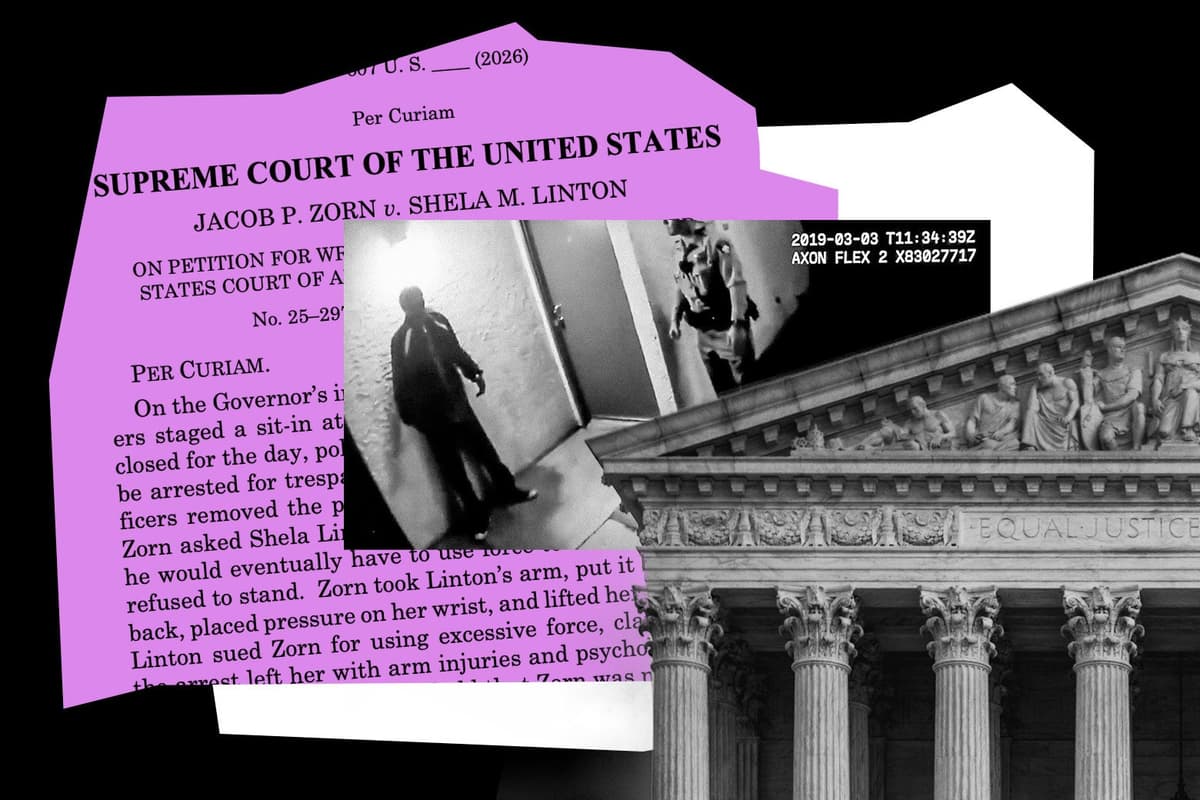
The Supreme Court Just Twisted Its Cop Immunity Doctrine in an Even More Violent Direction
Companies Mentioned
Why It Matters
The ruling narrows the path for Section 1983 lawsuits, reinforcing qualified immunity and making it harder to hold officers civilly liable for excessive force, a setback for civil‑rights advocates and police‑reform efforts.
Key Takeaways
- •Supreme Court vacated 9th Circuit ruling on Roy Scott death
- •Decision hinged on *Zorn v. Linton* qualified‑immunity precedent
- •Court used summary disposition without briefing or oral argument
- •New standard lets officer “warnings” shield them from liability
- •Ruling deepens challenges for Section 1983 civil rights suits
Pulse Analysis
The Supreme Court’s abrupt reversal of the 9th Circuit’s ruling in the Roy Scott case underscores a growing judicial willingness to curtail civil‑rights remedies. By anchoring its decision to the *Zorn v. Linton* qualified‑immunity framework, the Court effectively raises the bar for plaintiffs to prove that an officer’s conduct was “clearly established” as unlawful. This shift narrows the scope of Section 1983 actions, meaning future victims of excessive force must locate a near‑identical precedent—an increasingly rare requirement as courts continue to narrow the doctrine.
Legal scholars warn that the Court’s reliance on a single‑paragraph, unsigned order—issued via summary disposition—bypasses the traditional safeguards of full briefing and oral argument. Such procedural shortcuts limit the factual record and reduce transparency, raising concerns about due process for both plaintiffs and defendants. The lack of a detailed opinion also leaves lower courts with scant guidance, potentially leading to inconsistent applications of the “warning” exception across jurisdictions.
For policymakers and reform advocates, the decision signals a tougher environment for holding law‑enforcement officials accountable. As qualified immunity expands, municipalities may face heightened pressure to adopt internal reforms, such as stricter use‑of‑force policies and better training on de‑escalation. Meanwhile, civil‑rights groups will need to recalibrate litigation strategies, perhaps focusing on state‑law claims or legislative avenues to curb the doctrine’s reach. The Supreme Court’s move thus reshapes the legal landscape surrounding police conduct, with ripple effects for accountability, public trust, and future reform efforts.
The Supreme Court Just Twisted Its Cop Immunity Doctrine in an Even More Violent Direction
Comments
Want to join the conversation?
Loading comments...