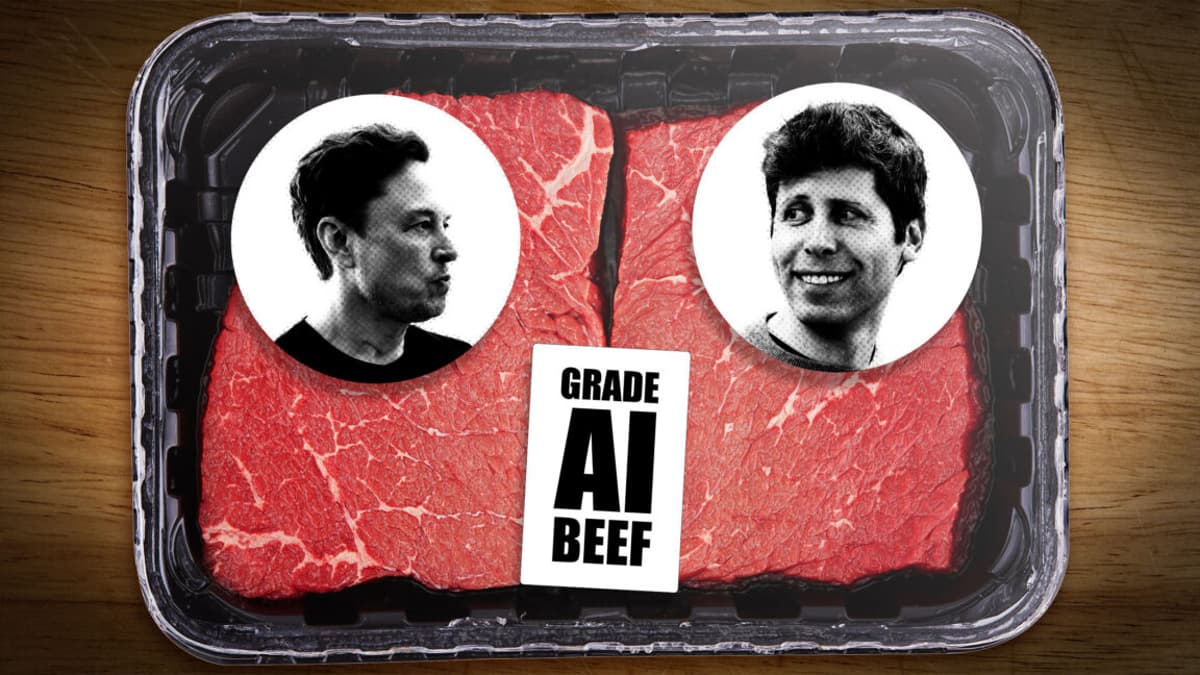
To Beat Altman in Court, Musk Offers to Give All Damages to OpenAI Nonprofit
Companies Mentioned

Why It Matters
The shift narrows the dispute to charitable‑trust enforcement, potentially reshaping governance of AI firms that blend nonprofit missions with commercial ventures. A ruling could set precedent for donor‑driven oversight of rapidly scaling AI companies.
Key Takeaways
- •Musk drops personal damages, seeks restitution for OpenAI charity
- •Judge denied punitive damages and continuous‑accrual claim
- •Musk wants OpenAI’s for‑profit conversion unwound
- •Outcome could redefine charitable‑trust limits in tech startups
Pulse Analysis
Elon Musk’s latest filing in the OpenAI lawsuit marks a strategic pivot from personal compensation to a broader charitable‑trust claim. After U.S. District Judge Yvonne Gonzalez Rogers rejected his request for punitive damages and dismissed the notion that Musk could claim continuous accrual of losses, Musk’s counsel reframed the case as a pure equity remedy. By asking the court to disgorge up to $134 billion in alleged gains and return them to the OpenAI nonprofit, Musk positions himself as a guardian of the organization’s original public‑benefit charter rather than a plaintiff seeking profit.
The legal battle underscores a growing tension in the AI sector between nonprofit ideals and for‑profit incentives. OpenAI began as a charitable venture but later restructured as a capped‑profit entity, attracting massive capital from Microsoft and other investors. If the court orders a reversal of that structure, it could force other AI startups to reconsider hybrid models that blend mission‑driven research with commercial scaling. Moreover, the case highlights how high‑profile donors can leverage charitable‑trust law to influence corporate governance, potentially prompting stricter oversight of donor agreements and board composition.
Industry observers note that the outcome will reverberate beyond OpenAI, affecting how venture capital and philanthropy intersect in emerging technologies. A ruling that upholds Musk’s remedy could embolden donors to demand greater accountability from firms that receive sizable charitable contributions, while a dismissal may reinforce the legitimacy of profit‑driven pivots for fast‑growing AI companies. Either way, the case will be a touchstone for future debates on the balance between innovation, public benefit, and shareholder value in the AI ecosystem.
To beat Altman in court, Musk offers to give all damages to OpenAI nonprofit
Comments
Want to join the conversation?
Loading comments...