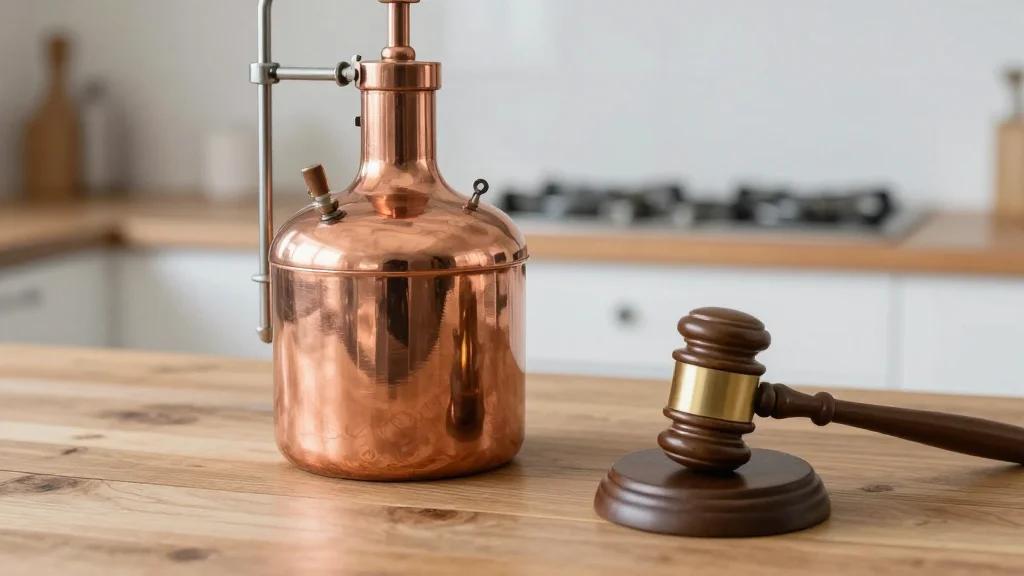
US Appeals Court Declares 158-Year-Old Home Distilling Ban Unconstitutional

Why It Matters
The decision curtails federal overreach, potentially opening the market for hobbyist spirit production and prompting states to address regulation. It also signals a judicial check on Congress’s use of the tax power to criminalize private conduct.
Key Takeaways
- •5th Circuit rules 158‑year‑old home‑distilling ban unconstitutional
- •Ban deemed improper tax measure, reducing potential revenue
- •Ruling favors Hobby Distillers Association, 1,300 members nationwide
- •Decision may limit Congress’s power to criminalize home activities
- •Hobbyists could legally distill spirits at home pending state regulations
Pulse Analysis
The 1868 ban on home distilling was born out of Reconstruction-era concerns over liquor tax evasion, giving the federal government a blunt tool to enforce revenue collection. By classifying the prohibition as a tax‑avoidance measure, the 5th Circuit highlighted a longstanding tension between Congress’s taxing authority and the Constitution’s limits on police powers. Legal scholars note that the court’s reasoning aligns with recent jurisprudence that scrutinizes statutes whose primary effect is to criminalize behavior rather than to raise revenue.
For hobbyists, the ruling could unleash a nascent market for small‑scale spirit production. Enthusiasts who previously risked five‑year prison terms and $10,000 fines can now explore craft vodka, whiskey, or gin recipes without federal interference, though state liquor laws will still apply. The decision may also prompt the Treasury’s Alcohol and Tobacco Tax and Trade Bureau to revise guidance, potentially creating a licensing framework that captures modest excise taxes while preserving individual liberty. Industry analysts project a modest boost to ancillary equipment sales and a surge in online communities sharing recipes and safety tips.
Beyond distilling, the case sets a precedent for challenging antiquated statutes that rely on tax rationale to regulate private conduct. Courts may now be more willing to strike down laws that criminalize home‑based activities—ranging from home‑brewing to remote‑work arrangements—if they appear to exceed Congress’s constitutional tax power. This could spur a wave of litigation aimed at redefining the boundary between legitimate taxation and overbroad criminal statutes, reshaping the regulatory landscape for a digital and gig‑economy era.
US appeals court declares 158-year-old home distilling ban unconstitutional
Comments
Want to join the conversation?
Loading comments...