Legal News and Headlines
  • All Technology
  • AI
  • Autonomy
  • B2B Growth
  • Big Data
  • BioTech
  • ClimateTech
  • Consumer Tech
  • Crypto
  • Cybersecurity
  • DevOps
  • Digital Marketing
  • Ecommerce
  • EdTech
  • Enterprise
  • FinTech
  • GovTech
  • Hardware
  • HealthTech
  • HRTech
  • LegalTech
  • Nanotech
  • PropTech
  • Quantum
  • Robotics
  • SaaS
  • SpaceTech
AllNewsDealsSocialBlogsVideosPodcastsDigests

Legal Pulse

EMAIL DIGESTS

Daily

Every morning

Weekly

Sunday recap

NewsDealsSocialBlogsVideosPodcasts
LegalNewsWashington Justices Revive Sodium Nitrite Suicide Suit Against Amazon
Washington Justices Revive Sodium Nitrite Suicide Suit Against Amazon
Legal

Washington Justices Revive Sodium Nitrite Suicide Suit Against Amazon

•February 19, 2026
0
Courthouse News Service
Courthouse News Service•Feb 19, 2026

Companies Mentioned

Amazon

Amazon

Why It Matters

The decision expands e‑commerce liability, signaling that online retailers may be held accountable for foreseeable misuse of dangerous products. It sets a precedent that could reshape product‑safety standards and litigation across the tech industry.

Key Takeaways

  • •Washington Supreme Court allows suicide suit against Amazon
  • •Court says Amazon owes duty despite product misuse
  • •High‑purity sodium nitrite sold, linked to teen deaths
  • •Amazon restricted high‑concentration sales after lawsuit
  • •Ruling may affect similar product‑liability cases nationwide

Pulse Analysis

The Washington Supreme Court’s unanimous opinion marks a watershed moment for product‑liability law in the digital age. By holding Amazon potentially responsible for the deaths of four young people who bought 98‑99% pure sodium nitrite, the court emphasized that a seller’s duty of care extends beyond obvious misuse. Justice Whitener’s reasoning hinges on foreseeability: even if suicide is a personal act, a retailer must anticipate and mitigate risks when it markets a substance with no legitimate household purpose. This nuanced legal framing could open the door for numerous claims against online marketplaces that host hazardous items.

For e‑commerce platforms, the ruling underscores the growing scrutiny of algorithmic recommendation systems. Plaintiffs argue Amazon’s search and suggestion tools nudged vulnerable shoppers toward a “suicide kit,” including the chemical, instructional books, and anti‑emetic medication. If courts accept that algorithmic curation can constitute negligent facilitation, retailers may need to redesign recommendation engines, implement stricter vetting of high‑risk products, and enhance age‑verification protocols. The decision also pressures third‑party sellers to adhere to tighter compliance standards, as Amazon’s liability can extend to the conduct of its marketplace participants.

Beyond Amazon, the case could catalyze broader regulatory action on chemicals like sodium nitrite, which have legitimate industrial uses but are increasingly weaponized for self‑harm. Lawmakers may consider federal guidelines mandating concentration limits, mandatory safety warnings, or outright bans on consumer sales of certain grades. Meanwhile, consumer‑advocacy groups are likely to push for more transparent reporting of product‑related suicides. As litigation spreads, businesses across the tech and chemical supply chains will need to balance accessibility with proactive safety measures, reshaping risk management strategies industry‑wide.

Washington justices revive sodium nitrite suicide suit against Amazon

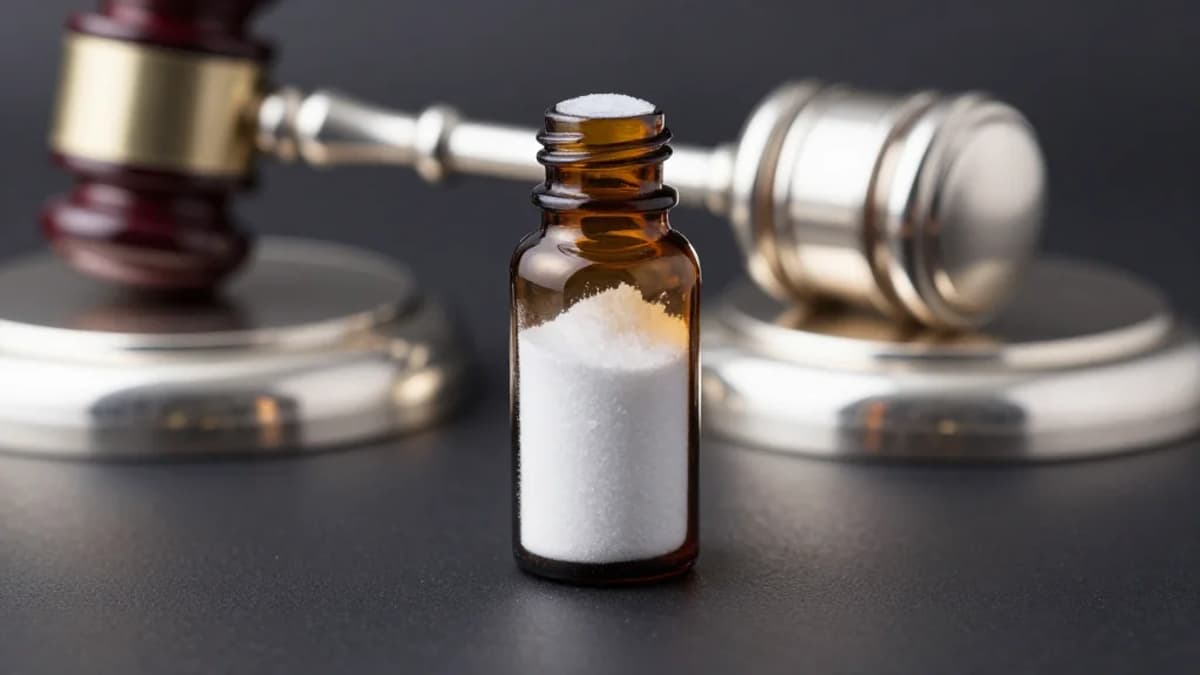
OLYMPIA, Wash. (CN) — The families of three teenagers and a young adult who died after ingesting sodium nitrite purchased on Amazon can pursue claims against the company, the Washington Supreme Court ruled Thursday.

“Today’s historic decision from the Washington Supreme Court unanimously determined that Amazon can be liable for selling death,” said Carrie Goldberg, attorney for the plaintiffs. “According to Amazon, it could sell and deliver suicide kits to the general public even though it knew its purchasers were in despair and contemplating a tortured death.”

The families accused Amazon of selling high-purity sodium nitrite despite knowing it had no legitimate household uses, and of promoting it alongside other products that could facilitate suicide.

A trial court refused to dismiss the families’ claims, but the Washington Court of Appeals reversed and found state law doesn’t impose a duty on sellers to protect against intentional misuse of a product. However, the Washington Supreme Court disagreed.

“Taking the facts plaintiffs have alleged as true, we are unable to say, as a matter of law, beyond a reasonable doubt, that the decedents’ deaths were not proximately caused by Amazon’s alleged tortious sales practices of the sodium nitrite,” Supreme Court Justice Helen Whitener wrote on behalf of the majority.

The court found that the act of suicide, as a matter of law, doesn’t preclude the families’ claims brought under Washington state’s product liability law.

Sodium nitrite is used in research and medicine and in meat curing. In meat preservation, curing salts typically require a 6% purity of sodium nitrite. The two brands of sodium nitrite at issue in this case were sold at 98% and 99.6% purity. 

The families claim Amazon negligently sold the high-purity sodium nitrite and that its algorithm encouraged the purchase of harmful products, including a suicide instruction book and medication that prevents life-saving vomiting.  

Amazon argued it doesn’t have a duty to exercise reasonable care to prevent the act of suicide because the danger was obviously known. The high court rejected that.

“​​The argument that plaintiffs may have misused the product does not eliminate Amazon’s duty,” Whitener wrote.

As a product seller, Amazon has a legal duty to exercise reasonable care to avoid the foreseeable consequences and harm of selling the sodium salt, the Supreme Court found. It is also therefore required to avoid exposing purchasers to harm from the foreseeable conduct of a third party.

“Foreseeability does not eliminate the duty owed, it just limits the scope of the duty,” Whitener wrote. “Whether the act of suicide was a foreseeable consequence and harm of the act of selling sodium nitrite to the decedents is a question of fact for the jury.”

Concurring with the majority, Supreme Court Justice Steven Gonzalez wrote that the families’ accusations do more than create a triable issue. 

“The plaintiffs’ allegations suggest that Amazon’s algorithm marketed despair and a tortured death,” Gonzalez wrote. “In my view, it is, at least, negligent for a product seller to sell a dangerous product when it knows it is being used by vulnerable people the way sodium nitrite was being used here without taking reasonable steps to prevent that use.”

The plaintiffs celebrated the court’s decision.

“The concurrence by Judge Gonzalez recognizes what our clients have been arguing for half a decade — that Amazon’s actions were ‘not merely negligent but reckless or intentional,’” Goldberg said. “The majority opinion and three concurrences mark a huge shift in how courts are now appreciating the complexity of suicide.”

The four decedents in the case — ages 17, 18, 19 and 27 — purchased sodium nitrite from Amazon in 2020 and soon after died from poisoning. Their deaths, and the death of dozens of others linked to Amazon purchases of the chemical, prompted a 2021 investigation by The New York Times. The article led members of Congress to demand answers from the company about its sales practices in early 2022.

Amazon said it restricted the sale of high-concentration sodium nitrite to Amazon Business buyers in late 2022 and banned the sale of sodium nitrite in concentrations over 10% in November 2025. 

A spokesperson for the company extended condolences to the families and said the company is committed to customer safety. The company also requires its selling partners to follow applicable laws and regulations.

“High-concentration sodium nitrite is not intended for direct consumption, and unfortunately, like many products, it can be misused,” the spokesperson said. “While we disagree with the court’s ruling, we remain committed to the safety of all our customers.”

The Washington Supreme Court’s ruling carries implications for similar suits pending against Amazon. The Ninth Circuit has deferred ruling in a similar case until after the Washington Supreme Court issued its decision in this case.

If you are having thoughts of suicide, call or text 988, or call the National Suicide Prevention Lifeline at 1-800-273-8255 (TALK). Visit SpeakingOfSuicide.com/resources for a list of resources.

Read Original Article
0

Comments

Want to join the conversation?

Loading comments...