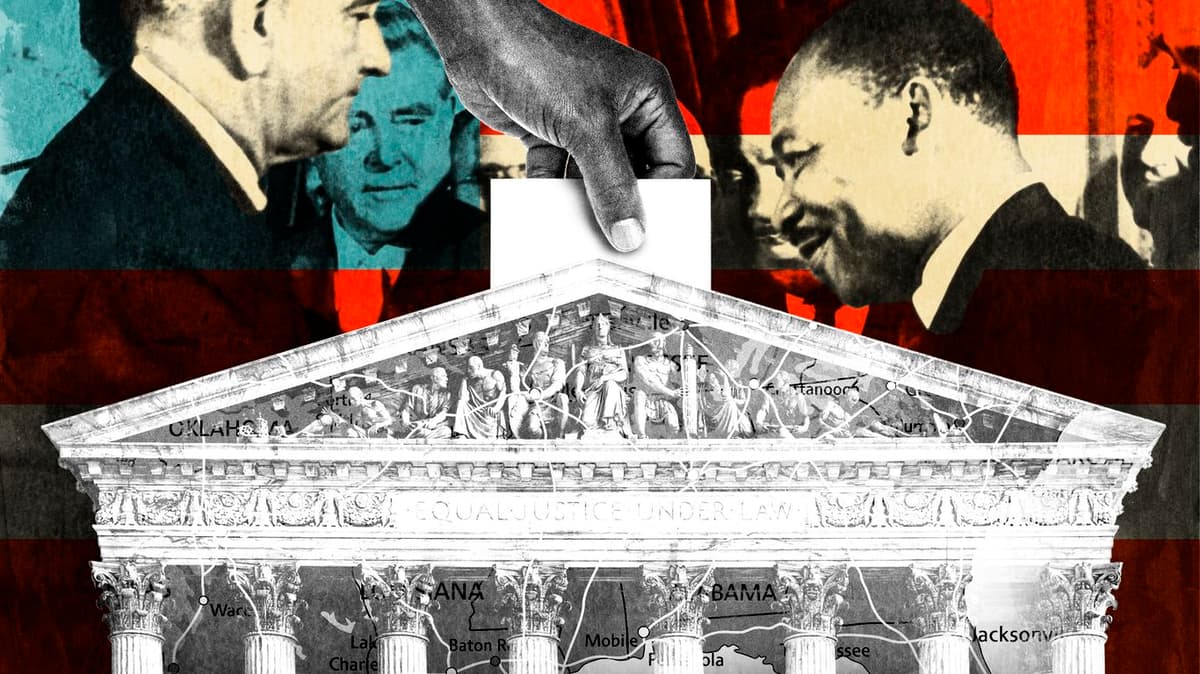
What a Weakened Voting Rights Act Means in Today's America
Why It Matters
Weakening Section 2 removes a primary federal guardrail for minority voters, potentially reshaping electoral power in an increasingly diverse nation.
Key Takeaways
- •Supreme Court narrows Section 2, limiting federal gerrymandering oversight.
- •White share fell to ~59%; multiracial growth up 276% (2010‑2020).
- •Sun Belt metros, historic voting‑rights battlegrounds, now face higher redistricting stakes.
- •Legal challenges likely to shift to state courts and Congress.
- •Critics warn the ruling could erode minority electoral representation.
Pulse Analysis
The Supreme Court’s recent decision in Louisiana v. Callais marks a pivotal shift in voting‑rights jurisprudence. Section 2, enacted in 1965 to dismantle Jim Crow barriers, has long served as the nation’s primary tool for challenging racially gerrymandered maps. By narrowing its scope, the Court effectively reduces the federal government’s ability to intervene when state legislatures draw districts that dilute minority voting strength. This change comes at a moment when the demographic landscape has transformed dramatically—white Americans now comprise roughly 59% of the population, while multiracial, Latino and Asian groups have surged, reshaping the electorate’s composition.
The practical fallout will be most acute in the Sun Belt, where population inflows have turned cities like Austin, Phoenix and Atlanta into political flashpoints. Historically, these regions were the battlegrounds for civil‑rights victories, and they now face heightened stakes as state legislatures gain greater leeway to redraw districts without robust federal scrutiny. Legal challenges are expected to migrate to state courts, where precedents vary widely, and to the halls of Congress, which may need to craft new legislation to fill the protective gap. Analysts project that the immediate impact could alter one to three congressional seats in the 2026 cycle, with larger repercussions for Black‑majority districts by 2028.
Beyond the numbers, the decision reverberates through the civil‑rights movement’s legacy. Advocacy groups warn that the erosion of Section 2 could embolden tactics that marginalize voters of color, from aggressive voter‑ID laws to restrictive polling access. As demographic trends continue to diversify the electorate, the balance between state autonomy and federal protection will shape the next generation of American democracy. Stakeholders are watching closely for legislative responses that could restore or reinvent the safeguards once provided by the Voting Rights Act.
What a weakened Voting Rights Act means in today's America
Comments
Want to join the conversation?
Loading comments...