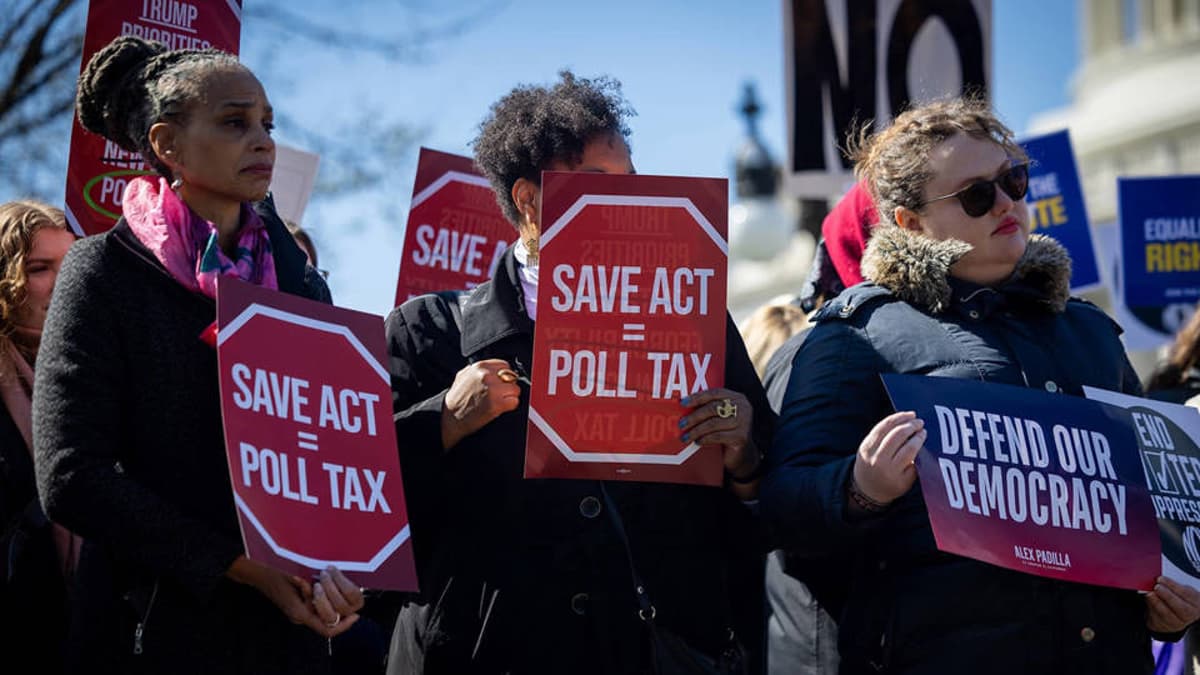
What’s Wrong With the SAVE America Act?
Why It Matters
If enacted, the SAVE Act could reshape the electorate, suppress turnout among certain groups, and set a national precedent for stricter voter‑ID requirements.
Key Takeaways
- •SAVE Act mandates citizenship verification for voter registration
- •Critics warn it may suppress eligible voter participation
- •Bill faces legal challenges over constitutional voting rights
- •Republicans support; Democrats oppose the measure
Pulse Analysis
The SAVE America Act emerges amid a wave of state‑level voter‑ID initiatives that aim to tighten election security. Historically, proof‑of‑citizenship requirements have been rare in the United States, with most states relying on less stringent identification methods. By mandating a citizenship document at registration, the bill seeks to eliminate alleged fraud involving non‑citizens, a claim that has been repeatedly debunked by academic studies. Advocates argue that the policy will restore public confidence in the electoral process, especially after the contentious 2024 presidential election.
However, the legislation carries significant risks of disenfranchising legitimate voters. Many eligible citizens, particularly recent immigrants, low‑income individuals, and the elderly, may lack easy access to the required documents, leading to lower registration rates. Legal scholars contend that the act could violate the Fourteenth Amendment’s Equal Protection Clause and the National Voter Registration Act, which prohibits undue burdens on voter registration. Courts across the country have struck down similar measures, suggesting that the SAVE Act may face immediate litigation if it clears the Senate.
Politically, the SAVE Act has become a litmus test for party loyalty. Republicans frame it as a necessary safeguard against fraud, while Democrats portray it as a voter‑suppression tool that benefits the incumbent party. Polls indicate a divided electorate: a modest majority supports stronger ID checks, yet a sizable portion fears the loss of voting rights. As the Senate debate continues, the outcome will signal the trajectory of federal voting‑rights policy and could influence upcoming state legislation ahead of the 2028 election cycle.
What’s Wrong With the SAVE America Act?
Comments
Want to join the conversation?
Loading comments...