Why Scalable Case Management Software Is Essential for Growing Law Firms
•February 27, 2026
0
Why It Matters
A unified, scalable system transforms chaotic expansion into efficient, revenue‑protecting operations, giving firms a competitive edge in a crowded legal market.
Key Takeaways
- •Growth strains informal tools, causing missed deadlines
- •Centralized case management improves visibility and collaboration
- •Scalable software standardizes onboarding and delegation
- •Consistent workflows reduce errors and support billing accuracy
- •Flexible platforms enable future expansion without disruption
Pulse Analysis
Law firms are confronting unprecedented growth pressures as client demands rise and new practice areas emerge. Traditional reliance on email, spreadsheets, and shared drives creates silos that hinder visibility and increase the likelihood of missed deadlines. Industry surveys show that firms adopting dedicated practice management platforms report a 20‑30% boost in operational efficiency within the first year, underscoring a broader shift toward technology‑enabled legal services.
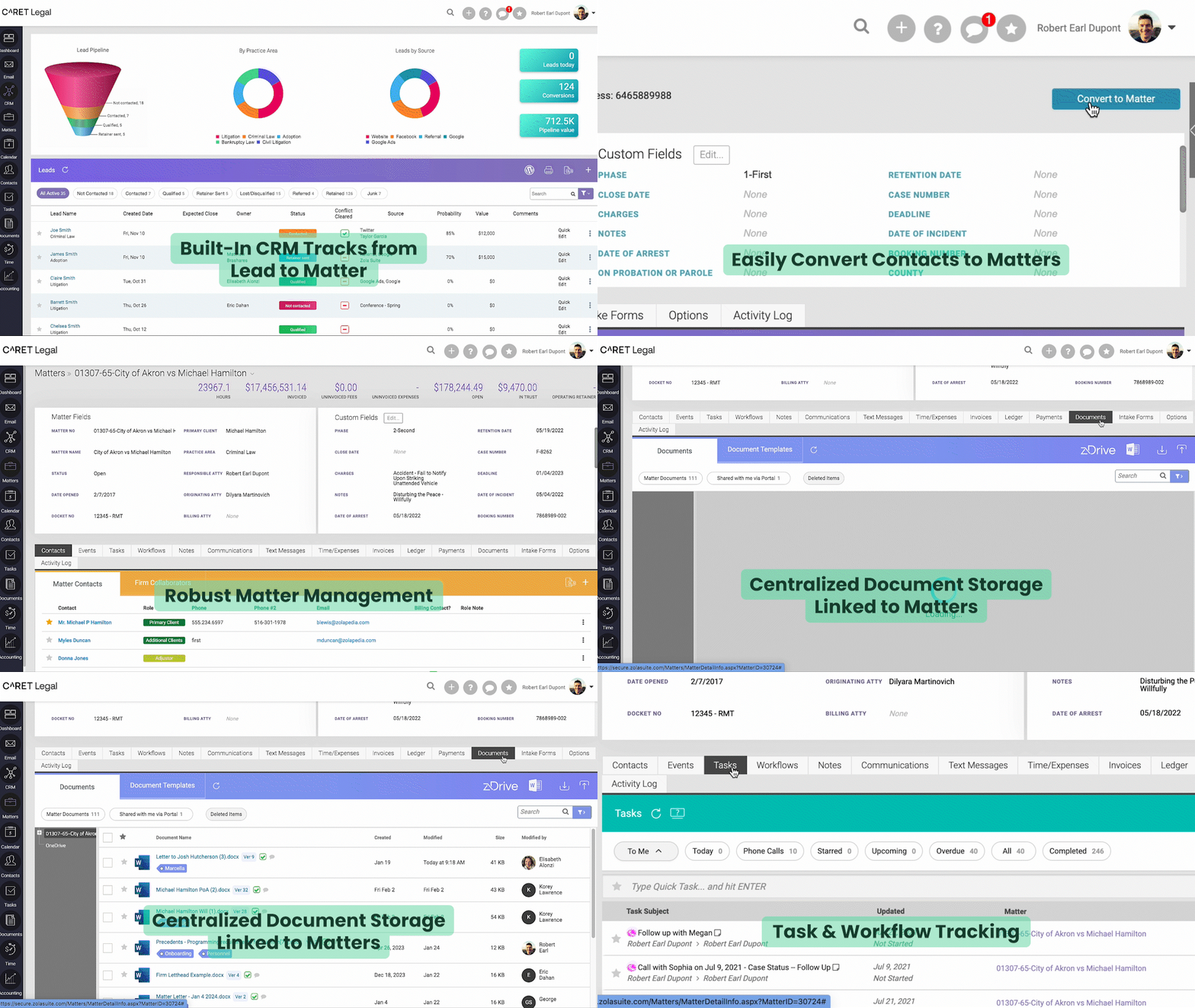
Centralization lies at the heart of scalable case management. By consolidating case files, task assignments, and time‑tracking into a single dashboard, firms gain real‑time insight into workload distribution and financial performance. Standardized workflows accelerate onboarding, reduce the learning curve for new hires, and ensure billing consistency across the organization. Moreover, a unified system minimizes duplicate effort and mitigates compliance risks, delivering measurable cost savings and protecting revenue streams as the firm scales.
Looking ahead, flexibility becomes a decisive factor. Scalable platforms allow law firms to expand functionality—such as advanced analytics, AI‑driven document review, or client portals—without overhauling existing processes. This adaptability reduces the need for disruptive migrations and supports a smoother growth trajectory. Firms that invest early in a robust case management solution not only safeguard current operations but also build a resilient foundation for future market opportunities, delivering a clear return on investment and a sustainable competitive advantage.
Why Scalable Case Management Software Is Essential for Growing Law Firms
0
Comments
Want to join the conversation?
Loading comments...