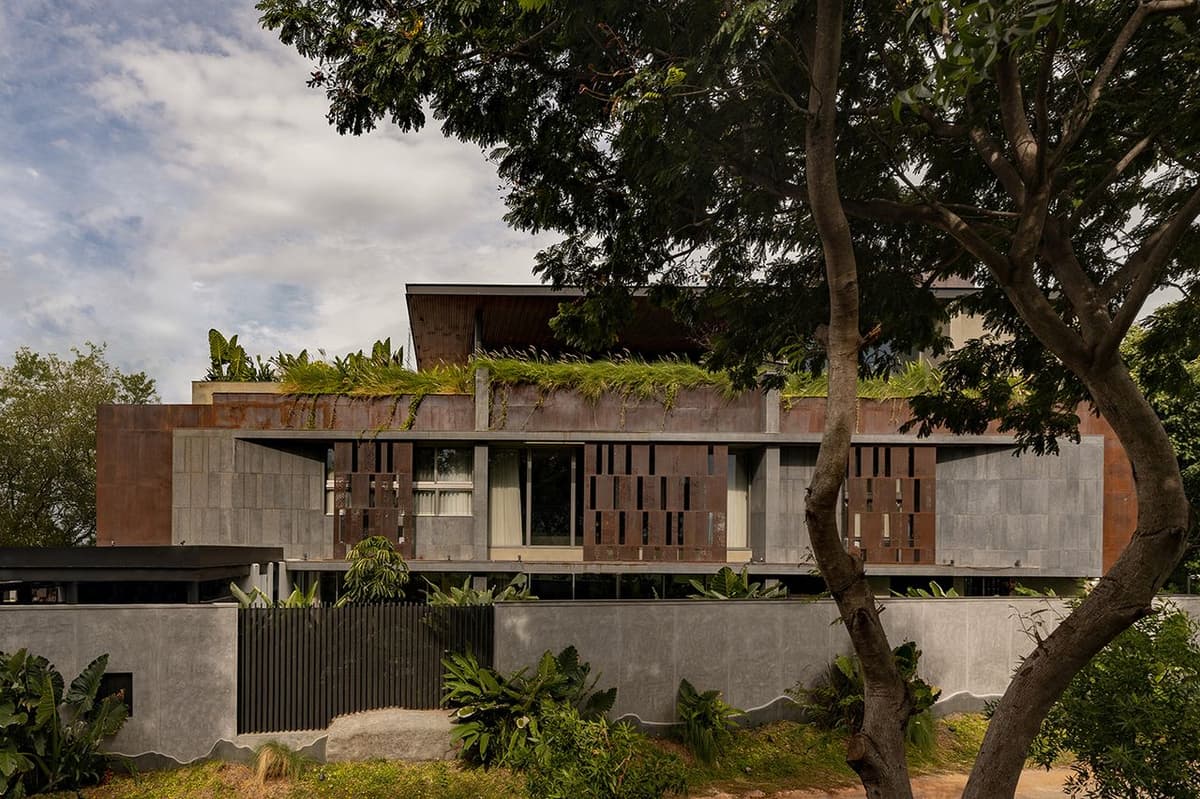
A Serene Indian Home, Western Valley House, Was Designed with a Cinematographer’s Eye
Why It Matters
The project showcases how emerging Indian architects are redefining residential design with narrative‑driven spatial concepts, signaling a shift toward experiential homes that integrate nature and storytelling.
Key Takeaways
- •STO.M.P’s Western Valley House uses three stacked horizontal bands.
- •Design blurs indoor‑outdoor boundaries with large openings toward the lake.
- •Warm wood, brass accents create a rustic‑modern material palette.
- •Cinematographic approach guides movement, framing views like a moving shot.
Pulse Analysis
India’s residential architecture is entering a new era where storytelling and place‑making intersect. STO.M.P, a studio emerging from Madurai’s vibrant design scene, leverages its cinematic sensibility to craft Western Valley House, a home that feels like a sequence of carefully framed shots. Situated on a leafy valley edge near Theni, the project taps into the region’s natural topography, using the lake and surrounding hills as visual anchors that inform both layout and materiality. This contextual grounding reflects a broader movement among Indian architects to move beyond generic modernism toward site‑specific narratives.
The house’s three‑band composition translates programmatic functions into a clear visual hierarchy: communal spaces occupy the ground level, private bedrooms rise above, and a wellness suite crowns the structure. Large glazed openings dissolve the wall between interior and exterior, inviting the valley’s light and the lake’s reflections inside. Materially, the design juxtaposes rustic timber with polished brass, creating a tactile contrast that reinforces the dialogue between tradition and contemporary aesthetics. By treating each spatial transition as a cinematic cut, the architects orchestrate a rhythm that guides occupants through varying moods and scales, echoing the pacing of a well‑edited film.
Western Valley House signals a growing appetite for homes that deliver experiential richness rather than mere shelter. As Indian buyers increasingly value lifestyle integration with nature, architects who can weave narrative techniques into functional design are poised to lead the market. STO.M.P’s approach may inspire peers to adopt similar cinematographic strategies, fostering a new typology of Indian residences that prioritize visual storytelling, material honesty, and seamless indoor‑outdoor continuity.
A serene Indian home, Western Valley House, was designed with a cinematographer’s eye
Comments
Want to join the conversation?
Loading comments...