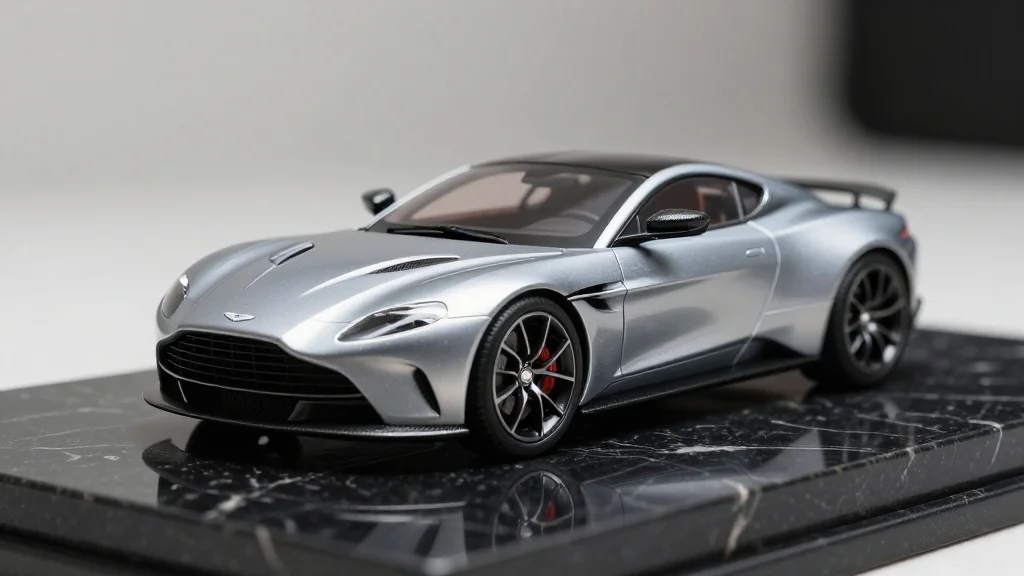
Aston Martin Begins Delivering $1 Million Valhalla Hyper‑Car, Cementing $1 Billion Bet

Companies Mentioned
Why It Matters
The Valhalla’s launch is a pivotal moment for the luxury automotive sector because it demonstrates how legacy brands are leveraging hyper‑cars to reinvent their financial narratives. By committing a billion dollars to a single model, Aston Martin signals that high‑priced, limited‑edition vehicles can serve as profit engines, offsetting broader market headwinds such as tightening emissions standards and shifting consumer preferences toward electrified mobility. Moreover, the Valhalla’s hybrid powertrain underscores the industry’s transition toward sustainable performance. As regulators worldwide tighten CO₂ limits, manufacturers that can deliver track‑level performance without sacrificing efficiency will gain a competitive edge. Aston Martin’s gamble could set a benchmark for how luxury marques balance heritage, exclusivity, and technological innovation in the coming years.
Key Takeaways
- •Aston Martin begins delivering the Valhalla hyper‑car, priced just over $1 million.
- •Development of the Valhalla cost roughly $1 billion, marking the brand’s biggest single investment.
- •The hybrid V6 powertrain produces 937 horsepower and 0‑60 mph in under three seconds.
- •Initial rollout targets 100 deliveries by end‑2026, with a total run limited to 500 units.
- •The launch intensifies competition with Ferrari, Lamborghini, and McLaren in the ultra‑luxury segment.
Pulse Analysis
Aston Martin’s Valhalla represents a calculated pivot from its traditional grand touring pedigree toward the hyper‑car niche, a space historically dominated by Italian marques. The decision to allocate a billion dollars to a single model reflects a broader industry trend where legacy manufacturers bet on halo products to rejuvenate brand perception and attract affluent buyers. While the financial upside of a $1 million price tag is clear, the real test lies in the car’s ability to deliver a seamless ownership experience that justifies its cost—something that has tripped up rivals in the past.
Historically, hyper‑cars have served as both engineering showcases and marketing tools, often subsidized by the parent company’s broader portfolio. Aston Martin’s approach differs in that the Valhalla is positioned as a direct revenue source, not merely a brand‑building exercise. If the limited‑run strategy succeeds, it could inspire other struggling luxury brands to adopt similar high‑margin, low‑volume models, reshaping the profit structures of the sector. However, the gamble carries risk: production delays, supply chain constraints, or underwhelming performance data could erode confidence among investors and customers alike.
Looking forward, the Valhalla’s hybrid architecture may set a new benchmark for performance electrification. As emissions standards tighten, manufacturers that can marry extreme power with efficient powertrains will likely dominate the next wave of ultra‑luxury vehicles. Aston Martin’s success—or failure—will therefore reverberate beyond its own balance sheet, influencing how the entire luxury automotive ecosystem balances heritage, exclusivity, and sustainability.
Aston Martin Begins Delivering $1 Million Valhalla Hyper‑Car, Cementing $1 Billion Bet
Comments
Want to join the conversation?
Loading comments...