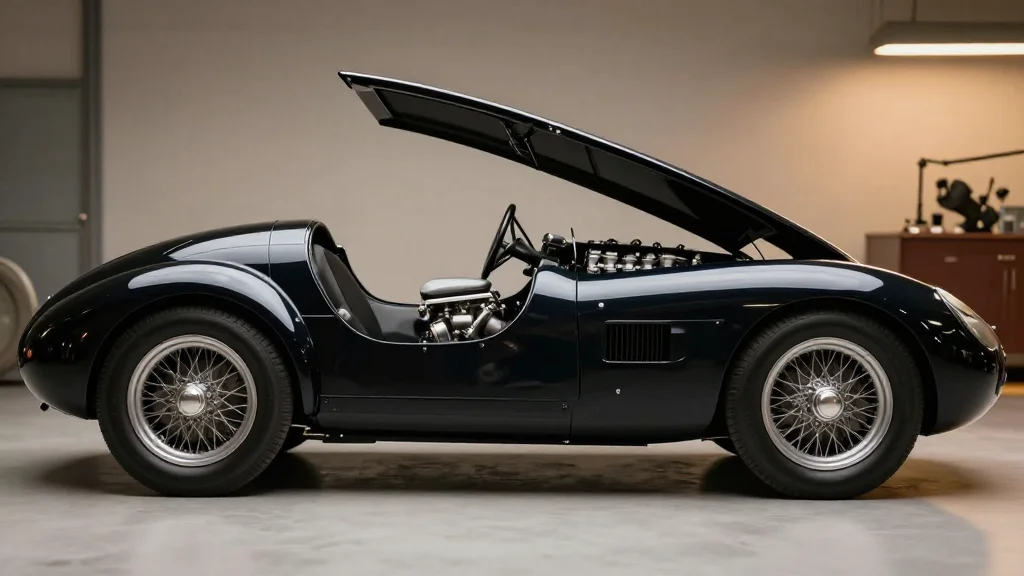
Audi Unveils Hand‑Built V16 Supercar Inspired by 1930s Auto Union Lucca

Companies Mentioned
Why It Matters
The Lucca project illustrates how legacy brands can monetize their archives by creating ultra‑exclusive, high‑performance vehicles that command premium prices and generate buzz without diluting core product lines. It also demonstrates a viable pathway for automakers to explore low‑volume, hand‑built manufacturing partnerships, reducing the risk and cost associated with full‑scale production. Finally, the blend of historic aesthetics with a modern V16 engine challenges industry norms around sustainability, prompting a dialogue on how luxury performance can evolve in an era of stricter emissions regulations. For collectors, the Lucca offers a tangible link to automotive history, potentially reshaping the secondary market for vintage‑inspired hypercars. For competitors, it raises the bar for heritage projects, compelling rivals to consider similar collaborations or to innovate new ways of honoring their own archives while meeting contemporary performance expectations.
Key Takeaways
- •Audi and Crosthwaite & Gardiner unveiled a hand‑built V16 supercar modeled on the 1930s Auto Union Lucca
- •The car uses a 6.0‑liter V16 delivering 520 PS (≈513 hp) and weighs 2,116 lb
- •Wind‑tunnel testing achieved a drag coefficient of 0.43, rare for a 1930s‑style body
- •Fuel blend includes 40 % premium gasoline, 50 % methanol and 10 % toluene
- •Limited production run announced, with final specs and pricing expected in early 2027
Pulse Analysis
Audi’s Lucca is less a commercial launch than a strategic showcase of brand DNA. By resurrecting a record‑setting machine from the pre‑war era, Audi taps into the emotional capital of its Auto Union heritage, a narrative that resonates with affluent collectors who prize rarity and story over sheer performance numbers. The partnership with Crosthwaite & Gardiner sidesteps the economies of scale that typically constrain hyper‑car projects, allowing Audi to test bespoke manufacturing processes without committing to a full production line. This approach mirrors the limited‑edition strategies of Ferrari’s SP series, where the marque outsources chassis work to external specialists while retaining powertrain oversight.
From a market perspective, the Lucca arrives at a time when the luxury performance segment is saturated with carbon‑fiber‑laden, turbocharged hybrids. Its naturally aspirated V16, running on a mixed fuel, offers a nostalgic counterpoint that could attract purists disillusioned with electrification. However, the reliance on methanol and toluene may limit its appeal in jurisdictions tightening fuel standards, suggesting that the Lucca is destined for private tracks or exhibition rather than road use. This niche positioning could reinforce the perception of hyper‑cars as collectible art pieces rather than everyday performance tools.
Looking ahead, the Lucca could serve as a prototype for a new line of heritage‑centric models, each leveraging a different chapter of Audi’s storied past. If the limited run proves financially successful, we may see a cascade of similar projects across the Volkswagen Group, where brands like Porsche and Lamborghini could revive iconic silhouettes with modern powertrains. The key will be balancing authenticity with regulatory compliance, a challenge that will shape the next decade of ultra‑luxury automotive design.
Audi Unveils Hand‑Built V16 Supercar Inspired by 1930s Auto Union Lucca
Comments
Want to join the conversation?
Loading comments...