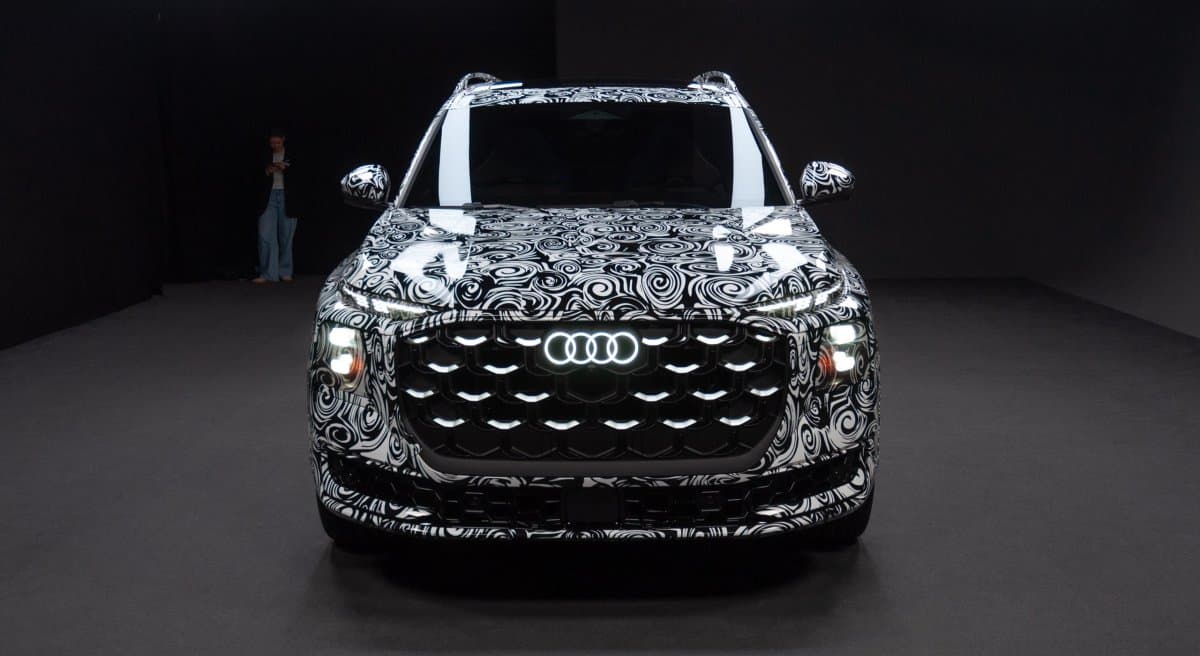
Audi’s Matrix LED Headlights Are Finally Coming to America
Companies Mentioned
Why It Matters
The rollout gives Audi a competitive edge in safety and premium technology, aligning U.S. offerings with European standards and satisfying consumer demand for advanced driver‑assist features. It also signals broader industry adoption of adaptive lighting as regulations evolve.
Key Takeaways
- •Audi Q9 will debut Matrix LED headlights in US later this year
- •Updated US regulations in 2021 finally allow adaptive lighting systems
- •Previous Audi models had disabled Matrix LEDs due to compliance issues
- •Digital Matrix LED uses cameras to shape beams around oncoming traffic
- •Rivian remains only other US brand offering compliant matrix lighting now
Pulse Analysis
The United States has long lagged behind Europe in adaptive headlamp technology, primarily because federal lighting standards were frozen for decades. In 2021, Congress finally modernized those rules, allowing dynamic beam‑shaping systems that can adjust to traffic conditions. Automakers that had already engineered such systems for overseas markets faced a costly redesign dilemma, prompting most to postpone U.S. rollouts. Audi’s decision to wait until the regulatory framework caught up reflects a strategic choice to avoid premature investment while still preserving the technology for future deployment.
Audi’s Digital Matrix LED system represents a leap beyond conventional adaptive headlights. By integrating a high‑resolution forward‑looking camera with a matrix of individually controllable LEDs, the system can dim or block light precisely where oncoming vehicles appear, preserving high‑beam illumination elsewhere. This real‑time beam sculpting reduces glare, enhances road visibility, and aligns with emerging safety metrics that prioritize driver comfort and pedestrian protection. Compared with Rivian’s compliant matrix solution, Audi’s approach promises a more seamless integration with its broader driver‑assist suite, potentially setting a new benchmark for luxury SUVs.
Introducing the technology on the Q9—a flagship three‑row crossover—positions Audi to capture affluent buyers who value cutting‑edge safety and convenience. The move also pressures competitors, from Mercedes‑Benz to BMW, to accelerate their own adaptive lighting programs as consumers become accustomed to such features. As regulatory certainty grows, we can expect a cascade of matrix‑enabled models across the segment, expanding the market for premium lighting components and creating new supply‑chain opportunities for semiconductor and sensor manufacturers. Audi’s timely entry may therefore translate into both brand differentiation and incremental revenue streams in the coming years.
Audi’s Matrix LED Headlights Are Finally Coming to America
Comments
Want to join the conversation?
Loading comments...