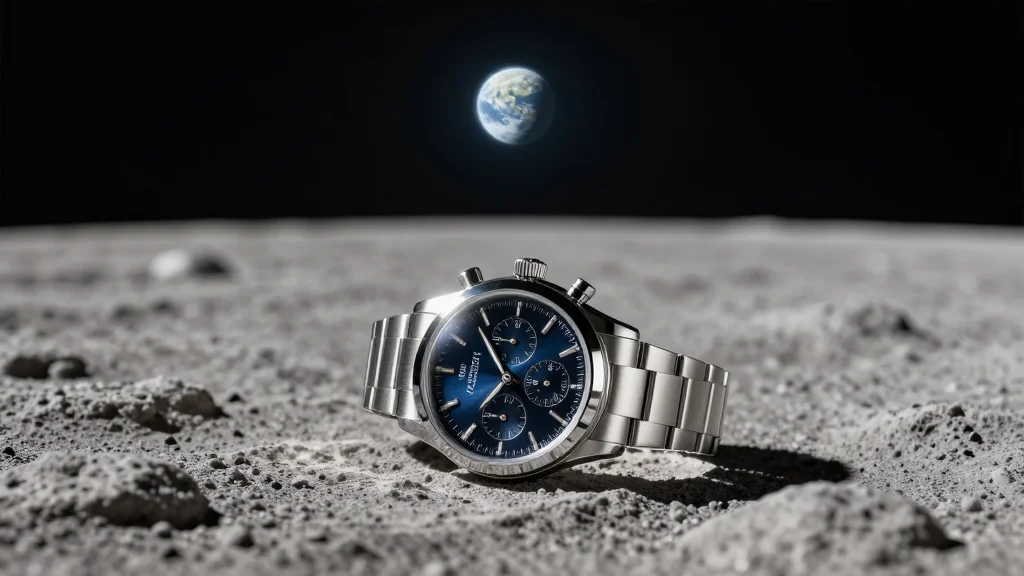
Bremont Unveils Supernova Collection, First British Watch to Journey to the Moon

Why It Matters
Bremont’s lunar venture signals a broader evolution in luxury branding, where heritage meets high‑tech ambition. By embedding a chronograph on a moon‑bound rover, the company creates a tangible link between its British engineering pedigree and the aspirational allure of space, a narrative that can command premium pricing and deepen emotional engagement with affluent buyers. The move also pressures competitors to innovate beyond traditional watchmaking, potentially accelerating a wave of space‑themed collaborations across the luxury sector. Furthermore, the Supernova collection could reshape secondary‑market dynamics. Limited‑edition pieces tied to historic events often appreciate in value, offering collectors a dual incentive of ownership and investment. If Bremont’s moon‑bound watch proves successful, it may set a new benchmark for how luxury brands leverage real‑world milestones to drive scarcity, brand equity, and long‑term profitability.
Key Takeaways
- •Bremont unveiled the Supernova collection at 2026 Watches & Wonders.
- •Supernova Chronograph will be embedded in Astrolab’s FLIP rover landing on the moon’s south pole this summer.
- •CEO Davide Cerrato called the launch a "pivotal moment" and the brand’s fourth product universe – Space.
- •The watch features a 904L steel case, black ceramic bezel and a blue‑glowing Super LumiNova dial.
- •Bremont aims to leverage the lunar mission to attract high‑net‑worth collectors and differentiate from heritage rivals.
Pulse Analysis
Bremont’s decision to send a watch to the moon is more than a marketing stunt; it reflects a strategic pivot toward experiential luxury that blurs the line between product and narrative. Historically, luxury watchmakers have relied on heritage and mechanical mastery. By anchoring its story in an actual extraterrestrial mission, Bremont creates a unique provenance that cannot be replicated, offering a compelling justification for higher price points and limited‑edition scarcity. This approach aligns with a growing consumer appetite for products that embody adventure and exclusivity, especially among younger ultra‑wealthy buyers who value authenticity over legacy alone.
The partnership with Astrolab also illustrates an emerging ecosystem where luxury brands collaborate with aerospace firms to co‑create artifacts that serve both scientific and commercial purposes. Such collaborations could become a new growth engine, providing luxury houses with access to cutting‑edge technology and a platform for storytelling that resonates globally. However, the success of this model hinges on execution—delays or technical failures could tarnish brand credibility. Bremont’s careful emphasis on its end‑to‑end British manufacturing and engineering rigor aims to mitigate that risk, positioning the watch as a reliable instrument rather than a novelty.
Looking forward, the lunar landing will serve as a litmus test for the viability of space‑centric luxury products. If the Supernova Chronograph garners strong demand and secondary‑market performance, we may see a cascade of similar initiatives—from high‑end jewelry to fashion houses—seeking to embed their creations in space missions. This could redefine the parameters of luxury scarcity, shifting the focus from limited production runs to limited access to historic moments, fundamentally altering how brands create and monetize desirability.
Bremont Unveils Supernova Collection, First British Watch to Journey to the Moon
Comments
Want to join the conversation?
Loading comments...