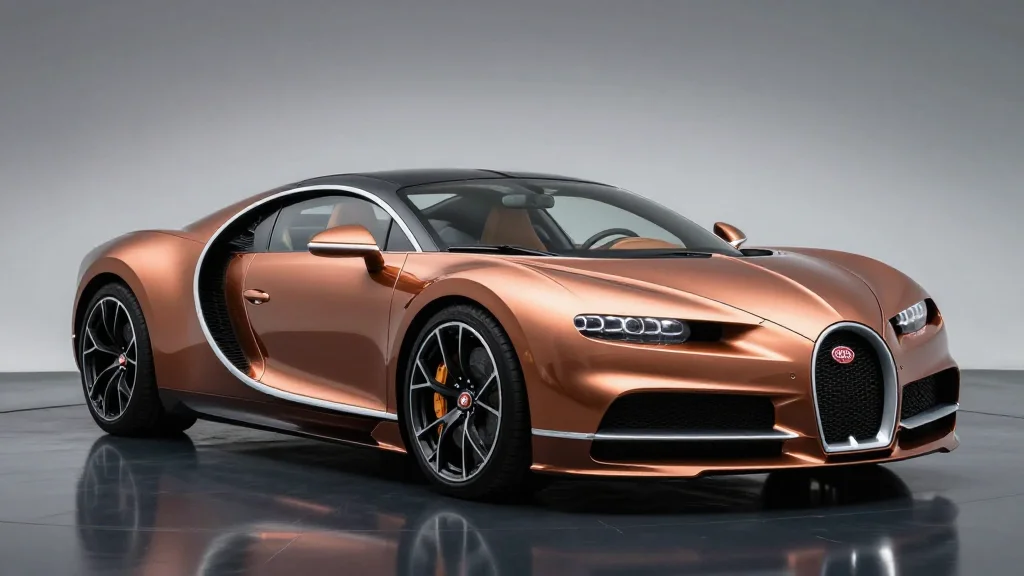
Bugatti Unveils One‑Off W16 Mistral ‘Le Retour Du Jeune Prince’ After Porsche Exit

Companies Mentioned
Why It Matters
The launch of ‘Le Retour du Jeune Prince’ illustrates how hyper‑luxury manufacturers are doubling down on ultra‑exclusive, narrative‑driven commissions to differentiate themselves in a market where regulatory constraints threaten the viability of traditional combustion‑engine supercars. By marrying a literary tribute with the iconic W16 powertrain, Bugatti reinforces its brand mythos while navigating a post‑Porsche ownership landscape that demands both financial independence and creative autonomy. The vehicle also serves as a barometer for how other luxury marques might employ bespoke projects to retain elite clientele as the industry pivots toward greener propulsion. Furthermore, the car’s existence challenges the narrative that emissions regulations will imminently end the era of the W16 engine. By preserving the powerplant in a limited, highly curated context, Bugatti signals that there may still be a niche market for pure internal‑combustion hypercars, provided they are produced in ultra‑low volumes and paired with compelling storytelling. This approach could influence how regulators and manufacturers negotiate the future of high‑performance automotive engineering.
Key Takeaways
- •Bugatti unveiled a one‑off W16 Mistral ‘Le Retour du Jeune Prince’, the first model after Porsche sold its stake.
- •The car’s design draws on a new continuation of *Le Petit Prince*, featuring copper‑bronze paint and dual‑tone leather interiors.
- •It retains the quad‑turbo 8.0‑litre W16 engine, despite earlier plans to retire the powerplant due to emissions rules.
- •The vehicle was created through Bugatti’s Sur Mesure program, highlighting the brand’s focus on bespoke hyper‑car exclusivity.
- •The launch signals Bugatti’s strategic shift toward ultra‑custom projects in a post‑Porsche ownership era.
Pulse Analysis
Bugatti’s decision to showcase a one‑off hypercar at a time when the automotive world is racing toward electrification is both a bold brand statement and a calculated risk. Historically, Bugatti has thrived on the myth of the W16 engine—a symbol of unbridled performance that few competitors can match. By preserving this engine in a limited, narrative‑rich commission, the marque is effectively creating a collector’s artifact that transcends pure performance metrics. This mirrors a broader luxury trend where heritage and storytelling become as valuable as the product itself.
The post‑Porsche ownership structure gives Bugatti greater latitude to pursue niche projects without the pressure of meeting the broader corporate profitability targets that a larger conglomerate might impose. However, this freedom comes with the challenge of sustaining a viable business model when the pool of buyers for such singular pieces is minuscule. The company’s reliance on Sur Mesure commissions could become a double‑edged sword: it reinforces exclusivity but may also limit revenue streams if regulatory pressures eventually force a shift to hybrid or electric powertrains.
Looking forward, Bugatti’s next strategic move will likely involve integrating electrified technology into its bespoke offerings while preserving the emotional pull of the W16 legacy. If the brand can successfully blend cutting‑edge sustainability with its storied performance DNA, it could set a template for other ultra‑luxury manufacturers navigating the same crossroads. Until then, projects like ‘Le Retour du Jeune Prince’ serve as both a celebration of past engineering triumphs and a reminder of the delicate balance between art, regulation, and market demand in the hyper‑luxury segment.
Bugatti Unveils One‑Off W16 Mistral ‘Le Retour du Jeune Prince’ After Porsche Exit
Comments
Want to join the conversation?
Loading comments...