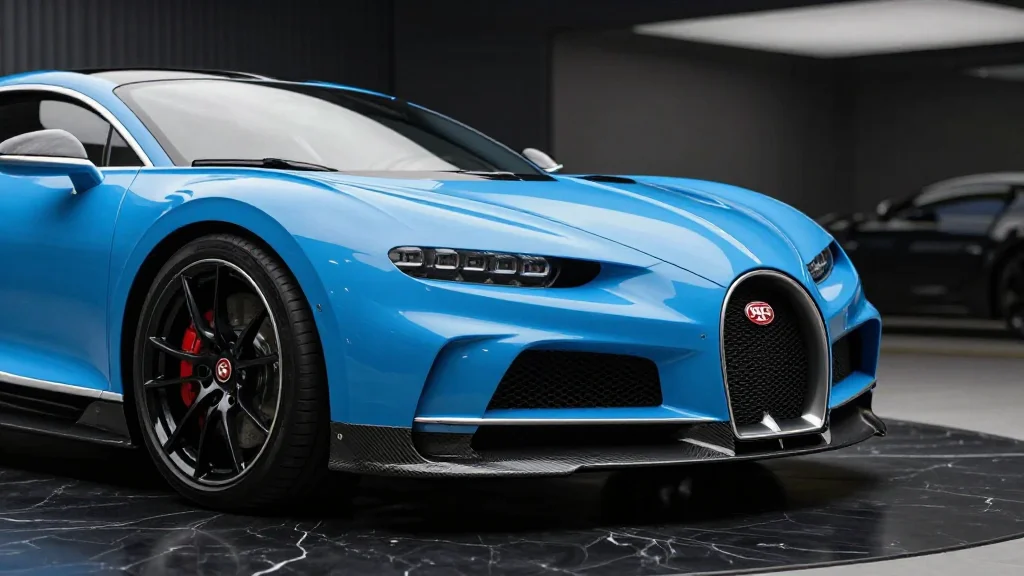
Bugatti Unveils W16 Mistral ‘Fly Bug’, a Dragonfly‑Inspired Hypercar for Ultra‑Wealthy Collectors

Why It Matters
The ‘Fly Bug’ underscores a pivotal trend: luxury consumers are no longer satisfied with performance alone; they demand objects that tell a personal story and serve as extensions of their identity. By delivering a hyper‑personalized vehicle that fuses cutting‑edge engineering with a narrative drawn from the natural world, Bugatti sets a benchmark for other luxury manufacturers seeking to deepen client relationships. Moreover, the project highlights the increasing importance of bespoke material development, a capability that could spill over into other high‑end sectors, reshaping how luxury brands differentiate themselves in an increasingly saturated market. For the broader luxury ecosystem, Bugatti’s approach signals that the future of ultra‑luxury may hinge on collaborative creation rather than mass‑produced exclusivity. As wealth concentration grows, brands that can translate a client’s personal passions into tangible, high‑performance art will capture the most lucrative segment of the market, driving both revenue and brand equity.
Key Takeaways
- •Bugatti unveiled the W16 Mistral ‘Fly Bug’, a one‑off hypercar inspired by dragonflies.
- •The car features a bespoke ‘Dragonfly Blue’ paint that shifts hue with light.
- •An ellipse pattern spreads across the exterior, becoming denser toward the rear.
- •Interior combines leather over Alcantara in a geometric, three‑dimensional finish.
- •First Bugatti model to apply a graphic pattern across both door panels and armrests.
Pulse Analysis
Bugatti’s Sur Mesure program is evolving from a niche customization service into a strategic growth engine. Historically, the brand’s limited‑edition models have been driven by engineering milestones—Veyron, Chiron, Divo—yet the ‘Fly Bug’ demonstrates a pivot toward storytelling as a core value proposition. By anchoring the vehicle’s design in the collector’s fascination with dragonflies, Bugatti transforms a mechanical marvel into a personal artifact, effectively monetizing emotional capital. This shift mirrors a broader luxury trend where experiential ownership outweighs pure performance metrics.
From a market perspective, the ‘Fly Bug’ could catalyze a wave of hyper‑personalized collaborations across the automotive sector. Brands like Rolls‑Royce and Lamborghini have already experimented with bespoke interiors, but Bugatti’s integration of custom paint chemistry, material engineering, and graphic design sets a new bar for depth of personalization. Competitors will need to invest in multidisciplinary design studios—combining automotive engineering with fine‑art craftsmanship—to remain relevant to the ultra‑wealthy clientele that now expects a seamless blend of art and technology.
Looking ahead, the sustainability angle may become a decisive factor. While the ‘Fly Bug’ retains the W16’s massive fuel consumption, its emphasis on recyclable, high‑end materials hints at a future where luxury performance can coexist with environmental stewardship. If Bugatti can marry its legendary powertrain with greener material cycles, it could redefine the definition of a hypercar for the next generation of affluent consumers, positioning itself not just as a purveyor of speed, but as a leader in responsible luxury innovation.
Bugatti Unveils W16 Mistral ‘Fly Bug’, a Dragonfly‑Inspired Hypercar for Ultra‑Wealthy Collectors
Comments
Want to join the conversation?
Loading comments...