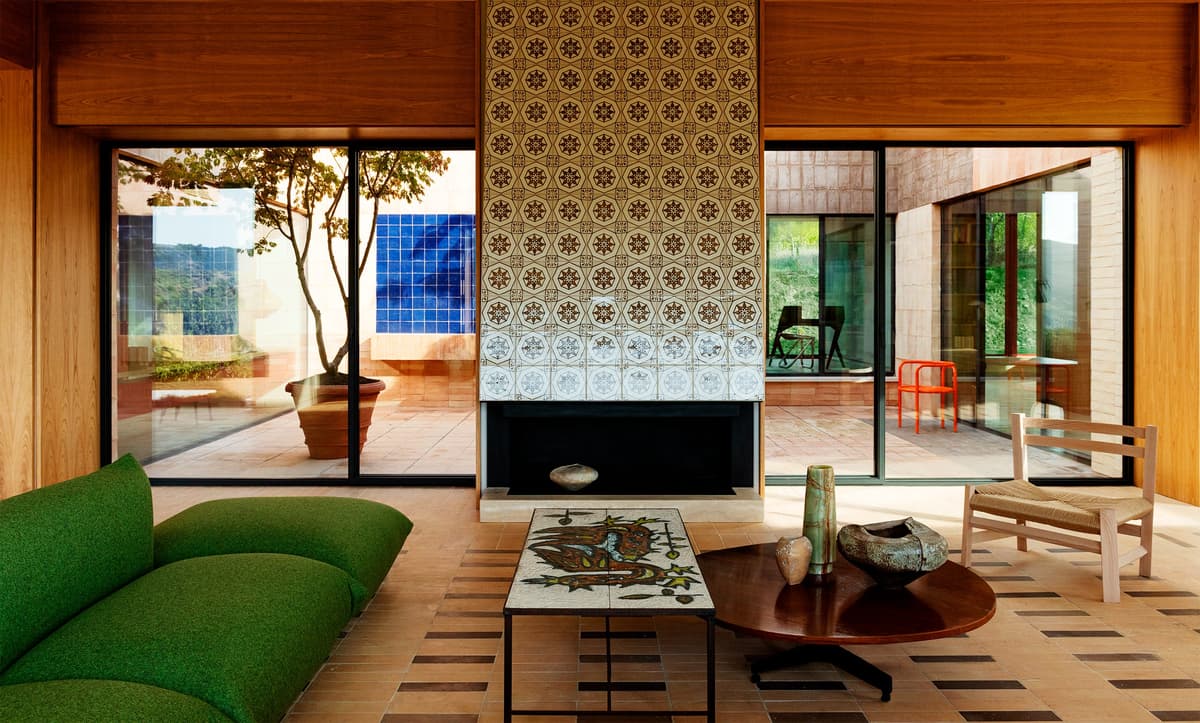
Built for a Family of Five, This Italian Countryside Home Resembles “a Small Village”
Why It Matters
The project demonstrates how contemporary architects can reinterpret modernist precedents while honoring local materials, setting a benchmark for luxury, family‑centric villas in heritage‑sensitive regions. Its success signals growing demand for immersive, long‑term residential commissions that merge architecture, landscape, and interior design into a unified experience.
Key Takeaways
- •Eight-year build creates a village‑like home for five family members
- •Design draws on Alvar Aalto’s Experimental House and Scandinavian principles
- •Polished terra‑cotta bricks form carpet‑like patterns, deviating from rustic norms
- •Custom chestnut‑wood furniture blends iconic pieces with contemporary Italian design
Pulse Analysis
The resurgence of architect‑driven, site‑specific residences reflects a broader shift toward experiential living, where the boundary between home and landscape is deliberately porous. By channeling Alvar Aalto’s Experimental House—a 1930s Finnish prototype that tested materiality through varied brickwork—Massimo Adario reimagines that experimental spirit for the Roman countryside. His use of polished terra‑cotta, a material traditionally associated with rustic farmhouses, is treated as a design canvas, creating carpet‑like patterns that respond to light and weather, echoing Aalto’s material investigations while grounding the project in local heritage.
Beyond material innovation, Castel Madama illustrates the growing appetite among affluent families for multi‑generational dwellings that function as micro‑communities. The layout, described as a "small village," allocates separate volumes for sleeping, cooking, and gathering, each accessed through shared patios that double as outdoor rooms. This modular approach not only respects the site’s archaeological constraints but also offers flexibility for evolving family needs, a trend increasingly valued in luxury real estate where longevity and adaptability are paramount.
Finally, the project underscores the importance of integrated design teams that span architecture, landscape, and interior craftsmanship. Adario’s collaboration with Italian artisans—producing custom chestnut‑wood furniture, hand‑decorated majolica tiles, and bespoke lighting—creates a cohesive aesthetic that resonates with discerning buyers seeking authenticity. As high‑net‑worth clients prioritize narrative‑rich environments over generic luxury, such holistic, culturally attuned projects are likely to shape the next generation of elite residential architecture.
Built for a Family of Five, This Italian Countryside Home Resembles “a Small Village”
Comments
Want to join the conversation?
Loading comments...