Companies Mentioned
Why It Matters
The project demonstrates how high‑performance, low‑carbon homes can respect regional vernacular while delivering modern comfort, setting a benchmark for sustainable rural development.
Key Takeaways
- •606 m² farmhouse blends modern design with North Hertfordshire vernacular.
- •Distributed across central house and three outbuildings forming sheltered courtyards.
- •Uses exposed brick, timber, bespoke joinery for tactile interior palette.
- •Fabric‑first sustainability includes MVHR, heat pumps, rainwater harvesting, PV array.
- •Designed to operate off‑grid under optimal conditions.
Pulse Analysis
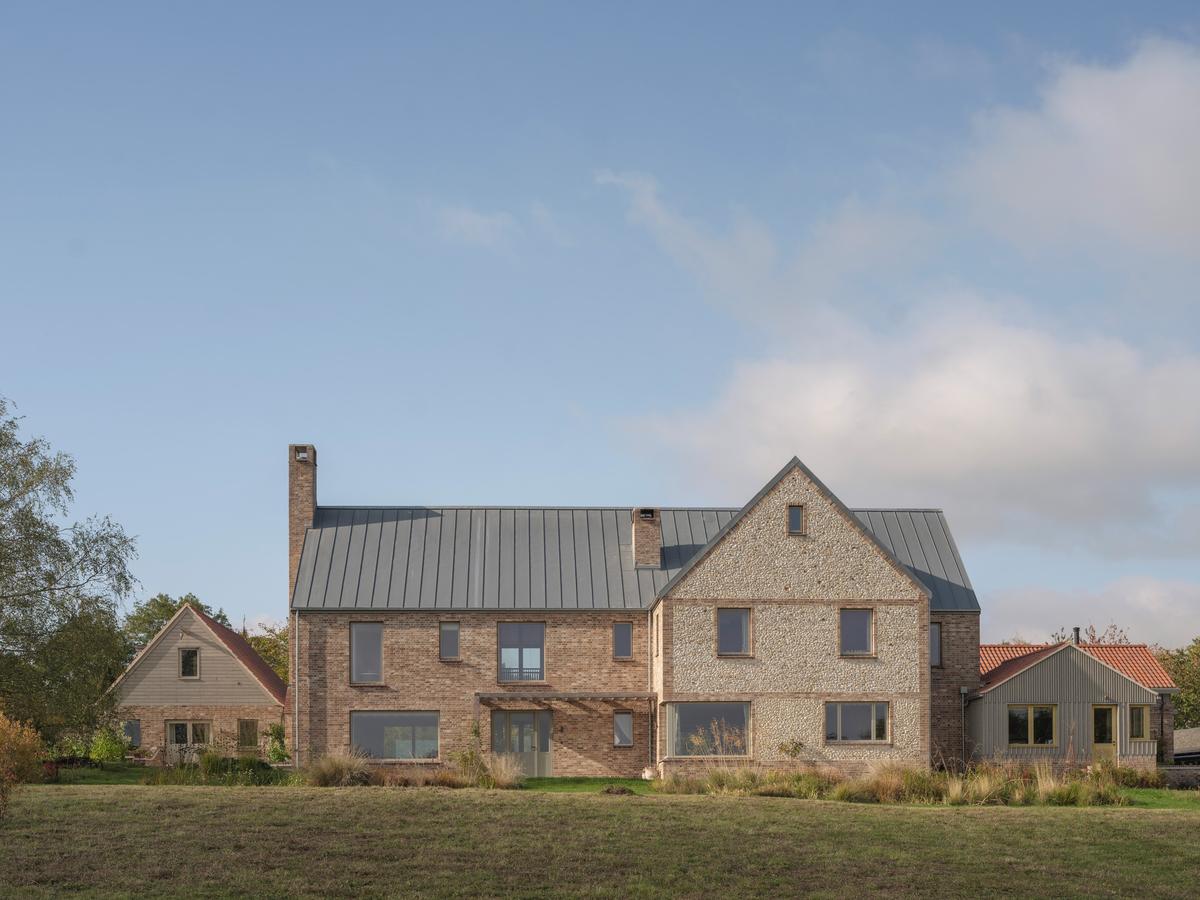
The resurgence of contemporary rural architecture reflects a broader industry shift toward context‑sensitive design. In the UK, architects are increasingly tasked with reimagining historic farmsteads for modern families, balancing heritage cues with clean, minimalist aesthetics. Ashworth Parkes Architects’ Hertfordshire farmhouse exemplifies this trend, using a de‑constructed layout that respects the site’s agricultural lineage while delivering spacious, flexible interiors. By situating three distinct outbuildings around a central volume, the design creates layered outdoor rooms that protect occupants from the exposed landscape and frame panoramic views of the countryside.
Materiality plays a pivotal role in bridging past and present. The architects selected locally resonant finishes—exposed brickwork, painted timber linings, and hand‑crafted joinery—to evoke the texture of traditional farm structures. Inside, a grand entrance hall anchored by a timber‑beam bridge and bespoke staircase adds a sculptural focal point, while large glazed apertures punctuate the façade, pulling the surrounding fields into daily life. This tactile palette not only enriches occupant experience but also reinforces a sense of place, a critical factor for buyers seeking authenticity in suburban‑rural markets.
Sustainability is woven into the building’s fabric rather than appended as an afterthought. High‑performance insulation, airtight detailing, and a mechanical‑ventilation‑with‑heat‑recovery system reduce energy demand, while an air‑source heat pump and stratified thermal water tanks adapt to occupancy patterns. Rainwater harvesting and a photovoltaic array installed on a repurposed piggery enable the home to operate off‑grid under favorable conditions, showcasing a viable pathway for low‑carbon living in dispersed settings. As climate imperatives intensify, such integrated, performance‑driven projects are likely to influence policy incentives and set new expectations for rural residential development.
Contemporary Farmhouse / Ashworth Parkes Architects
Comments
Want to join the conversation?
Loading comments...