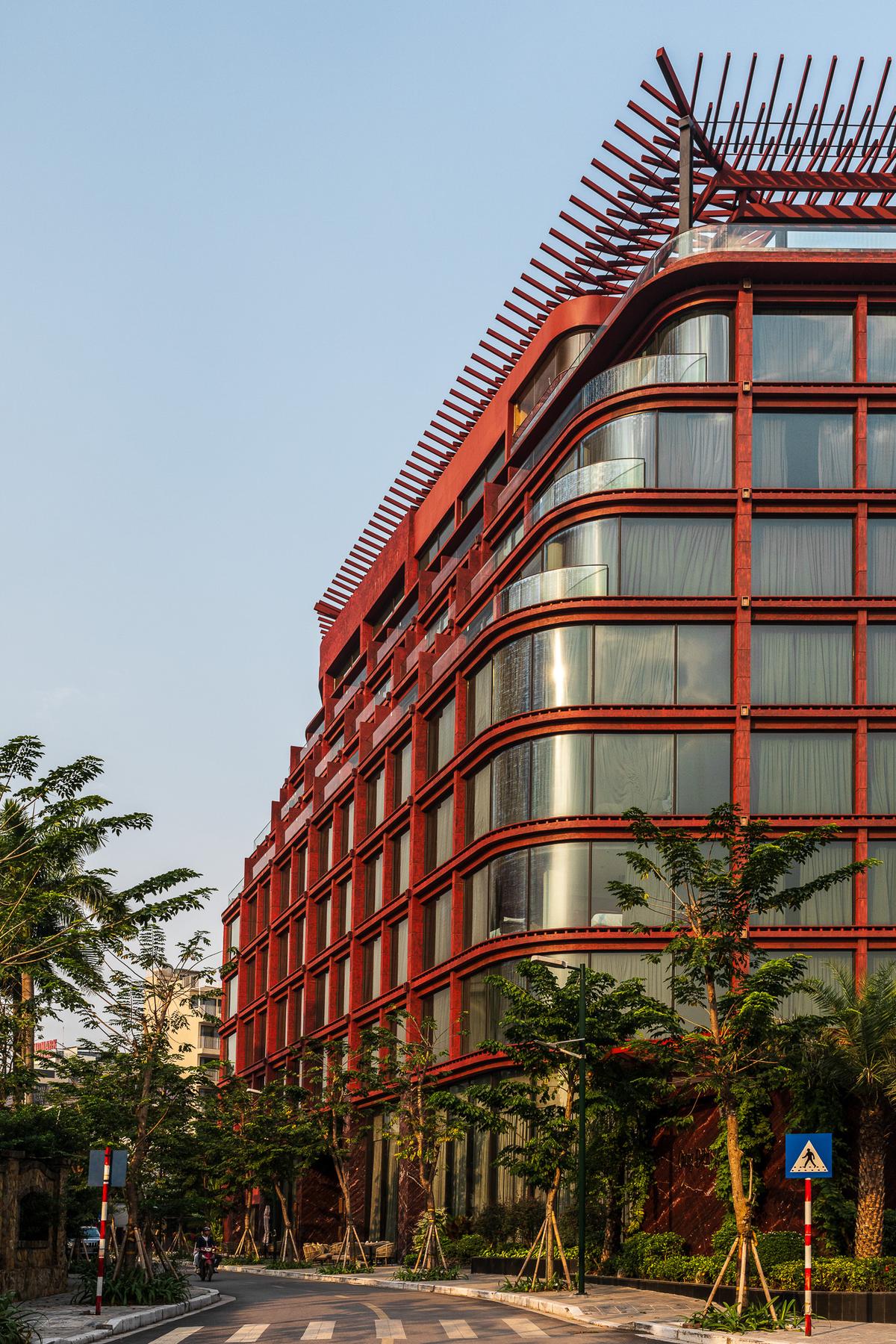
Dusit Le Palais Tu Hoa Hotel / Baumschlager Eberle Architekten
Why It Matters
The hotel’s vertical village concept reshapes hospitality design in Southeast Asia, offering a differentiated guest experience that can command premium rates and set new benchmarks for spatial efficiency.
Key Takeaways
- •Vertical atrium connects all hotel functions from basement to roof
- •Parametric roof creates dynamic light‑shadow patterns throughout day
- •Three glass shuttle elevators animate vertical movement visually
- •Design blends international geometry with Vietnamese spatial principles
- •Hotel positions itself as a destination, not just accommodation
Pulse Analysis
Hanoi’s tourism sector is on an upward trajectory, with international arrivals projected to grow double‑digits through 2027. The Dusit Le Palais Tu Hoa Hotel taps this momentum by situating itself between the leafy Tay Ho neighborhood and the city’s burgeoning northern districts, offering both easy access to business hubs and a tranquil retreat. This strategic placement aligns with the growing demand for upscale accommodations that combine convenience with a sense of place, positioning the hotel to capture both leisure travelers and corporate guests seeking premium amenities.
Architecturally, the hotel departs from conventional horizontal layouts by centering a vertical atrium that acts as a spatial spine. The atrium channels natural light and ventilation deep into the building, while three glass shuttle elevators provide a kinetic visual focal point that reinforces the sense of vertical movement. By arranging key functions—restaurants, ballrooms, meeting rooms, wellness centers, and a rooftop bar—around this core, the design encourages exploration and creates a layered, village‑like atmosphere that differentiates the property in a crowded market.
The design’s emphasis on light, shadow, and rhythm extends to the parametric roof, which manipulates daylight to produce ever‑changing interior moods. This experiential focus not only enhances guest satisfaction but also supports sustainability goals by reducing reliance on artificial lighting. As a result, the Dusit Le Palais Tu Hoa Hotel is poised to become a benchmark for future hospitality projects in the region, marrying cultural nuance with cutting‑edge architecture to deliver both economic and brand value.
Dusit Le Palais Tu Hoa Hotel / Baumschlager Eberle Architekten
Comments
Want to join the conversation?
Loading comments...