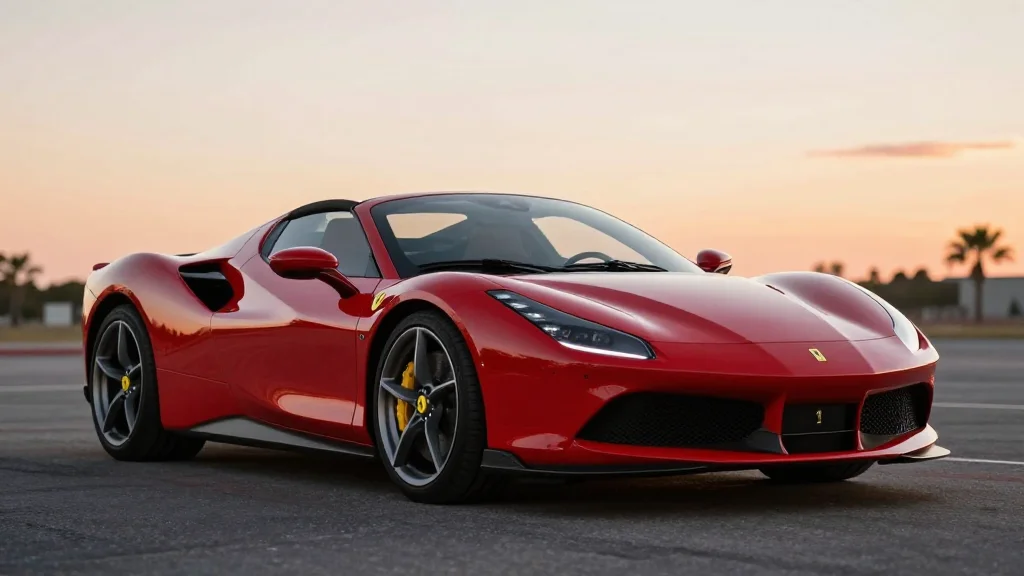
Ferrari Unveils One‑Off HC25 Open‑Top Supercar at Austin Racing Days

Companies Mentioned
Why It Matters
The HC25 illustrates how luxury automakers can maintain relevance amid a rapid shift to electrification by leveraging bespoke programs that celebrate heritage while teasing future design directions. For Ferrari, the one‑off serves as both a farewell to the V8 era and a testbed for styling cues that could shape its next generation of flagship models. The move also reinforces the brand’s ability to command extreme premiums for personalization, a key differentiator in the high‑net‑worth market where exclusivity often outweighs performance alone. In a broader sense, the HC25 signals that ultra‑luxury customers still value the emotional connection of a combustion engine, even as regulatory pressures push manufacturers toward greener powertrains. By offering a final, highly customized V8 experience, Ferrari may set a precedent for other premium marques to create limited, non‑electric masterpieces that cater to collectors unwilling to abandon the sound and feel of traditional supercars.
Key Takeaways
- •Ferrari unveiled the one‑off HC25 at the Ferrari Racing Days in Austin, Texas.
- •The HC25 is built on the F8 Spider platform, using Ferrari’s final mid‑engine twin‑turbo V8.
- •Design led by Flavio Manzoni; development spanned two years in collaboration with a single client.
- •Features a distinctive black band, new lighting architecture and hidden door‑handle blade.
- •HC25 represents the last non‑hybrid Ferrari spider, hinting at future design direction amid electrification.
Pulse Analysis
Ferrari’s decision to showcase a one‑off V8 spider at a time when the industry is racing toward electrification is a calculated brand statement. By delivering a hyper‑exclusive product that celebrates the marque’s combustion heritage, Ferrari reinforces its identity as a purveyor of emotion‑driven performance, a trait that resonates deeply with its ultra‑wealthy clientele. This strategy mirrors the broader luxury trend where manufacturers create limited, highly personalized experiences to justify premium pricing, especially as the baseline product line becomes increasingly homogenized by hybrid and electric platforms.
The HC25’s design language—sharper lines, a split‑volume silhouette, and futuristic lighting—offers a preview of how Ferrari may evolve its aesthetic without sacrificing its DNA. If elements of this styling appear on upcoming hybrid or electric models, the brand will have effectively used the HC25 as a low‑risk design lab, gathering real‑world feedback from a single owner before committing to mass production. This approach could accelerate the adoption of bold design cues across the lineup while preserving the brand’s heritage.
Looking forward, the HC25 may also influence how other luxury automakers approach their own bespoke programs. As the market for ultra‑customized, non‑standard vehicles expands, manufacturers will likely invest more in dedicated design studios and longer development cycles to meet the exacting demands of high‑net‑worth buyers. Ferrari’s Special Projects division, already a benchmark for exclusivity, could become a template for a new era of hyper‑personalized luxury mobility, blending traditional performance with emerging technologies in a way that satisfies both nostalgia and innovation.
Ferrari Unveils One‑Off HC25 Open‑Top Supercar at Austin Racing Days
Comments
Want to join the conversation?
Loading comments...